
May 1, 2026

How to Start a Roofing Company: Complete Guide for New Roofers

Author

Liam Walsh

9 minute read

Share

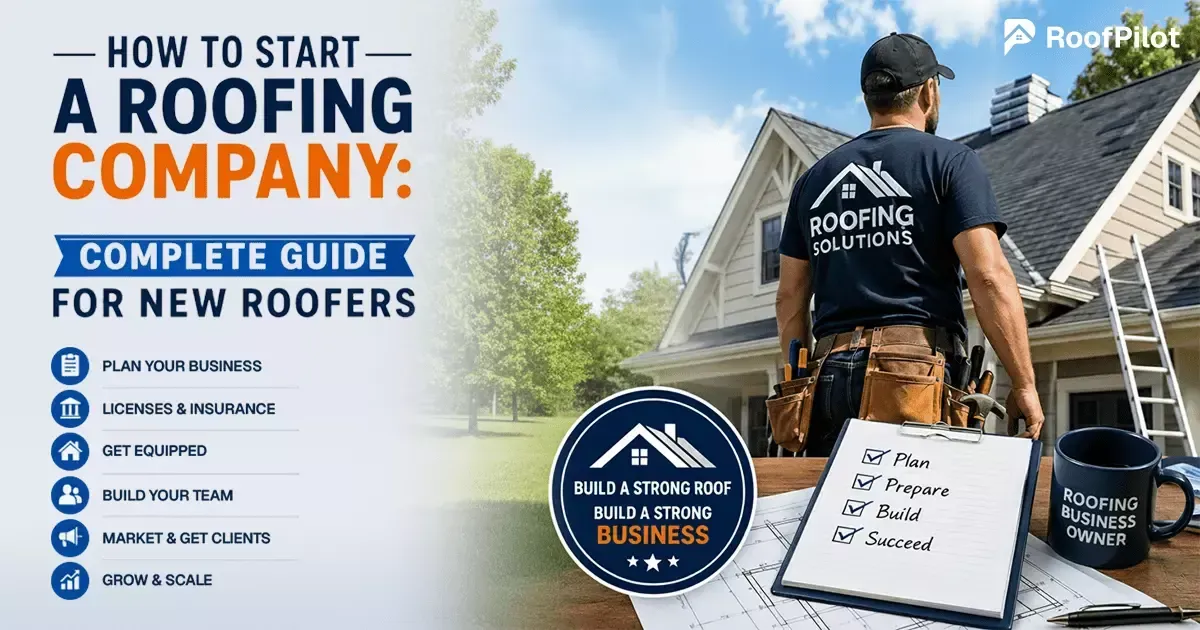
how to start a roofing company checklist

Starting a roofing company is a significant undertaking. The work is demanding, the risks are real, and the competition is fierce. But for roofers with the skills, drive, and discipline, it can also be a path to independence and real financial success.


This guide covers what it takes to start a roofing business — the legal requirements, financial realities, operational essentials, and practical steps to get your company off the ground.

Is Starting a Roofing Company Right for You?

Before diving into the how, consider the why.

The Opportunity

What roofing offers:

  • Consistent demand (roofs always need replacement)
  • Good profit potential (margins of 30–40% are achievable)
  • Low barrier to entry compared to many industries
  • Scalable — grow from one crew to many
  • Local business with community ties

Market size: The U.S. roofing market exceeds $60 billion annually. According to the U.S. Bureau of Labor Statistics, demand for roofers is projected to grow steadily — driven by aging housing stock and the ongoing volume of re-roofing work nationwide. Understanding roofing industry trends in 2026 helps you position your new company for where the market is heading.

The Reality

What it actually takes:

  • Physical demands (early on, you'll likely do the work yourself)
  • Long hours, especially when building the business
  • Financial risk (you're putting your own money on the line)
  • Management challenges (people problems are real)
  • Competitive pressure (everyone with a truck and ladder thinks they can roof)

The Prerequisites

Before starting, you should have:

Technical knowledge: You need to understand roofing — materials, installation, codes, best practices. Working for another roofer first is almost essential.

Business aptitude: Roofing skills alone aren't enough. You need to sell, manage money, lead people, and run an operation.

Financial resources: Starting costs range from $50,000–$100,000+ depending on your approach. You need capital.

Physical capability: Roofing is demanding work. Health and fitness matter.

Risk tolerance: You might fail. Can you handle that possibility?

What this means for your business: Don't skip the experience phase. The roofers who struggle most in year one are those who launched before they were ready — technically or financially. Spend a year or two working for an established roofing company first. The knowledge and industry contacts pay dividends.

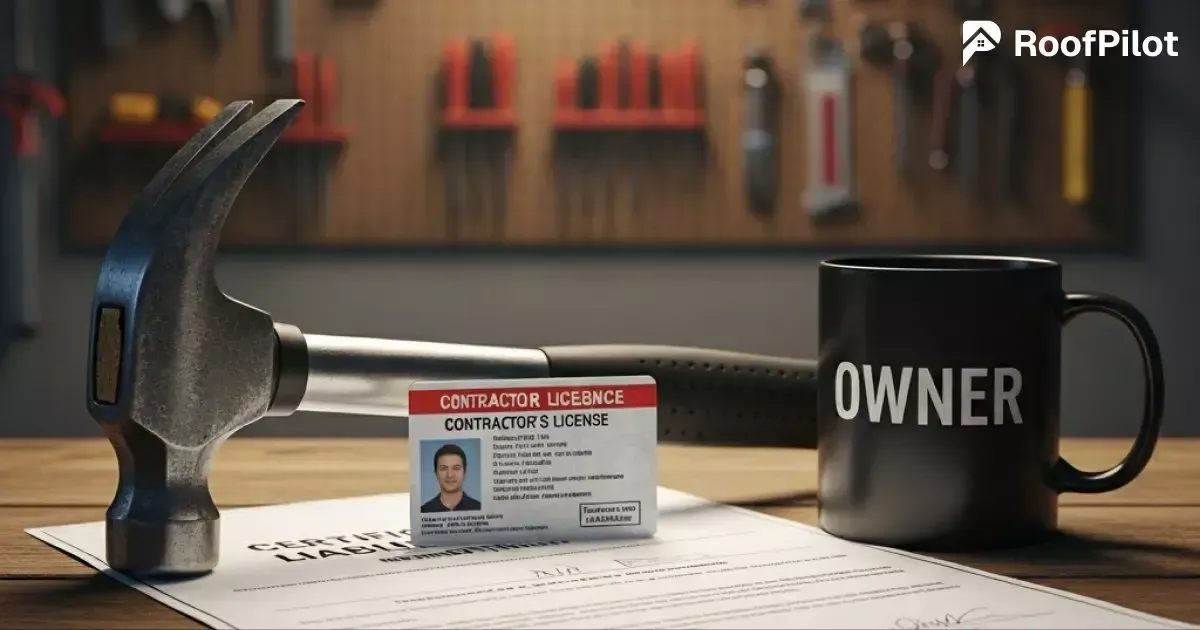
roofing company contractor license

Legal Requirements

Before you swing a hammer, handle the legal foundations.

Business Structure

Sole Proprietorship:

  • Simplest to set up
  • No separation between you and the business
  • Personal liability for business debts
  • Common starting point

LLC (Limited Liability Company):

  • Liability protection
  • Tax flexibility
  • Relatively simple to maintain
  • Most common choice for roofing companies

Corporation (S-Corp or C-Corp):

  • More complex structure
  • Additional tax considerations
  • May make sense as you grow

Recommendation: Most new roofers start as sole proprietorships and move to LLC as they grow. Consult an attorney or accountant for your specific situation.

Licensing

Roofing licensing varies by state and locality.

State license:

  • Required in most states
  • May require an exam
  • May require documented experience
  • Often requires proof of insurance

Local licenses:

  • City or county business license
  • May have additional requirements
  • Check your specific jurisdiction

Steps:

  1. Research your state's requirements
  2. Verify local requirements
  3. Complete required applications
  4. Pass any required exams
  5. Obtain licenses before advertising or bidding

Common requirements:

  • Minimum experience (often 2–4 years)
  • Competency exam
  • Proof of insurance
  • Bond in some jurisdictions
  • Continuing education

Insurance

Insurance isn't optional — it's essential and often legally required.

General liability: Protects against property damage and bodily injury claims. Typically $1M–$2M coverage. Required by most general contractors to sub and often required for licensing.

Workers' compensation: Required in most states if you have employees. Covers job-site injuries. High premiums in roofing due to fall risk.

Commercial auto: Covers vehicles used for business. Required for company-owned vehicles.

Tools and equipment: Covers theft and damage. Optional but recommended.

Cost reality: Budget $15,000–$50,000+ annually depending on the size of your operation.

What this means for your business: Get your licensing and insurance sorted before you do a single job. Working without them exposes you to personal liability, disqualifies you from commercial work, and can end your business before it starts. The paperwork is tedious — but it's the foundation everything else sits on.


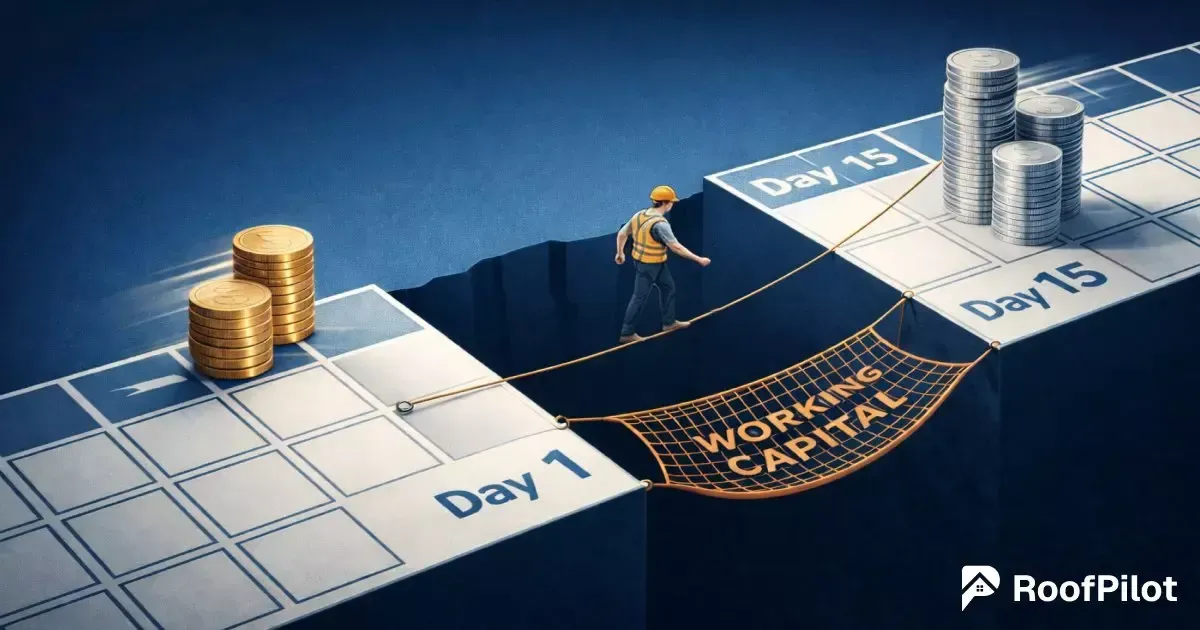
working capital when starting a roofing company

Financial Requirements

Let's talk money.

Startup Costs

Material costs have climbed sharply since 2020, and 2026 tariffs on imported construction goods have pushed them higher still. New roofers need to plan for startup budgets that reflect today's pricing — not figures from older guides.

Minimum startup (doing work yourself, minimal equipment):

Item Cost
Business registration/licensing $500–$2,000
Insurance (first year) $15,000–$30,000
Basic equipment and tools $5,000–$15,000
Vehicle (used truck) $15,000–$30,000
Marketing (basic website, cards) $1,000–$3,000
Operating capital $10,000–$25,000
Minimum total $50,000–$100,000

Many startup guides show $5,000–$10,000. That's not realistic for a legitimate, insured operation in today's market.

Equipment Needs

Essential:

  • Reliable truck
  • Ladders (extension, step)
  • Basic roofing tools (hammers, pry bars, nail guns)
  • Safety equipment (harnesses, anchors)
  • Measuring tools

As you grow:

  • Dump trailer
  • Air compressor
  • Additional vehicles
  • Specialized equipment

Cash Flow Reality

You spend money before you collect it.

Example job:

  • Day 1: Buy materials ($5,000)
  • Day 1–3: Pay labor ($4,000)
  • Day 3: Job complete
  • Day 10: Customer pays ($15,000)

The implication: you need working capital to fund the gap between spending and collecting. More jobs mean a bigger gap.


What this means for your business: Undercapitalization is the most common reason new roofing companies fail in year one. Before you take your first job, make sure you have enough cash to fund it — materials, labor, and a buffer. Collecting a 30–50% deposit before ordering materials is standard practice and should start on day one.

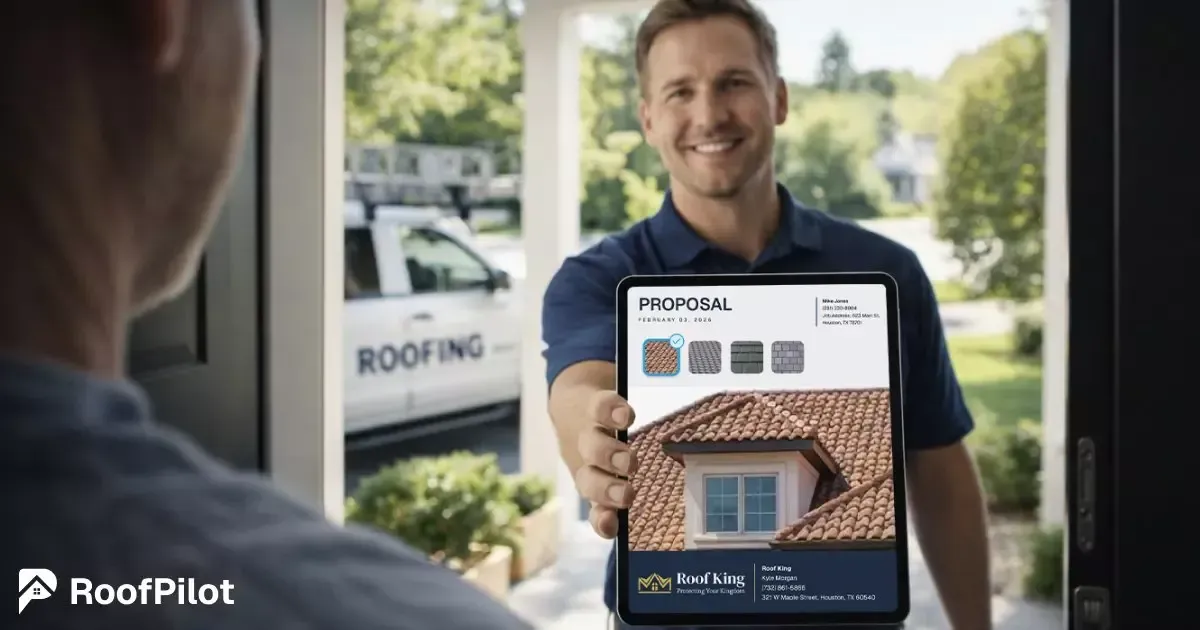
roofing contractor showing a proposal on tablet

Getting Your First Customers

A roofing company without customers is just a roofer with a truck.


Starting from Zero

Your immediate network:

  • Friends and family who need roofs or know people who do
  • Previous employer connections (if appropriate)
  • Trade contacts

Early marketing:

  • Google Business Profile (free, essential)
  • Basic website
  • Business cards
  • Yard signs
  • Vehicle lettering

Lead Generation Strategies

Referrals: Every job should generate referrals. Ask satisfied customers.

Online presence: Optimized Google Business Profile, website with clear contact info, reviews collected from the start.

Local marketing: Yard signs on job sites, door hangers in the neighborhood, local advertising.

Networking: Real estate agents, property managers, other tradespeople, home inspectors.

The First 10 Jobs

  • Price competitively (but don't lose money)
  • Execute flawlessly
  • Ask for reviews
  • Ask for referrals
  • Document everything — photos for your portfolio
  • Build your reputation from day one

Using software to track and follow up on leads helps you stay organized and professional from the very first inquiry.

What this means for your business: Your first 10 jobs are your most important marketing asset. Execute them well, collect reviews, and ask every satisfied customer for a referral. One good job in a neighborhood can generate three more. One bad job can stop that entirely.

Building Your Operation

As you get work, you need to deliver it.

Doing the Work Yourself

Most new roofing company owners do the work themselves, at least initially. That means you're the salesperson, the estimator, the roofer, and the business manager — often all in the same day.

The goal is to generate enough revenue and profit to hire help.

Your First Hire

Helper/laborer: Lowest cost. Helps with physical work while you handle skilled tasks and management.

Experienced roofer: Higher cost, but can lead jobs and free you for sales and administration.

Subcontractor crew: No payroll burden, flexible — but you need reliable subs and give up some control.

Systems from the Start

Don't wait until you're drowning to get organized.

Basic systems you need:

  • Lead tracking and follow-up
  • Estimating process
  • Proposal creation
  • Scheduling
  • Invoicing and payments

What this means for your business: Set up your systems in month one — before you're too busy to think. It's far easier to build good habits early than to retrofit a process onto a chaotic operation. Most roofers who reach $1M in revenue got there because they ran their business like a business from the start.


Estimating and Pricing

Getting pricing right is critical.

Know Your Costs

Direct costs: Materials, labor, equipment/rentals, disposal.

Overhead costs: Insurance, vehicle, office/admin, marketing, your salary.

Profit: On top of all costs, you need a margin.

Pricing Strategy

Cost-plus: Calculate costs, add overhead allocation, add profit margin.

Market-based: Know what others charge and price accordingly.

Reality: You need to know your costs AND the market. Price too high and you don't win work. Price too low and you don't make money.

Accurate roofing estimating tools help you calculate costs correctly instead of guessing.

Common Pricing Mistakes

Underpricing: Winning lots of work at prices that lose money. Ignoring overhead: Covering direct costs but not fixed costs. Inconsistency: Every estimate is different, no repeatability. Guessing: No cost data — just "feels about right."

What this means for your business: Know your break-even before you bid your first job. Add up your annual fixed costs — insurance, vehicle, tools, your target salary — and divide by the number of billable days. That's the minimum daily revenue you need. Every bid has to cover it.

Professional Presentation

First impressions matter.

Company Image

A professional name, a simple logo, consistent branding, and a lettered vehicle signal credibility before you've said a word. Customers judge roofing companies by appearance — especially when comparing multiple bids.


Proposals

What customers expect:

  • Written proposals (not verbal)
  • Clear scope of work
  • Detailed pricing
  • Professional format
  • Warranty information

What helps you win:

  • Fast turnaround
  • Multiple options (good/better/best)
  • Digital delivery and signing

RoofPilot proposals make professional-looking documents easy to produce — even when you're running a one-person operation.

Customer Communication

Responsiveness, clarity, and following through on commitments are what build trust. Return calls the same day. Put agreements in writing. Show up when you say you will.

What this means for your business: New roofers compete against companies with decades of history. The fastest way to close that credibility gap is with a professional proposal and fast follow-up. Your proposal is often the tiebreaker — and it costs nothing to make it look sharp.

Managing Finances

Financial discipline from day one.

Separate Business Finances

  • Business bank account (separate from personal)
  • Business credit card
  • Accounting software (QuickBooks, etc.)
  • Track every expense

Why: Legal protection, tax clarity, and knowing whether you're actually making money.

Target Margins

  • Gross profit: 30–40%
  • Net profit: 8–15%

If margins are consistently lower, you're working too hard for too little.

Cash Management

  • Collect deposits — always
  • Invoice immediately on day of completion
  • Follow up on unpaid invoices
  • Pay yourself last
  • Build cash reserves

Revenue isn't profit. Busy isn't profitable. Know your numbers.

What this means for your business: Open your business bank account before your first job — not after. Mix personal and business money and you'll lose track of whether you're making a profit, and you'll have a tax headache you don't need.

Growth Planning

Building beyond yourself.

The Growth Path

Year 1: Establish a legitimate business. Build reputation. Develop processes. Survive.

Year 2–3: Add crew capacity. Hire first employees. Increase volume. Improve systems.

Year 3–5: Multiple crews. Office support. Sales help. A real business, not just a job.

Scaling Requirements

To grow, you need consistent lead flow, a repeatable sales process, production capacity, administrative support, and your time focused on management — not production.

Once you're ready for that next level, the path to scaling a roofing business from $1M to $5M and beyond comes down to consistent lead flow, repeatable systems, and getting your time off the tools.

Common Growth Obstacles

Can't get leads: Marketing investment required. Can't close deals: Sales skills or pricing issues. Can't find crews: Labor market, compensation, culture. Can't manage operations: Systems and management skills. Can't fund growth: Cash flow management.

What this means for your business: Year one and year three require completely different skills. Year one is about survival and execution. Year three is about systems and people. Start thinking about what kind of owner you want to be before you're forced into a role you didn't plan for.


What Makes New Roofers Fail

Undercapitalization: Running out of money before getting established.
Pricing too low: Winning work that loses money.
No systems: Chaos and inefficiency.
Poor quality: Reputation destroyed early.
Cash flow problems:
Spending before collecting.
Giving up too soon: Year one is hard. Many quit.

Survival strategies: Conservative spending. Know your costs. Collect deposits. Deliver quality. Stay persistent.

The First Year Checklist

Before Launch

  • Business structure established
  • Business registered with state
  • EIN obtained
  • Business bank account opened
  • Licenses obtained
  • Insurance in place
  • Equipment acquired
  • Accounting system set up
  • Basic marketing materials created

First 3 Months

  • First customers served
  • First reviews collected
  • Basic systems working
  • Cash flow positive (or managed)
  • Lessons documented

First 6 Months

  • Consistent lead flow starting
  • Repeat customers or referrals coming in
  • Pricing refined based on real job data
  • Processes improving
  • Financial picture clear

First 12 Months

  • Sustainable business rhythm
  • Reputation building
  • First hire being considered
  • Revenue growing
  • Year two plan in place

The Bottom Line

Starting a roofing company requires preparation (technical knowledge, business understanding, financial resources, legal requirements), execution (customer acquisition, quality delivery, professional operations, financial discipline), and persistence — because year one is hard, problems will arise, and success takes time.

It's not easy. But for those who prepare properly, execute well, and persist through the early challenges, a roofing business can provide independence, income, and real opportunity.

Start your roofing company the right way.

RoofPilot gives new roofers the professional tools they need — CRM, estimating, proposals, and more — to look and operate like an established company from day one.


Happy roofer holding tablet displaying financial dashboard
By Liam Walsh July 17, 2026
How to track roofing job costs, calculate true profit margins, and use the data to improve estimates — a practical job costing guide for roofers.
Roofer holding tablet showing job completed workflow with final payment still missing
By Liam Walsh July 13, 2026
How to get paid faster on every roofing job — deposit structures, payment terms, and invoicing tools that cut days-to-payment and protect cash flow.

Homeowner signing roofing contract on phone with verified digital signature
By Liam Walsh July 10, 2026
How to implement digital signatures for roofing contracts — legal validity, setup options, best practices, and how e-signatures close deals faster.

Roofer reviewing detailed roofing contract agreement with couple at kitchen table
By Liam Walsh July 6, 2026
What every roofing contract needs to protect your business — scope, payment terms, warranty language, change orders, and the clauses that prevent disputes.
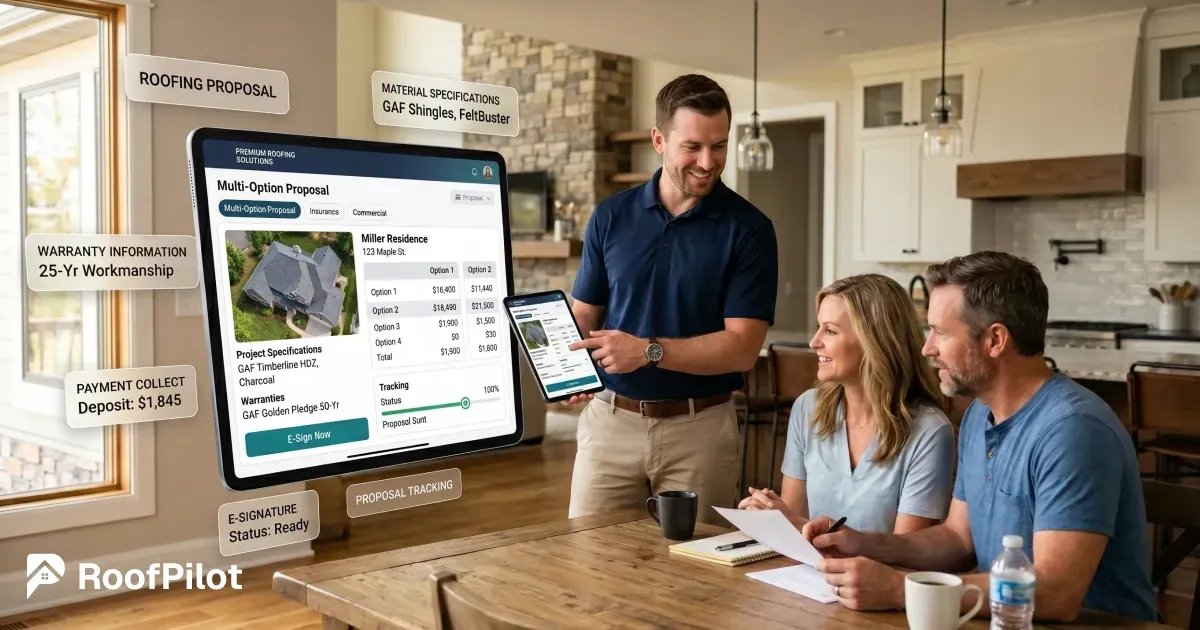
Roofer presenting professional multi-option roofing proposal example on large tablet to homeowners
By Liam Walsh July 3, 2026
Roofing proposal examples for residential, storm damage, multi-option, and commercial jobs — with templates and the structure that turns estimates into signed contracts.
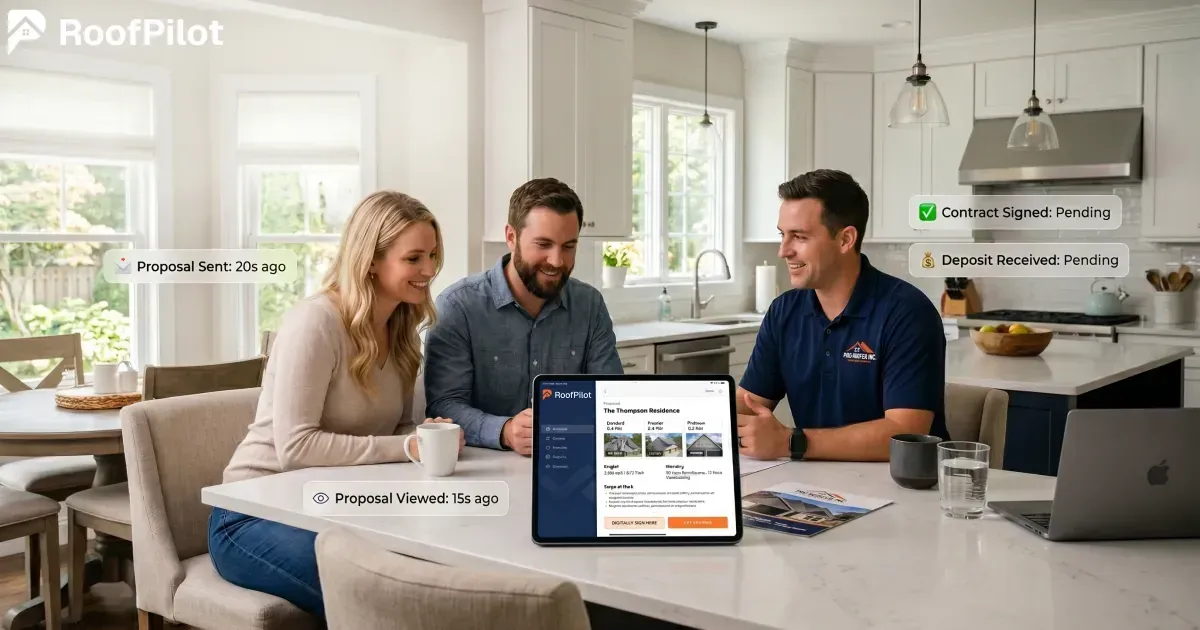
Roofer presenting professional digital roofing proposal on tablet to smiling homeowners
By Liam Walsh June 29, 2026
How roofing proposal software helps you quote faster, present professionally, and close more jobs — what to look for and how to get the most out of it.
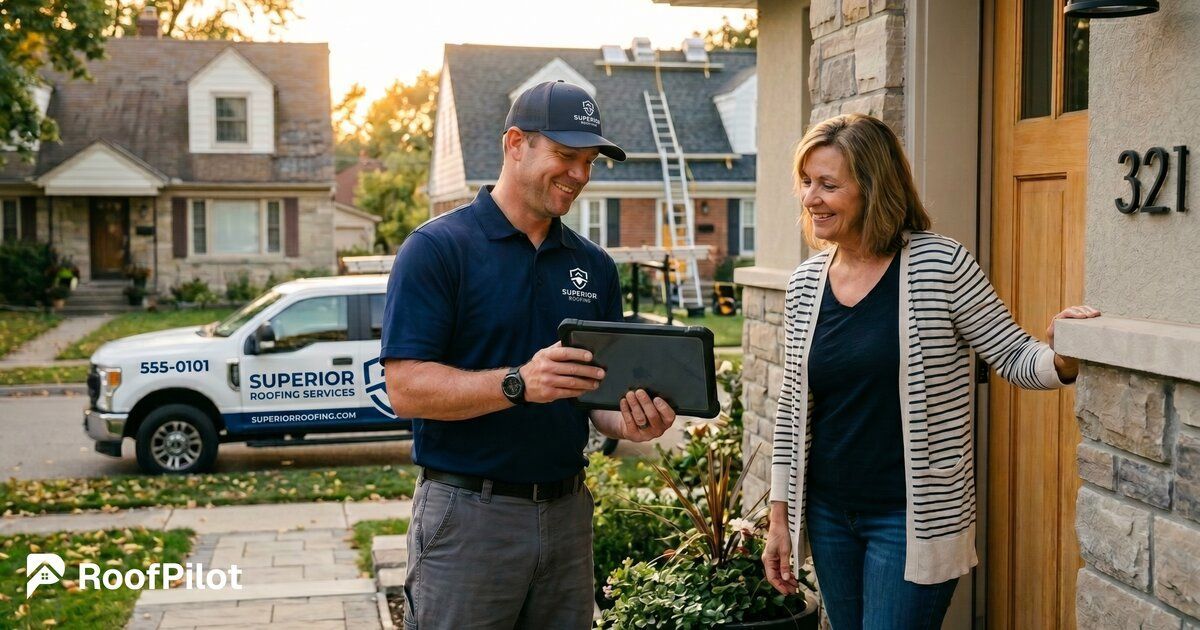
Roofer doing door to door roofing sales showing tablet proposal to smiling homeowner at front door
By Liam Walsh June 26, 2026
How to run door-to-door roofing sales that actually work — territory strategy, opening scripts, objection handling, and the CRM setup that ensures no lead gets dropped.
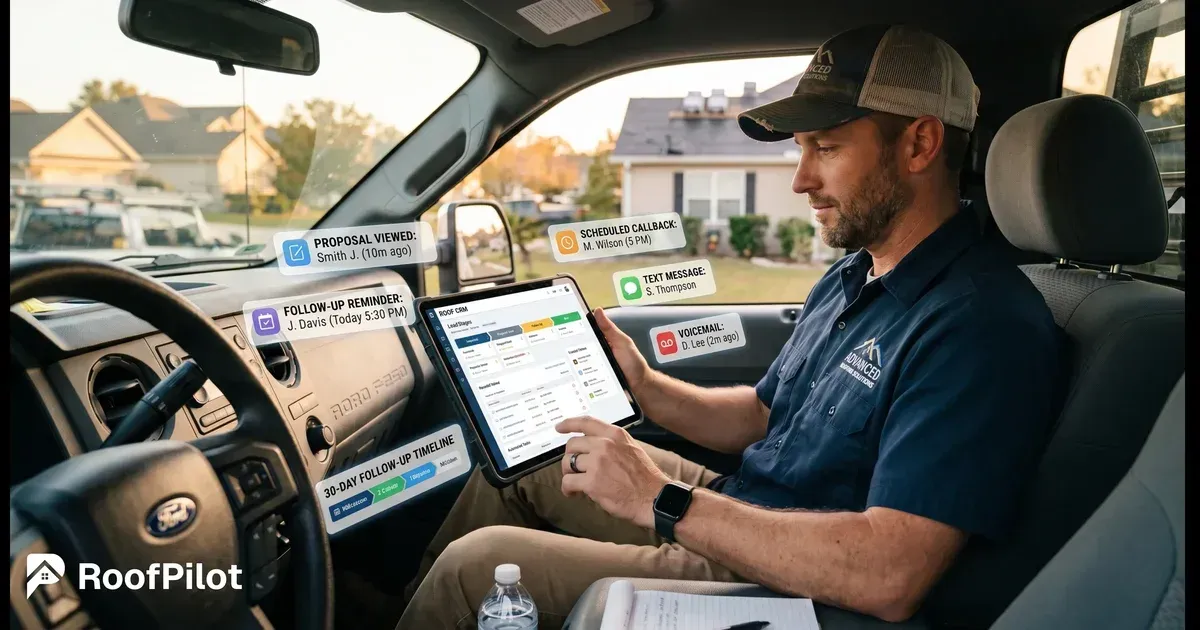
Roofer in truck using roofing lead follow-up system on tablet
By Liam Walsh June 22, 2026
The roofing lead follow-up sequence that converts more estimates — timing, scripts, and templates for phone, text, email, and the CRM setup that makes it automatic.
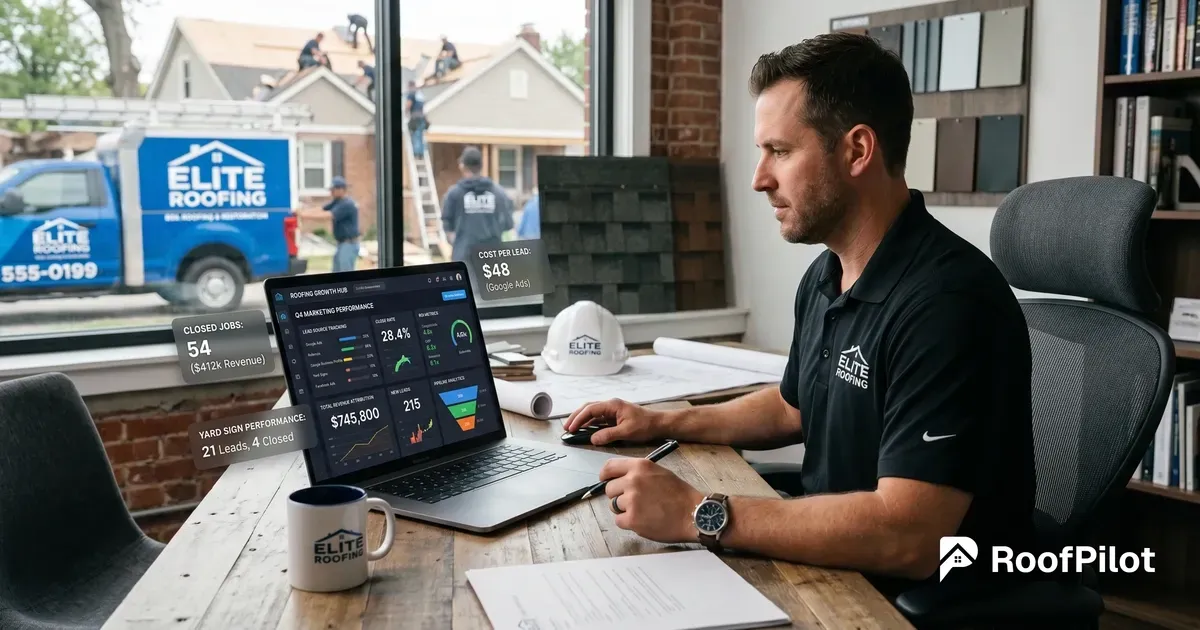
Roofer reviewing roofing marketing dashboard with closed jobs, revenue, and cost per lead
By Liam Walsh June 19, 2026
How to track roofing lead sources and calculate true marketing ROI — from setup to monthly review — invest in what actually closes jobs, not just generates leads.
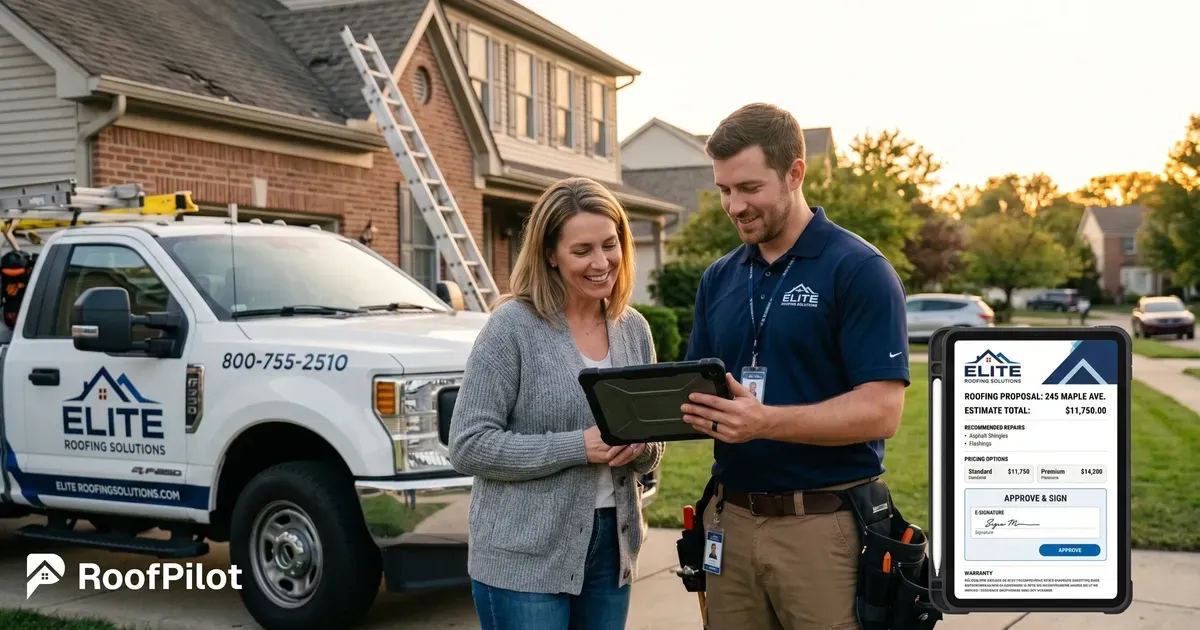
Roofer closing more roofing jobs by presenting clear proposal on tablet to smiling homeowner
By Liam Walsh June 15, 2026
How to close more roofing jobs without adding headcount — speed, professional proposals, a repeatable sales process, and the follow-up system that converts.