June 26, 2026

Door-to-Door Roofing Sales: Modern Strategies That Actually Work

Author

Liam Walsh

9 minute read

Share

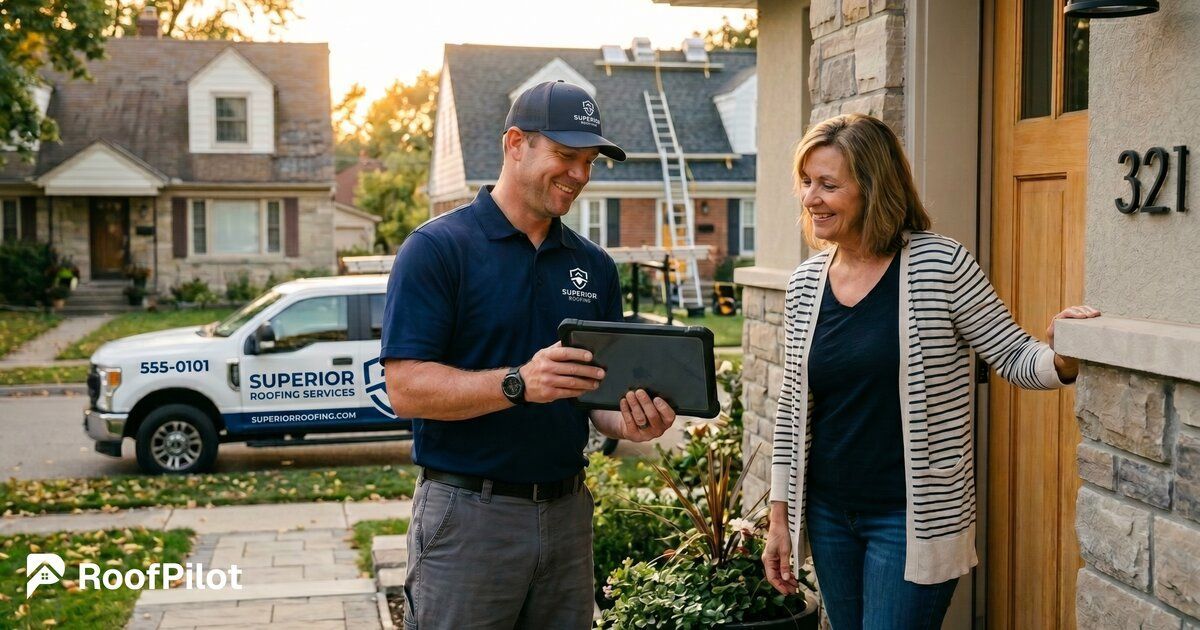
Roofer doing door to door roofing sales showing tablet proposal to smiling homeowner

Door-to-door canvassing remains one of the most effective lead generation methods in roofing, and in 2026 it's still producing results that digital-only strategies can't match in specific situations. After a storm event. In neighborhoods where you've just completed a job. In areas with visibly aging roofs where a professional showing up in person is a stronger signal than a Google ad. The face-to-face dynamic — pointing to specific damage on someone's actual roof, offering a free inspection, having a real conversation — closes the trust gap faster than any digital channel.


Done poorly, canvassing is a reputation liability. Done professionally with a clear process, it generates exclusive leads that aren't being shared with five other roofers who bought them from the same service. This guide covers how to do it right: territory planning, the opening scripts that work, handling the objections you'll get every day, and the field systems that make sure every lead gets followed up on.


When Door-to-Door Works Best


Canvassing isn't equally effective in all contexts. The highest-return situations are:


Storm events are the best canvassing opportunity in roofing. Within 24–48 hours of a qualifying hail storm, wind event, or significant weather in your area, homeowners with damaged roofs are actively looking for a solution but often haven't started the process yet. A roofer showing up with a specific observation about their roof during this window is solving an urgent problem rather than creating a need.


Proximity canvassing — working the blocks around a job you've already completed — provides the most powerful credibility tool available at the door: visible, completed work right down the street. "We just finished the roof on [address]" is a stronger credential than any brochure.


Retail canvassing in neighborhoods where housing stock is 15–20+ years old works on a longer sales cycle but generates a consistent pipeline of leads in markets where storm activity is lower. The homes need roofs — it's just a question of timing.

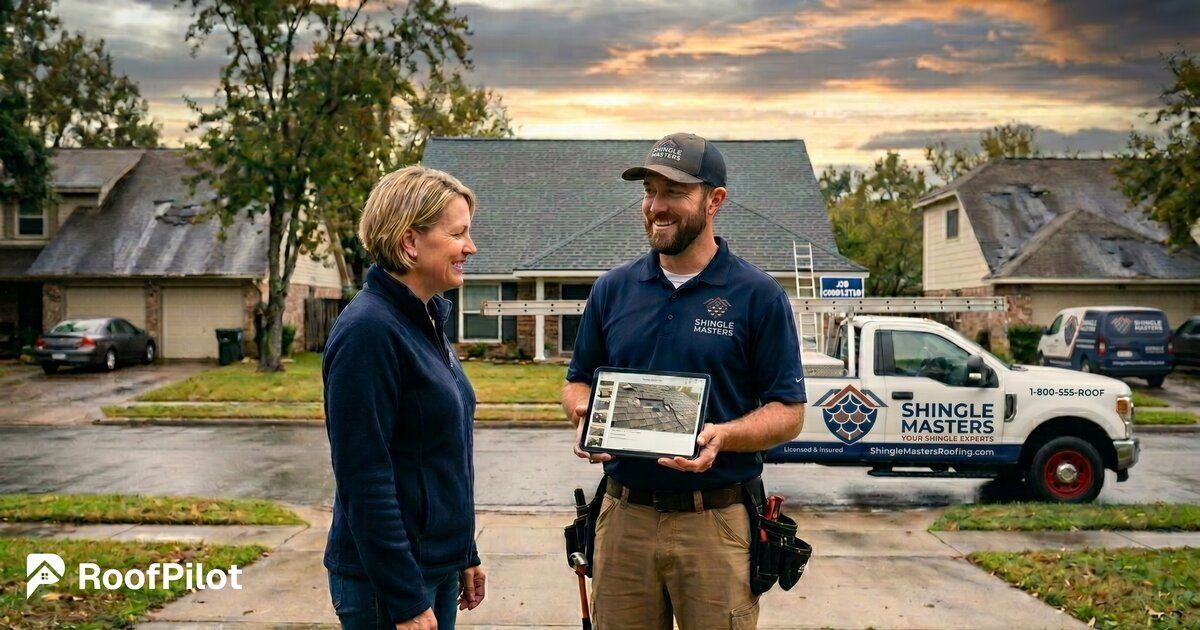
Roofer door knocking and showing roof inspection photo on tablet to homeowner during door to door roofing sales

Legal Considerations Before You Start


Every canvasser needs to understand the rules that govern door-to-door sales before their first day in the field.


Municipal regulations vary significantly by location. Many cities require a solicitation permit, which is often low-cost or free but must be obtained before canvassing begins. Some jurisdictions have time restrictions (typically 9 AM to 8 PM). Violations carry fines and can create reputational problems that undermine the goodwill you're trying to build.


The FTC's Cooling-Off Rule is a federal requirement that applies directly to roofing contracts signed at a homeowner's residence. According to the FTC's compliance guidance, consumers have a three-day right to cancel contracts for $25 or more that are signed at their home. Any canvassing-originated contract must include the required cancellation notice and be handled accordingly.


"No Soliciting" signs must be respected — both for legal reasons in most jurisdictions and for the practical reason that proceeding past them immediately marks your company as unprofessional. Skip those properties and work the rest of the street.


What this means for your business: One canvasser who ignores a solicitation ordinance or skips the FTC cancellation notice creates a liability that erases the revenue from dozens of legitimate door knocks. Train every canvasser on these requirements before they knock a single door.

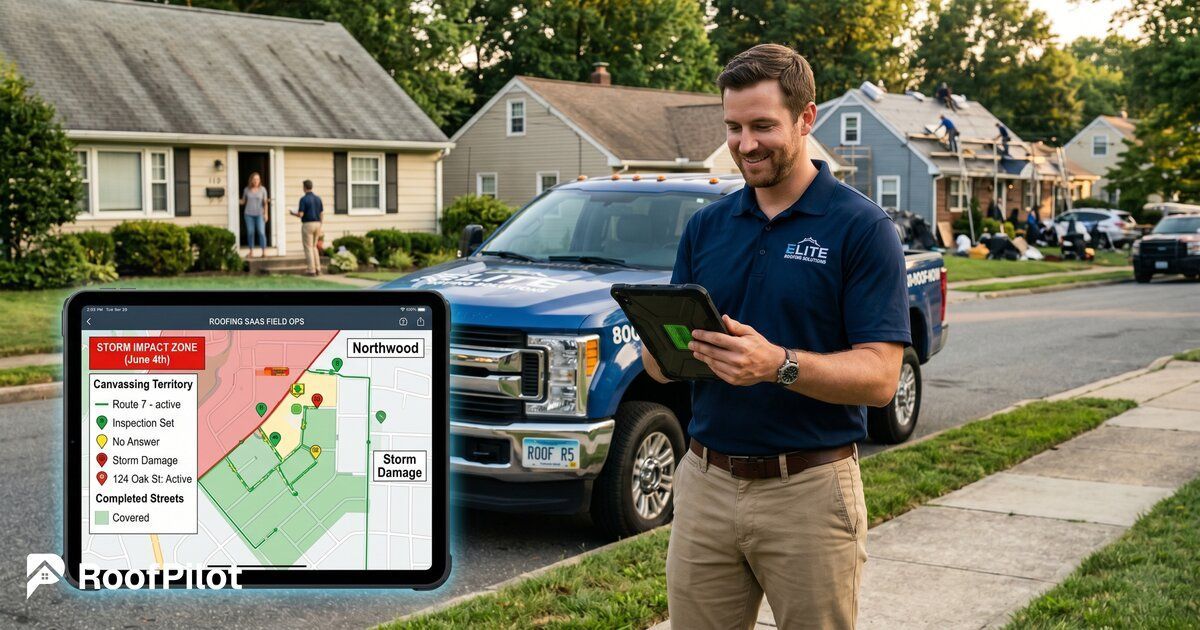
Roofer planning door to door roofing sales route on tablet

Territory Planning and Route Strategy


Random door knocking produces random results. Focused territory planning multiplies the return per hour of canvassing time.


For storm canvassing, use hail or damage maps to identify the highest-impact zones and work systematically outward from the worst damage areas. Speed matters here — the first professional roofer to a neighborhood after a storm often secures a disproportionate share of the work. Have your team deployed within 24–48 hours and work concentrated areas rather than spreading across a large geography.


For retail canvassing, look for neighborhoods where homes are in the right age range, ideally with visible signs of wear like granule loss, moss, or missing shingles. Work streets in logical order rather than jumping around — systematic coverage ensures no house gets skipped and makes it easier to track where you've been.


Timing the day matters too. Midmorning (after the morning rush) and late afternoon into early evening (after people are home from work) are the most productive windows. Weekdays produce higher answer rates than Sundays; Saturdays are a wildcard with more people home but also more people already engaged in weekend activities.


Opening Scripts That Work


The first 15–30 seconds determine whether the homeowner continues the conversation or politely closes the door. The openings that convert have three things in common: they establish a local connection, they make a specific observation about that homeowner's property, and they end with a low-pressure question rather than a pitch.


Storm damage opening:


"Hi, I'm [Name] with [Company] — we're a local roofing company, I actually live over in [nearby neighborhood]. We've been helping homeowners in [area] since the storm last week, and from the street I noticed some damage on your roof that's worth taking a closer look at. Do you have a few minutes?"


Proximity opening (after completing a nearby job):


"Hi, I'm [Name] with [Company]. We just finished a roof a few doors down on [street or address] and wanted to let neighbors know we're in the area if anyone needs a free inspection. Your roof looks like it could be getting toward the end of its life — have you noticed anything going on with it?"


Retail canvassing opening:


"Hi, I'm [Name] with [Company]. We're doing some work in this neighborhood and I couldn't help noticing your roof from the street. Based on its appearance it might be getting close to replacement age — have you had anyone look at it recently?"


What makes these work is the specific observation about that homeowner's actual property. "I noticed your roof might have some hail damage on the south face" is a different conversation starter than "We're in your area offering free inspections." One gives the homeowner a reason to care; the other gives them a reason to say no before you've said anything compelling.


Handling the Objections You'll Hear Every Day


"I'm not interested."


"I understand. Just curious — is it because you've already had someone look at it, or you don't think there's anything wrong?"


This uncovers whether it's a timing issue or a "go away" signal. If they've had someone look, offer a free second opinion. If they don't think there's a problem, give them a reason to reconsider based on what you observed from the street.


"I already have a quote."


"Smart move getting multiple opinions. Mind if I ask who you got it from?"


After they answer:


"They do good work. What I'd offer is a free second look — sometimes different inspectors catch different things, and if I see the same findings, it'll give you confidence moving forward with whoever you choose."


"My roof was just done."


"Great to hear! When was that? [If more than 10 years ago] At that point, it's worth a check-up to make sure everything's still performing — most warranties also require periodic inspection to stay valid."


"I rent."


"Got it. Do you have the landlord's contact? They'd probably want to know if there's something worth addressing before it becomes a bigger issue for them."


"I don't have time."


"No problem. When would work better — could I come back this weekend? The inspection takes about 15 minutes and I can work around your schedule."


The goal of every objection response is to keep the conversation going long enough to book an inspection or get a phone number. Getting inside the door for a walk-through is the goal of canvassing, not closing a job on the porch.


From the Door to the Inspection


Once the homeowner agrees to an inspection, the framing matters.


"The inspection is completely free and takes about 15 minutes. I'll look at the whole roof, take some photos, and tell you honestly what I see. If everything looks fine, I'll tell you that — I'm not going to make up damage. If there are concerns, I'll walk you through what's there and what the options are. When works better for you — this week or early next week?"


Give specific options rather than open-ended scheduling. "This week or next week" is easier to answer than "whenever works for you," which pushes the decision to the homeowner rather than helping them make it.


If they won't commit to a time, get a phone number and a follow-up permission.


"No problem. Can I get your number so I can reach out when I'm going to be in the area? That way you can let me know what works for your schedule."


A phone number is the minimum outcome of a productive door knock.

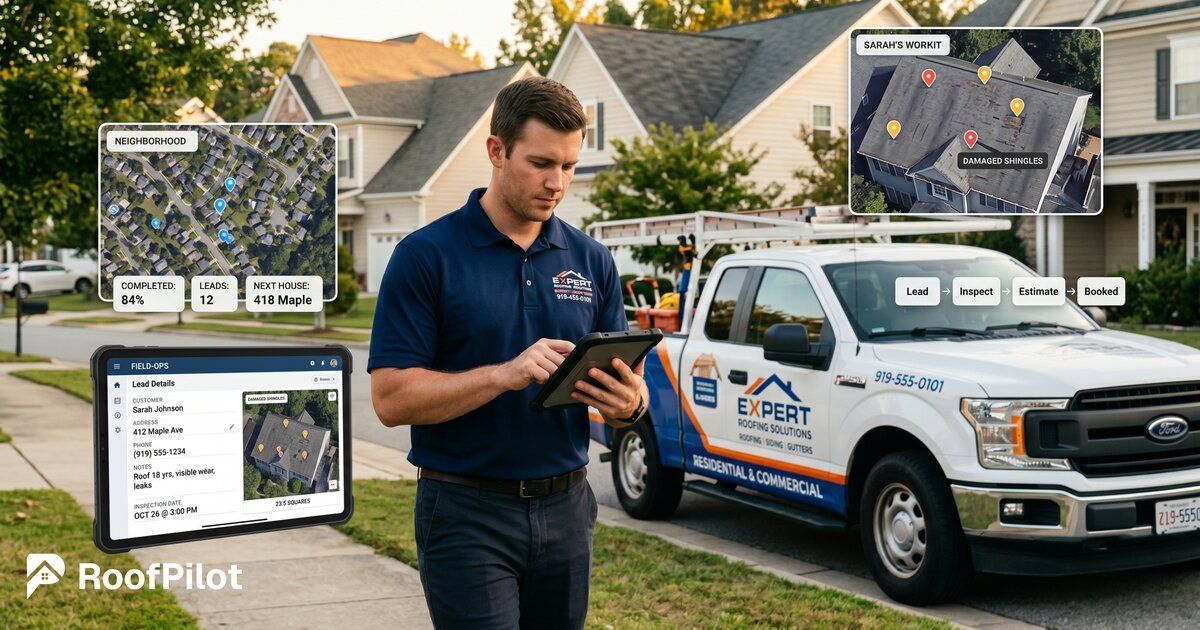
Roofer using door knocking scripts on tablet with neighborhood map, lead details, damaged roof photo, and sales workflow

Field Systems: Making Sure Leads Don't Slip


Every canvassing lead needs to be entered into your mobile CRM before you move to the next door — not at the end of the day when details have faded or contacts have been lost. This takes under a minute: name, address, phone number, conversation notes, scheduled inspection or follow-up date. Do it before you walk away from the property.


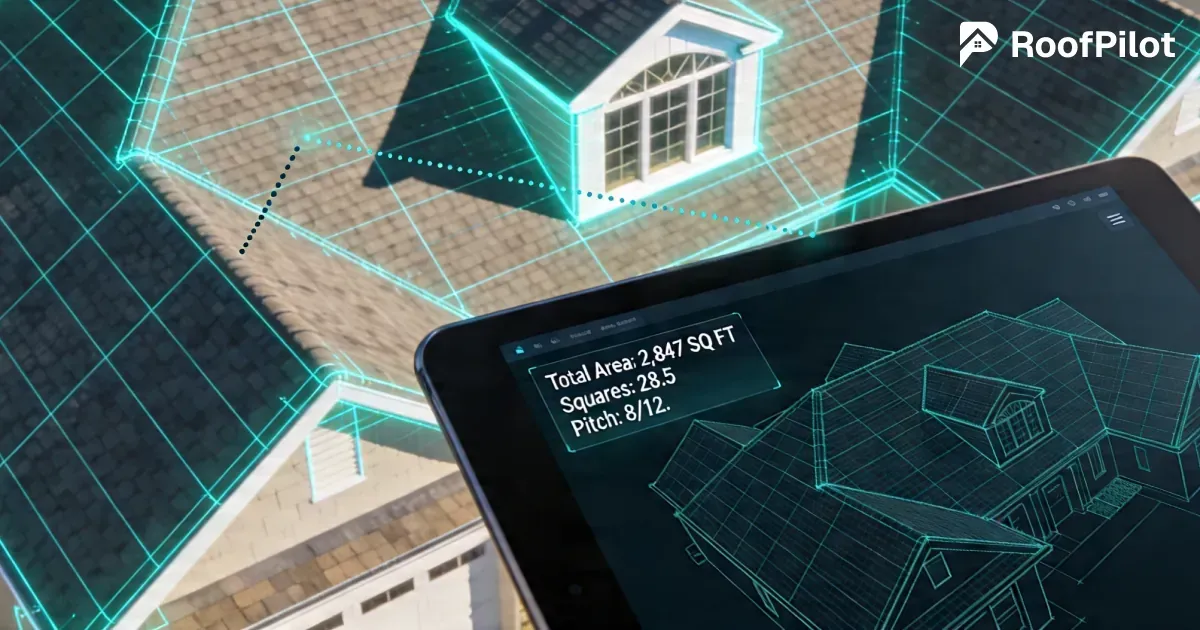
Aerial roof measurements from your phone are a field asset worth using. Pulling up a satellite view of the homeowner's roof during the conversation demonstrates capability and gives you the ability to show them what you're seeing in a way they haven't seen before. It also produces a preliminary measurement that informs ballpark pricing if the conversation gets that far before an inspection.


Route tracking prevents the wasted motion of revisiting streets you've already covered and helps teams coordinate in larger territories without overlap. Most smartphone maps handle this adequately for individual canvassers; dedicated canvassing apps offer more structured territory assignment for teams.


Measuring Canvassing Performance


Canvassing produces data that improves with measurement. Track doors knocked per day, leads generated per hundred doors knocked, inspection appointments booked per lead, and close rate on canvassing-originated estimates. These metrics differ meaningfully between storm canvassing (where conversion rates are higher and timelines are faster) and retail canvassing (where volume is needed to generate leads), and they improve with experience and targeted territory selection.


Review weekly which neighborhoods produced the best lead rate, which canvassers are converting best, and what objections are coming up most frequently. Use that data to sharpen territory targeting and script responses.


Converting Canvassing Leads Into Jobs


Canvassing generates leads. Closing them requires a follow-up system that's just as systematic as the canvassing itself. Most canvassing leads don't sign on the day of the initial knock — they sign after the free inspection, and often after one or two follow-up contacts after that. A disciplined roofing lead follow-up sequence converts canvassing leads at meaningfully higher rates than hoping homeowners will call you back on their own timeline.


What this means for your business: The canvasser who knocks the doors and the follow-up system that converts the leads are equally important parts of the same process. Invest in both or you're leaving results on the field.


The Bottom Line


Door-to-door canvassing in 2026 works when it's done professionally and systematically. Strategic territory selection, confident and specific openers, practiced objection handling, immediate CRM entry in the field, and a disciplined follow-up sequence after every inspection are what separate the roofers generating consistent results from canvassing from those who try it once and conclude it doesn't work.


RoofPilot brings the mobile CRM, aerial measurements, and follow-up automation together — so every lead that comes in from the field gets the same systematic treatment as leads from any other channel.


Track every door knock. Close more deals.
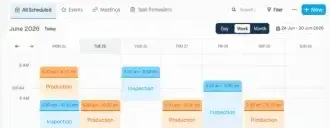
 

RoofPilot's mobile CRM captures leads in the field instantly, schedules inspections, and creates follow-up tasks automatically — so nothing falls through the cracks.


Start for Free | See CRM Features


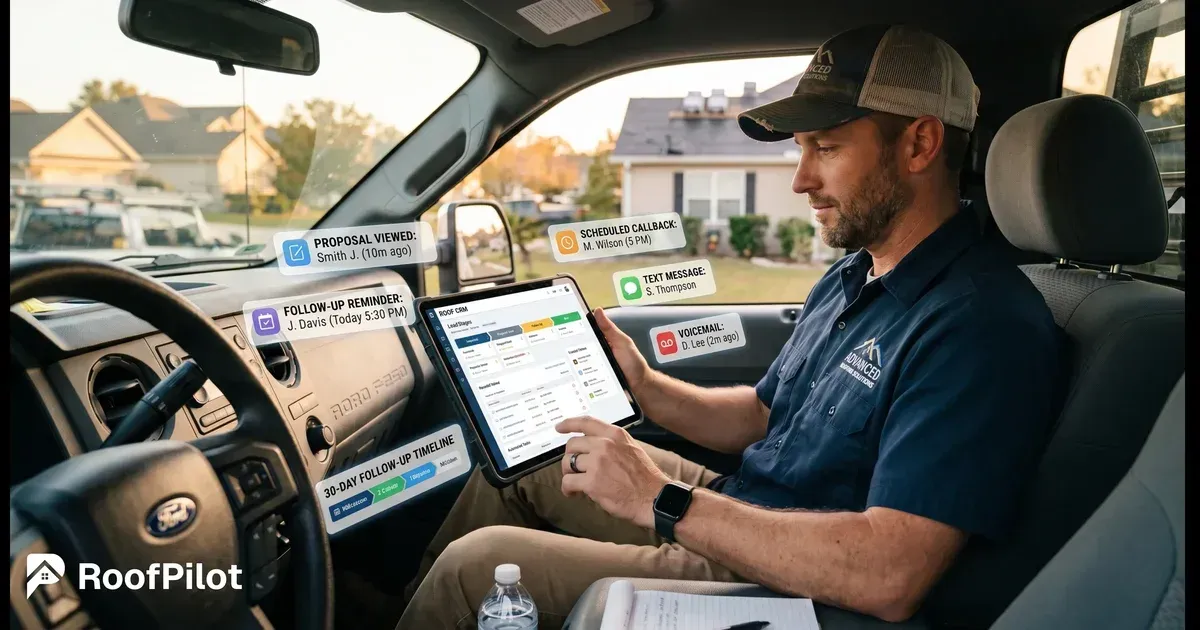
Roofer in truck using roofing lead follow-up system on tablet
By Liam Walsh June 22, 2026
The roofing lead follow-up sequence that converts more estimates — timing, scripts, and templates for phone, text, email, and the CRM setup that makes it automatic.
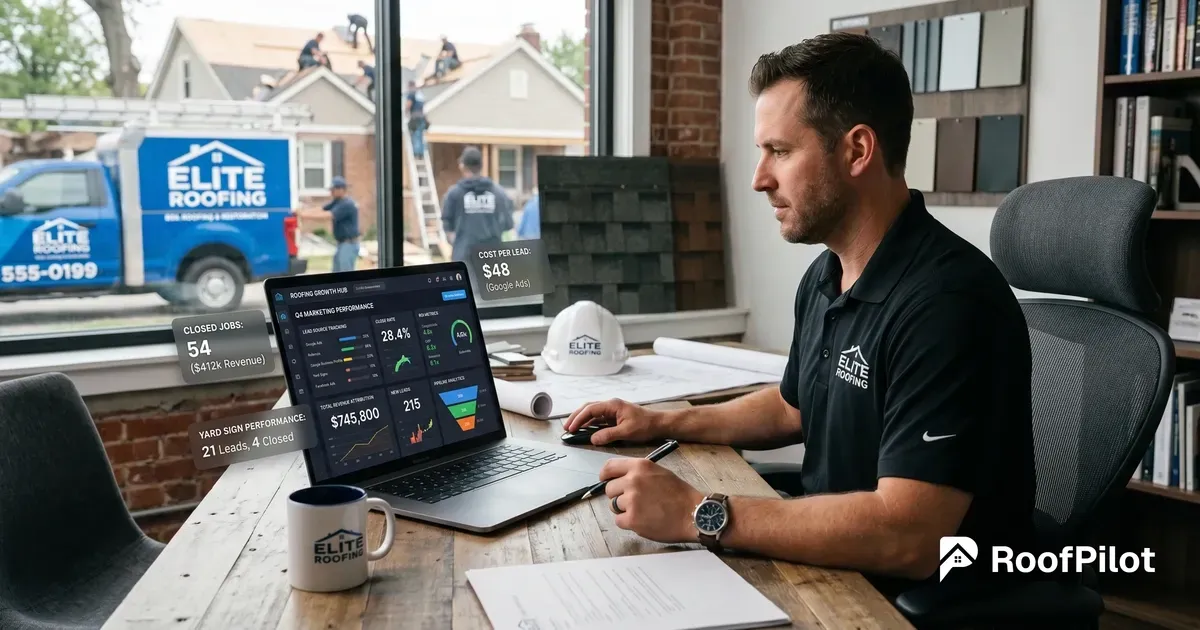
Roofer reviewing roofing marketing dashboard with closed jobs, revenue, and cost per lead
By Liam Walsh June 19, 2026
How to track roofing lead sources and calculate true marketing ROI — from setup to monthly review — invest in what actually closes jobs, not just generates leads.
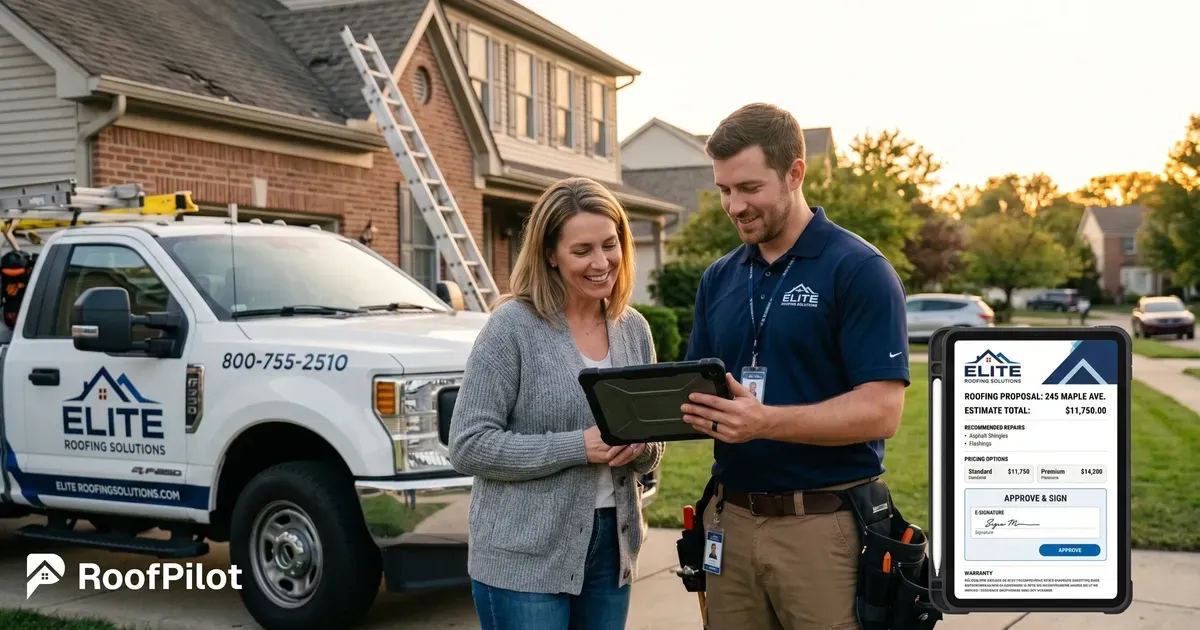
Roofer closing more roofing jobs by presenting clear proposal on tablet to smiling homeowner
By Liam Walsh June 15, 2026
How to close more roofing jobs without adding headcount — speed, professional proposals, a repeatable sales process, and the follow-up system that converts.
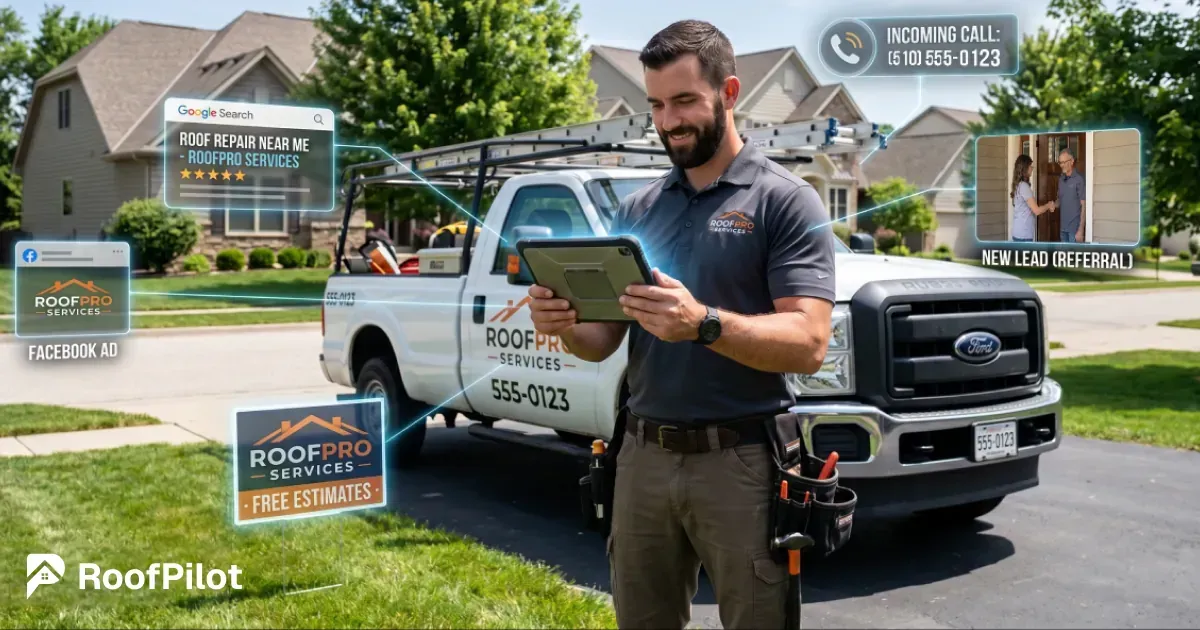
Roofer receiving multiple roofing leads from Google search, Facebook ads, incoming calls, etc.
By Liam Walsh June 12, 2026
How to generate more roofing leads — proven strategies from Google Business Profile to storm marketing, referrals, and the follow-up system that closes more jobs.
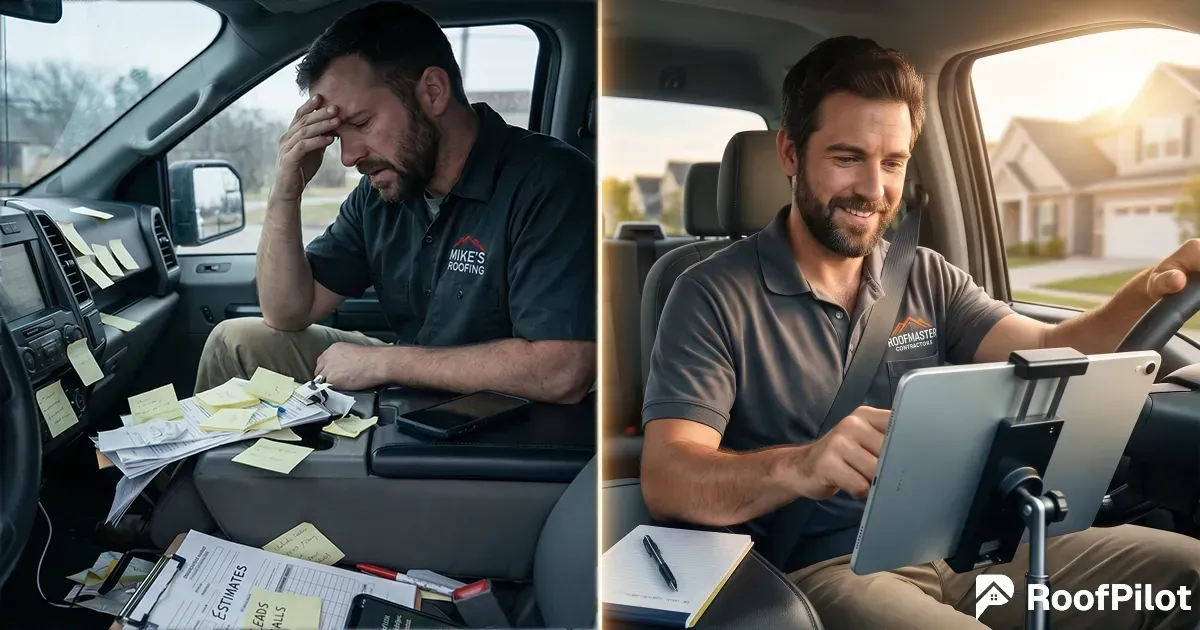
Overwhelmed roofer with chaotic paperwork and sticky notes versus organized roofer using roofing CRM
By Liam Walsh June 8, 2026
How to choose the best CRM for your roofing business — essential features, what separates roofing-specific CRMs from generic tools, and red flags to avoid.
Professional using advanced roofing calculator app with 3D holographic roof measurements and real-ti
By Liam Walsh June 5, 2026
How to choose the best roofing calculator app — what features matter, why integrated platforms outperform standalone tools, and what to look for before you commit.
Roofer using roof waste calculator on tablet to accurately measure materials and reduce waste compar
By Liam Walsh June 1, 2026
How to reduce roofing material waste with accurate measurements, correct waste factors by roof type, and ordering practices that save thousands annually.
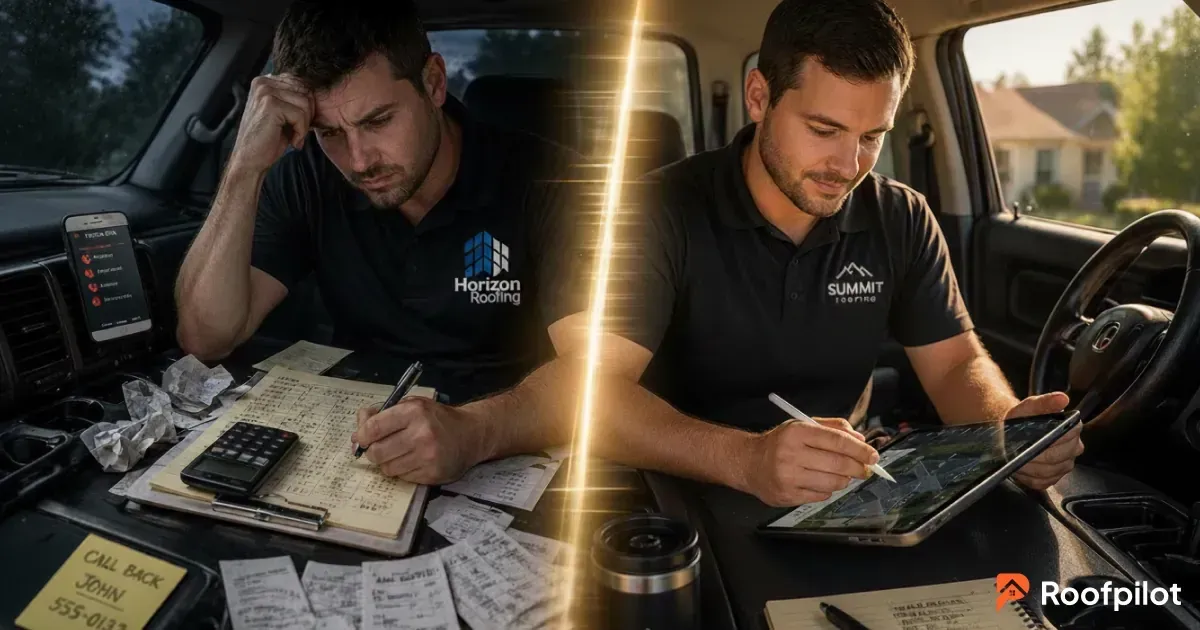
 roofer struggling manual calculations versus calm roofer creating instant roof estimate on a tablet
By Liam Walsh May 29, 2026
How to create instant roof estimates that win more jobs — the technology, the on-site process, and why being first with a professional quote matters.
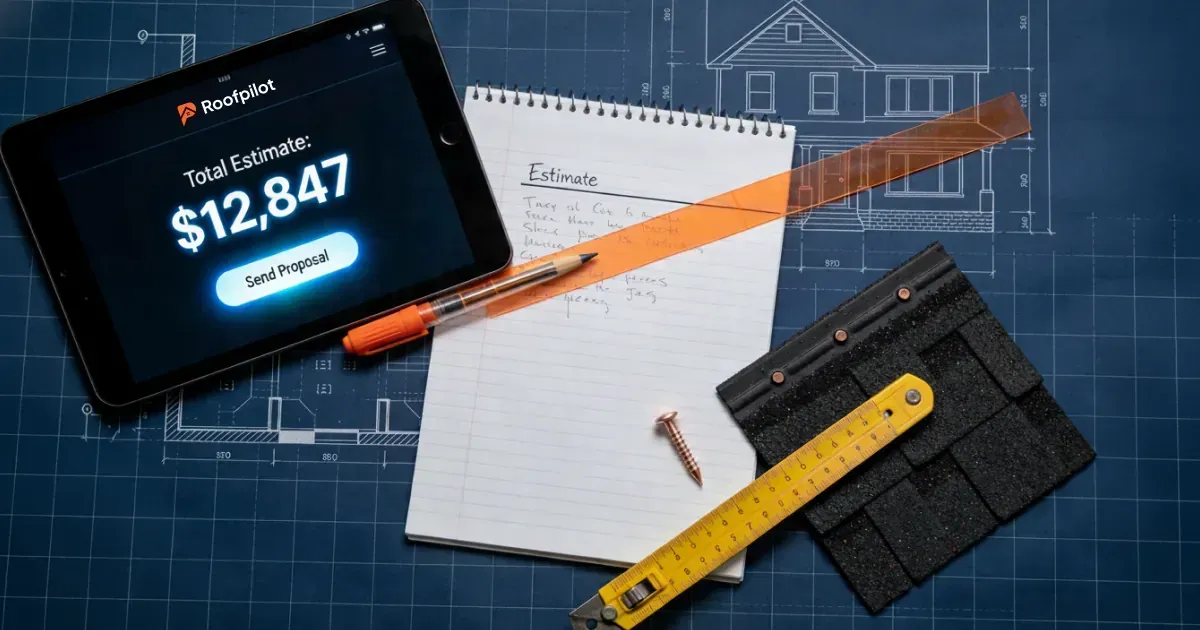
Modern roof estimating with RoofPilot showing $12,847 total cost and easy proposal sending on a tabl
By Liam Walsh May 25, 2026
How to estimate a roofing job accurately — materials, labor, waste, overhead, and profit — plus the common mistakes that cost roofers money on every job.
Roof size calculator on a tablet showing accurate measurements including total square footage.
By Liam Walsh May 18, 2026
How to calculate roof square footage accurately — ground-based estimates, physical measurement, and automated tools.