
May 29, 2026
Instant Roof Estimates: How to Quote Jobs Faster Than Your Competition
Author
9 minute read
Share

In roofing sales, speed wins. The roofer who delivers a professional estimate first typically wins the job — even when the price isn't the lowest. Homeowners dealing with a damaged or aging roof are anxious to resolve the problem. The first roofer to show up, provide a clear assessment, and hand them a written proposal creates a strong impression that's hard for later quotes to displace. By the time the third bid arrives three days later, the decision is often already made.

This guide covers why estimate speed is a genuine competitive advantage, how modern tools make same-day quoting possible, and how to build the on-site process that consistently gets you to a signed proposal before you leave the driveway.
Why Speed Matters in Roofing Sales

Research on lead response time consistently shows that response speed is one of the strongest predictors of whether a prospect becomes a customer. A widely cited study published in Harvard Business Review found that companies responding to inquiries within an hour were nearly seven times more likely to qualify a lead than those waiting even a few hours longer. The effect is especially pronounced when multiple contractors are being evaluated simultaneously — which is how most homeowners approach a roofing project.
For roofing specifically, the dynamic is amplified. A homeowner who discovers a leak or storm damage isn't casually exploring their options — they have an urgent, stressful problem. The roofer who shows up first, gives them a clear picture of what needs to happen and what it will cost, and presents a professional written proposal is providing something none of the other quotes have delivered yet: relief. Once that need is met, the motivation to keep calling roofers diminishes rapidly.
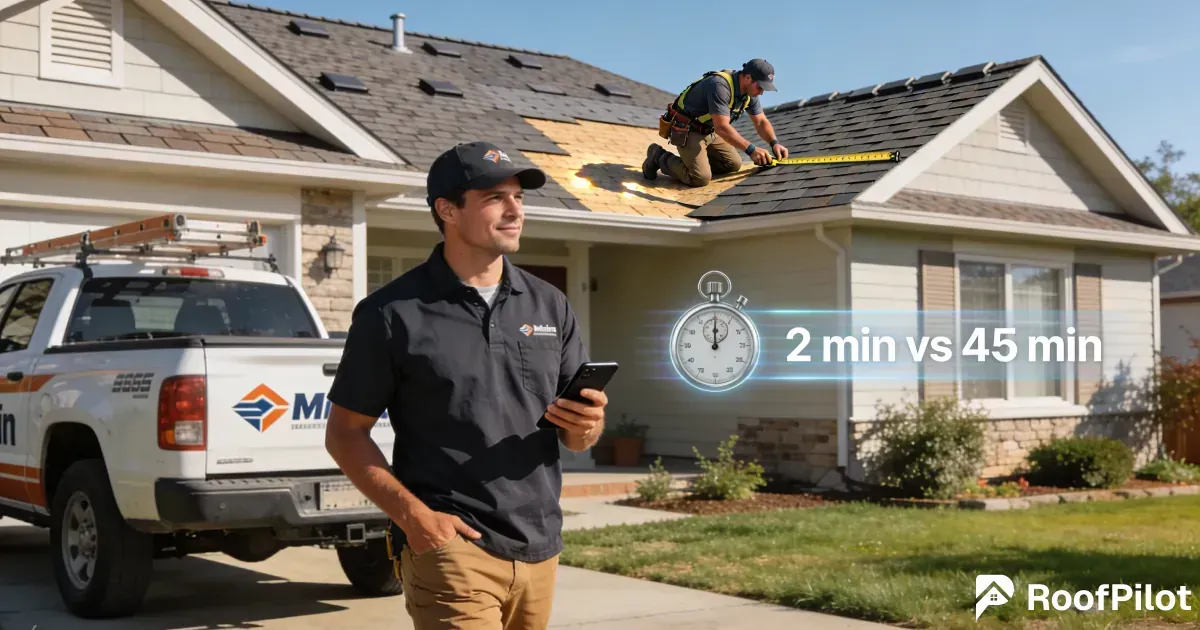
The other side of this equation is what most roofers are actually up against. The traditional estimating process — inspect the property, return to the office, build a spreadsheet, create a proposal document, email it days later — means the average estimate takes three to five days to reach the homeowner. In that window, a faster and well-organized competitor has often already had a second conversation.
What this means for your business: Price matters, but it's rarely the only factor in a roofing decision. Homeowners also weigh responsiveness, professionalism, and confidence in the roofer's ability to deliver. A fast, well-presented estimate signals all three at once.

What Instant Roof Estimates Actually Look Like

When experienced roofers talk about instant estimates, they mean measurement-to-delivered-proposal in under 30 minutes — often while still on the property.
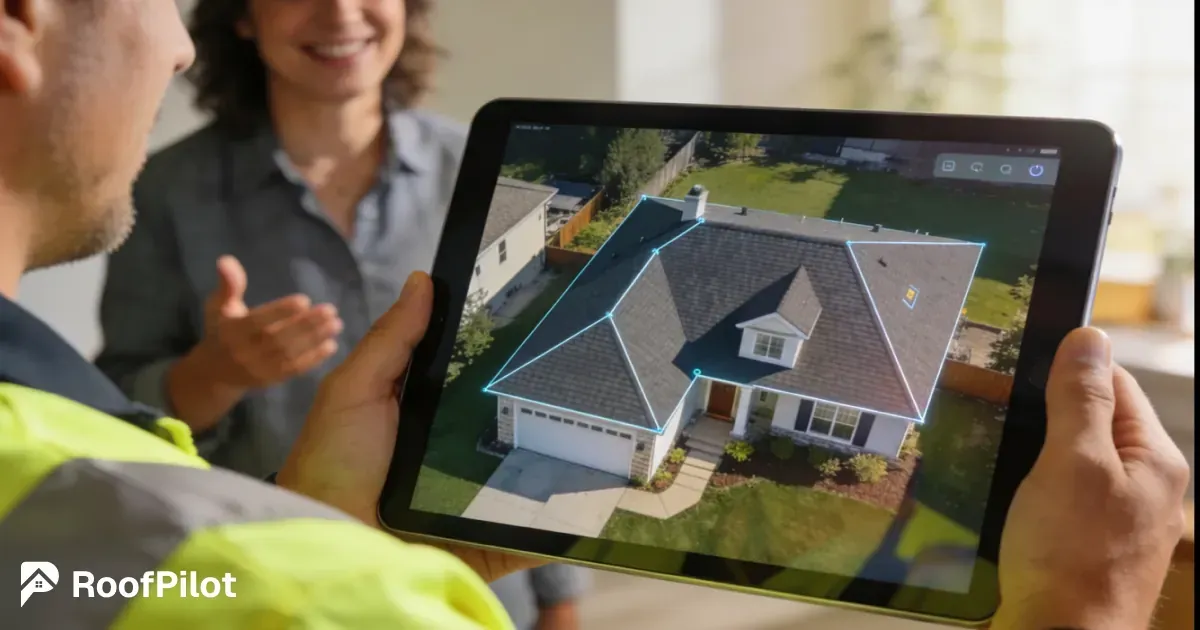
The on-site workflow looks like this: arrive at the property, pull accurate roof measurements from aerial imagery while walking the site with the homeowner, confirm dimensions and note any conditions not visible from satellite (layer count, decking condition, penetration details), build the estimate using pre-loaded material pricing and labor rates, generate a professional proposal, and present it in person before leaving.
From arrival to delivered proposal: typically 15–25 minutes on a standard residential roof. The homeowner walks away with a clear written quote before you've packed up your truck.

For straightforward re-roofs on properties with good imagery coverage, the process can run even faster remotely — pull measurements, build the estimate, send the proposal while on the phone with the homeowner. Some roofers are delivering complete written quotes the same day a homeowner calls, before any site visit has occurred. The site visit can then focus on confirming scope, not measuring.
The Technology Behind Fast Estimates
Three integrated tools make instant estimating possible. The key word is integrated — running each tool separately defeats much of the speed advantage.
Aerial roof measurement delivers accurate dimensions from satellite and aerial imagery without requiring a physical measuring tape on the roof. A complete report covers total roof area adjusted for pitch, section-by-section breakdown, all linear measurements (ridge, hip, valley, eave, rake), and waste factor recommendations by roof complexity. Results take 2–5 minutes and are accurate to within 1–2% of manual measurement on most residential roofs. For a detailed breakdown of how to use these measurements within a complete estimate, the how to estimate a roofing job guide covers every cost component.
Pre-built estimating templates eliminate the manual calculation step. When material quantities flow directly from the measurement report and labor rates are pre-loaded by roof type and complexity, you're reviewing and adjusting numbers rather than building them from scratch. Good roof measurement tools that connect directly to an estimating module mean the dimensions only get entered once — no re-typing between systems.
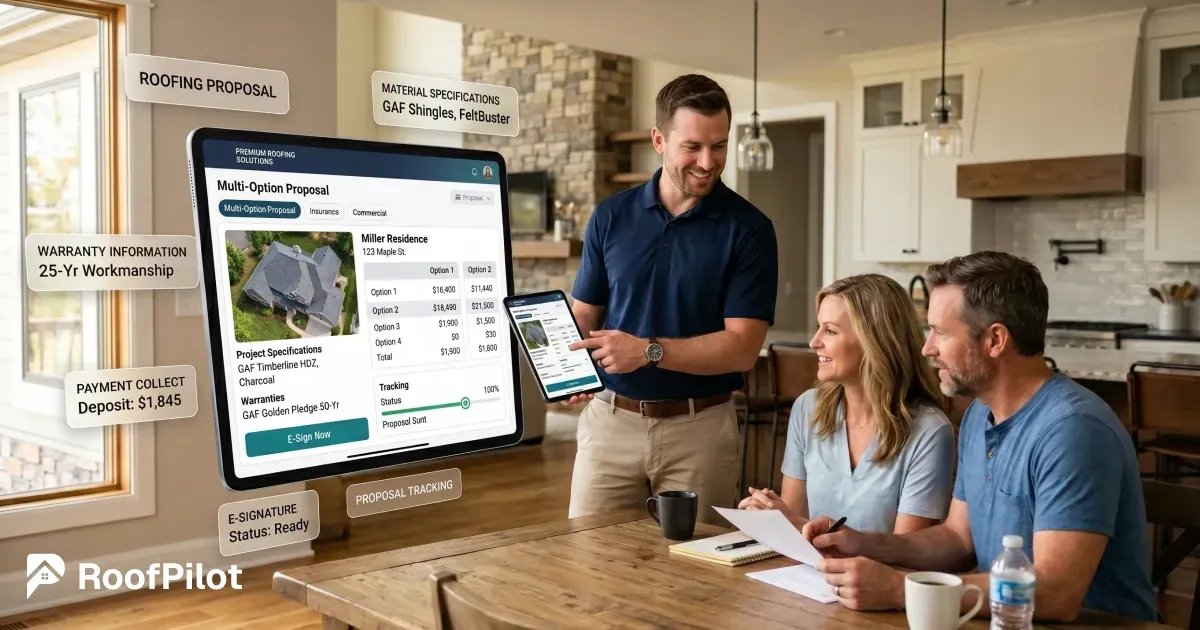
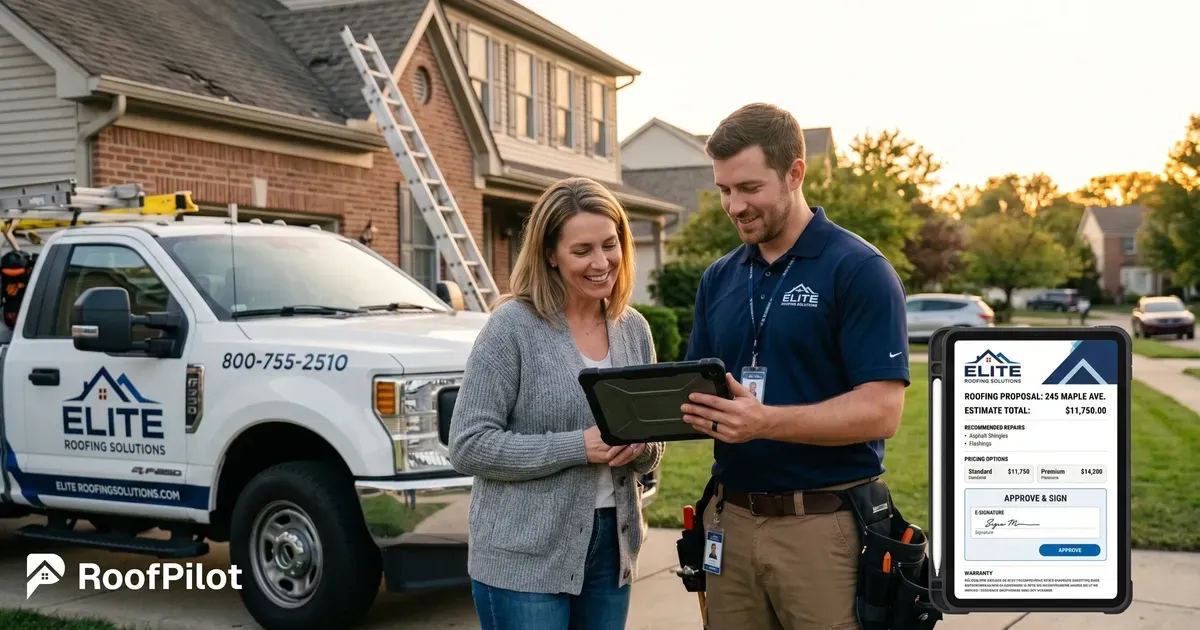
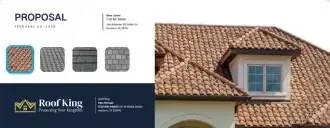
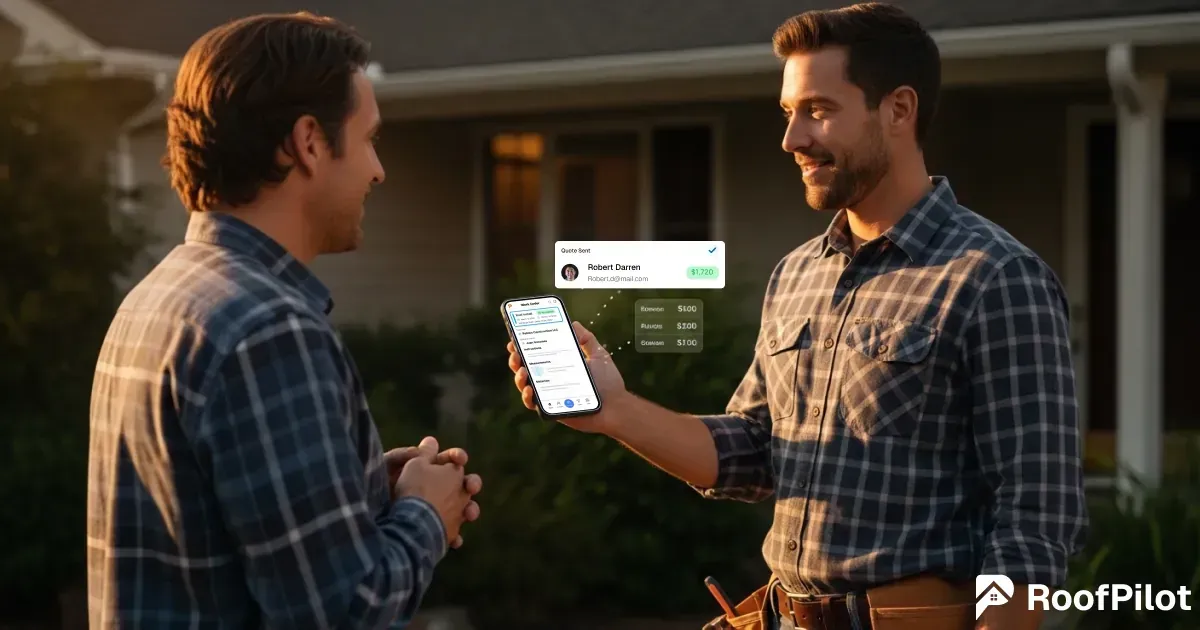
Proposal generation converts a completed estimate into a branded, professional document in under two minutes. Professional roofing proposals built on templates cover scope of work, material specifications, timeline, payment terms, and warranty information. They're ready to walk through with the homeowner on the spot or send digitally before leaving the property.
When these three tools live in one integrated platform, the multi-day estimation process compresses into a single appointment.

On-Site Quoting: How to Do It Well

Technology gets you most of the way there. Process and presentation close the job.
Before arriving at the property, pull the aerial measurements for the address and review what the roof looks like before you've physically seen it. This lets you arrive with a rough cost range already in mind — which matters because homeowners almost always ask "what do you think this is going to cost?" within the first few minutes. Having an informed answer, even a preliminary one, immediately differentiates you from the roofer who says "I have to run the numbers first."
During the inspection, focus on what aerial imagery can't capture: how many existing layers are present, the condition of visible decking, unusual penetrations, access constraints, and any conditions that might add scope or cost. Document everything with photos. Walk the homeowner through what you're finding — this builds trust and addresses their questions before they ask them.
When building the estimate on-site, don't rush the numbers to perform speed. "Instant" describes the process, not the attitude. Check that the waste factor matches the roof complexity, add any site-specific adjustments, and confirm the estimate is complete before presenting it. An estimate that requires a revision the next day costs more goodwill than the few extra minutes of care would have.
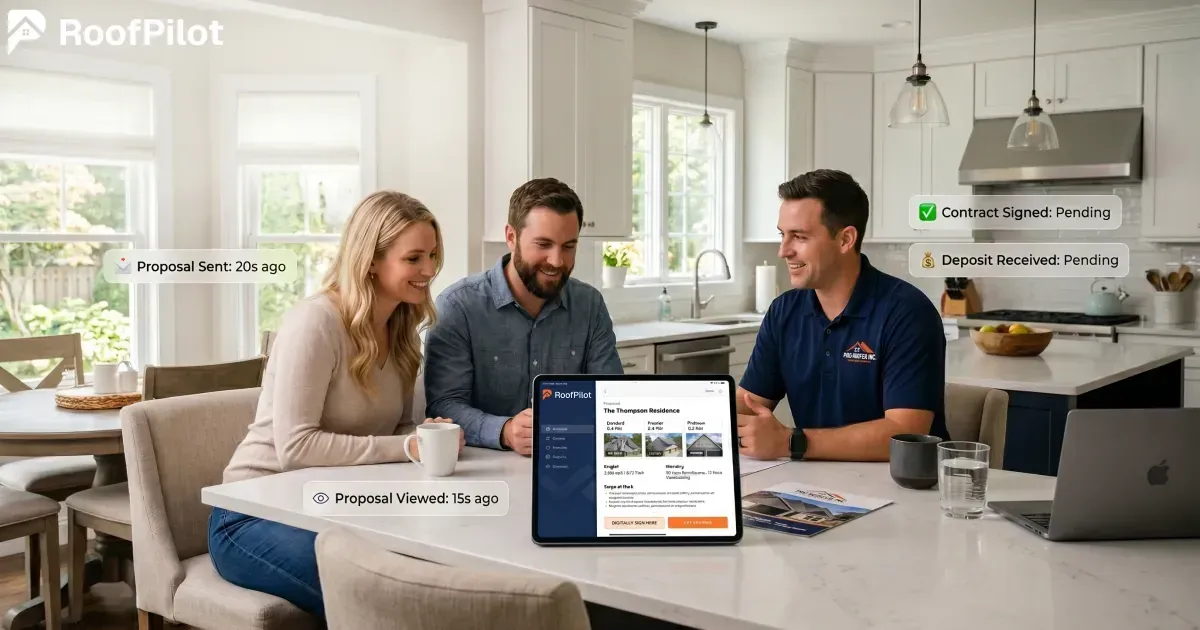
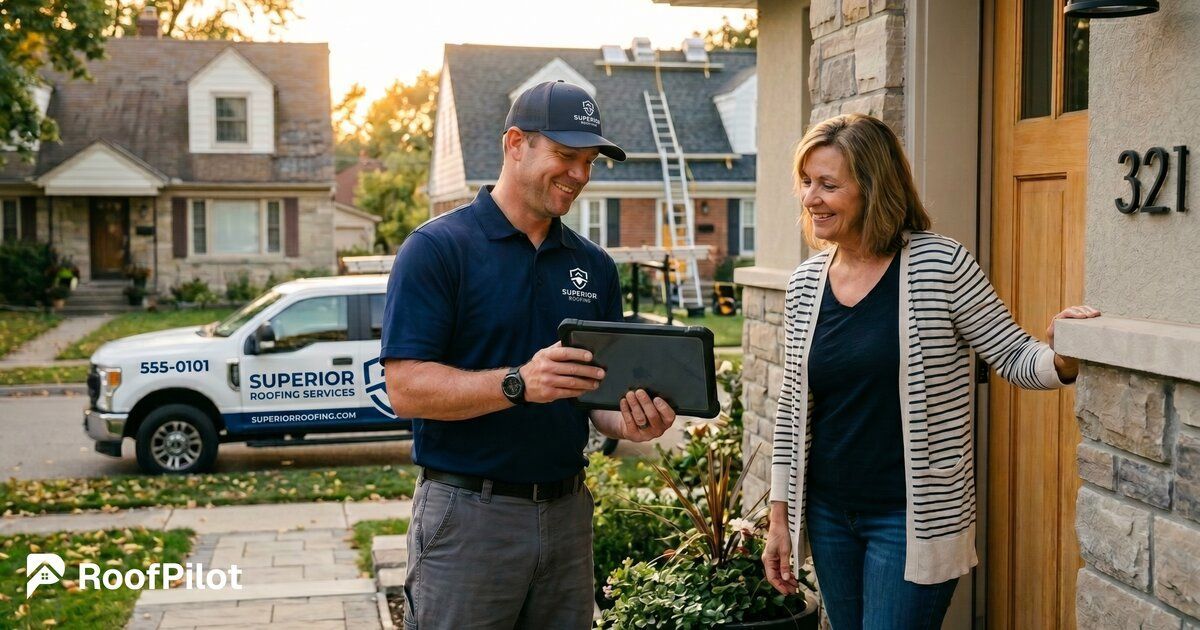
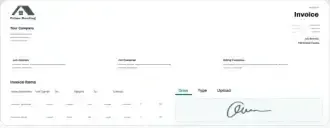
When presenting the proposal, go through it rather than just handing it over. Cover the scope, materials, and timeline. Ask whether the numbers match their expectations. Ask if they have questions. If they're ready to move forward, have a clear path for them: digital signature on the spot, deposit by card or bank transfer. The job closes before you leave.
What this means for your business: On-site closing is a skill that develops with repetition. The first few times you attempt to quote and close in a single appointment, the workflow will feel unfamiliar. After a dozen jobs it becomes natural — and your close rate will reflect it.
Balancing Speed with Accuracy
The concern most roofers raise about fast estimates is accuracy — that moving quickly through measurements and calculations invites errors that come back as expensive change orders or margin problems.
In practice, technology-assisted estimating is often more accurate than manual approaches because it removes the error-prone steps. Aerial measurement eliminates the imprecision of footprint-plus-pitch estimates done from the ground. Pre-built material quantity formulas eliminate the math mistakes that happen when building estimates by hand after a long day. Template-based proposals ensure no cost category gets forgotten.
The areas where speed genuinely requires caution are the site-specific conditions that automated tools cannot see: layer count, decking condition, access challenges, HOA requirements, code compliance issues. These require eyes on the property and professional judgment — and they should. Build time for a thorough site inspection into every appointment regardless of how fast the estimate itself takes to produce.

For complex roofs — steep pitch with multiple dormers, unusual geometry, commercial applications — plan for more time. Instant estimates are most reliable on standard residential re-roofs. When you encounter something unexpected mid-estimate, it's always better to say "let me verify this and send you the updated numbers this afternoon" than to rush out a number that turns out to be off.
The Bottom Line
Speed is a competitive advantage in roofing sales not because homeowners don't care about quality or price, but because fast estimates combined with professional presentation signal that the roofer is organized, capable, and easy to work with. Those signals reduce the perceived risk of hiring someone new and accelerate the decision.
With aerial measurement tools, integrated estimating, and professional proposal generation, the technology to estimate in minutes is available to any roofer willing to set up the workflow. The process discipline — arriving prepared, inspecting thoroughly, presenting confidently — is what separates roofers who use these tools effectively from those who have them but haven't changed how they work.
Quote roofing jobs in minutes. Close more business.
RoofPilot combines aerial measurements, integrated estimating, and professional proposals in one platform — so you can go from site visit to signed proposal in a single appointment.