July 10, 2026
Digital Signatures for Roofing Contracts
Author
9 minute read
Share

Paper contracts slow down roofing sales at exactly the wrong moment. A homeowner who just agreed to move forward needs to print a document, find a pen, sign it, scan or photograph it, and send it back. A surprising number of homeowners don't have a working printer. A larger number have a printer somewhere and will get around to it when life settles down — which often means the momentum from your appointment dissipates before the document comes back. While you wait, a competitor who made signing a two-tap process on a phone is already scheduled.
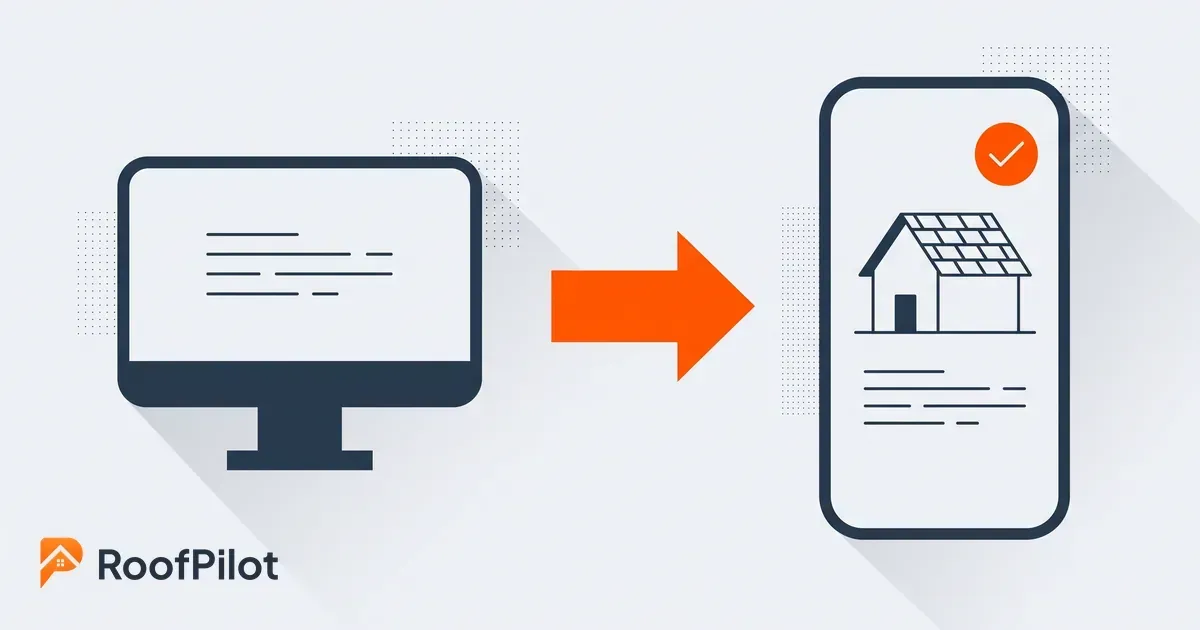
Digital signatures eliminate every step in that sequence. A homeowner can receive a proposal link, read through it on their phone, sign with a finger or stylus, and trigger a deposit payment — all within minutes of your appointment ending. This guide covers the legal foundation for e-signatures in roofing, the practical options for implementing them, and the best practices that get contracts signed faster.
Are Digital Signatures Legally Binding?

Yes — and the legal foundation has been in place for over two decades. The Electronic Signatures in Global and National Commerce Act (ESIGN), signed into federal law in 2000, establishes that electronic signatures carry the same legal weight as handwritten signatures for virtually all commercial transactions. Home improvement contracts, construction agreements, and service authorizations are all covered. As the Federal Trade Commission has noted, ESIGN ensures that contracts entered into electronically will be legally effective and valid. This is the strongest active FTC page confirming electronic records/signatures satisfy written-form requirements under ESIGN.
Alongside ESIGN, the Uniform Electronic Transactions Act (UETA) has been adopted by 49 states and the District of Columbia, further reinforcing that electronic contracts cannot be denied legal enforcement solely because they exist in digital form. A roofing contract signed electronically is as enforceable as one signed on paper — and in practice, better documented, since e-signature platforms generate a timestamped audit trail of every interaction that paper contracts don't produce.
The very few categories that require handwritten ("wet") signatures — wills, certain family law documents, specific real estate instruments — don't include home improvement or construction contracts. Your roofing contracts are fully covered by both federal and state law.
For the complete guide to what your roofing contracts should contain to be enforceable, see the guide on roofing contract requirements.
What Actually Constitutes a Valid E-Signature
Under ESIGN and UETA, an electronic signature can take multiple forms: a typed name, a clicked "I Agree" button, a drawn signature on a touchscreen, or a digital certificate. What makes it valid isn't the form — it's the combination of three elements. First, clear intent to sign: the customer deliberately performed the signing action rather than it happening accidentally. Second, consent to electronic signatures: typically established by a brief disclosure the customer acknowledges when they open the document. Third, association of the signature with the specific document: the signature is tied to the exact version of the contract they reviewed.
Reputable e-signature platforms handle all three automatically. The audit trail they generate — IP address, timestamp, document fingerprint, and signing sequence — is actually stronger evidence of contract execution than a paper signature, which can be challenged more easily without corresponding metadata.
The Speed Difference in Practice

The practical impact of digital signatures on close rate comes down to friction. Every step between "yes, I want to move forward" and a signed contract is an opportunity for the homeowner to reconsider, get distracted, receive a competing proposal, or simply procrastinate until the urgency fades.
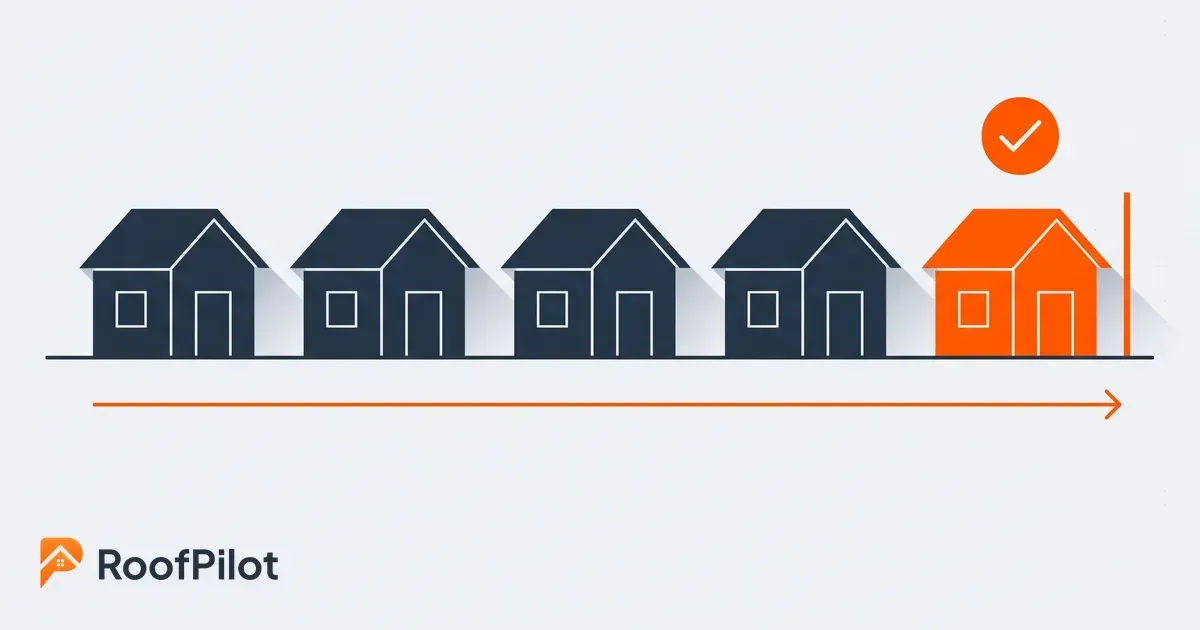
Consider the difference in timeline. With a paper contract: proposal is delivered, the homeowner finds time to print it (possibly days later), signs it, scans or photographs it, and emails it back — a process that typically takes two to five days and often longer. With a digital signature: you send a link when you leave the property, the homeowner opens it that evening on their phone, signs in a minute, and you have an executed contract the same day.
That compression matters. Roofing decisions are frequently made on urgency — a storm event, a visible leak, an upcoming winter. Homeowners who decide quickly act quickly. Those who have to wait on a friction-filled signature process often cool off. The roofer who makes it easy to say yes converts more of the homeowners who intended to hire them.
How to Implement E-Signatures in Your Business
There are two main approaches, and the right one depends on your current setup.
Standalone e-signature services — platforms like DocuSign, Adobe Sign, or HelloSign — work by uploading your contract document, placing signature fields, and sending a signing link to the customer. The customer signs through the platform and you receive a completed copy. These tools are widely recognized and legally solid. Their limitation is that they sit outside your proposal and CRM workflow: you build the proposal somewhere, export it, upload it to the signing platform, send it, and then manually update your records when it comes back. The more steps in the process, the more places it can break down.
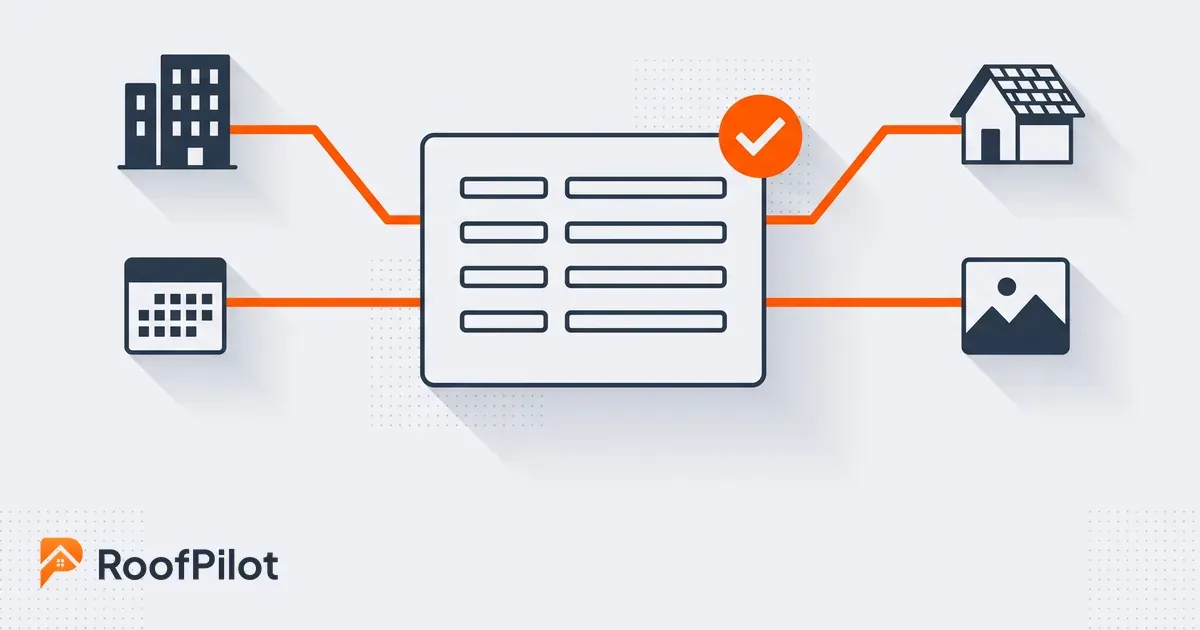
Integrated roofing proposals with built-in e-signatures eliminate that fragmentation. The proposal is built and sent from the same system, the signature is captured within that flow, and when the customer signs, the deal status in your CRM updates automatically, a deposit invoice is triggered, and the signed document is stored against the customer record — all without any manual intervention. This is the implementation that produces the fastest time-to-signature and the most reliable tracking of which proposals are pending versus executed.
For roofers who do a small volume of contracts and want to start without changing their existing proposal process, a standalone tool is a reasonable first step. For any company doing consistent volume, integration with the proposal and CRM workflow is worth the switch.
Best Practices for Getting Contracts Signed Quickly
The system matters, but so does the practice around it. A few habits consistently improve signing rates.

Send the proposal link immediately after the appointment — before you've left the neighborhood. Homeowners are most engaged with the decision in the hour after the inspection. A link that arrives the next morning is competing with everything else on their agenda for the day. A link that arrives while they're still thinking about the conversation often gets opened the same evening.
When you send, include a brief framing message — either a text or email note that explains what they're receiving and what to do. "I just sent over the proposal. It has everything we discussed plus a link to sign if you're ready to move forward. Call me if you have any questions." This removes the friction of a customer opening a link with no context and not knowing what action is expected.
Timing follow-up based on document activity improves the quality of the conversation. If you can see that a homeowner opened the proposal and spent eight minutes on it, calling within the hour catches them while the details are still fresh. Calling before they've opened it produces a shorter conversation — they haven't formed their questions yet.
For homeowners who express hesitation about signing electronically, the framing is simple: these are the same systems banks, insurance companies, and real estate transactions use every day. The audit trail they produce is actually more secure than a paper signature. Having a printed backup available for the rare customer who genuinely won't proceed digitally keeps you from losing a deal over the format.
Connecting Signature to Payment Collection

The most effective integration of e-signatures is when they're connected directly to deposit collection. A customer who signs a contract and then receives a separate invoice to pay later has two opportunities to reconsider. A customer who signs and immediately encounters a deposit payment screen — while their decision is fresh and their phone is already in their hand — has one.
The deposit collected at signing does several things at once: it confirms the commitment, it funds the material order, and it reduces the likelihood of cancellation. Homeowners who've paid a deposit rarely back out. Homeowners who've only signed a digital document occasionally do, because the financial commitment hasn't landed yet.
What this means for your business: Signature plus payment collection in a single flow is the complete conversion event for a roofing lead. Building that flow into your process — through integrated proposal software where e-signature triggers a payment link automatically — is the operational change that turns more appointments into committed jobs.
Documentation and Record Keeping
Every signed contract should be stored where it can be accessed by anyone who needs it. Integrated proposal platforms attach signed documents to the customer record automatically. For standalone e-signature tools, establish a process for downloading and filing signed contracts in your CRM or job management system immediately after receipt.
The audit trail generated by the signing platform — timestamp, IP address, document version, signing sequence — should be preserved along with the document itself. In any dispute situation, this metadata is what establishes when the contract was executed and by whom.
The Bottom Line
Digital signatures aren't a technology upgrade — they're a sales process change. The reduction in friction between a customer's decision and a signed contract is measurable in close rate terms, and the time-to-signature improvement is visible from the first day you implement it.
RoofPilot has e-signatures built into the proposal workflow, connected to CRM deal tracking and deposit collection — so every proposal sent has a clear path from delivery to signed contract to collected deposit without manual steps between them.