June 19, 2026

How to Track Roofing Lead Sources and Know What Marketing Actually Works

Author

Liam Walsh

9 minute read

Share

Roofer reviewing roofing marketing dashboard with closed jobs, revenue, cost per lead, and yard sign performance metrics on laptop

Most roofing companies are spending marketing dollars without knowing which ones are actually producing closed jobs. They know what they spent on Google Ads last month. They know roughly how many calls came in. But which of those calls turned into signed contracts — and at what cost per job? Without lead source tracking that follows a lead all the way through the pipeline to close, there's no answer to that question. As the U.S. Small Business Administration notes, small businesses that measure marketing performance by outcome rather than activity consistently make more effective budget decisions.


This guide covers how to set up lead source tracking, calculate true ROI by channel, and build the monthly review process that turns that data into smarter marketing decisions. If you're still building out your lead generation mix, the guide on roofing lead generation covers the full channel strategy first.


Why Lead-Level Data Isn't Enough


The gap between what most roofers know about their marketing and what they need to know is typically at the conversion point. Looking at lead volume by channel without following through to closed jobs produces a misleading picture.


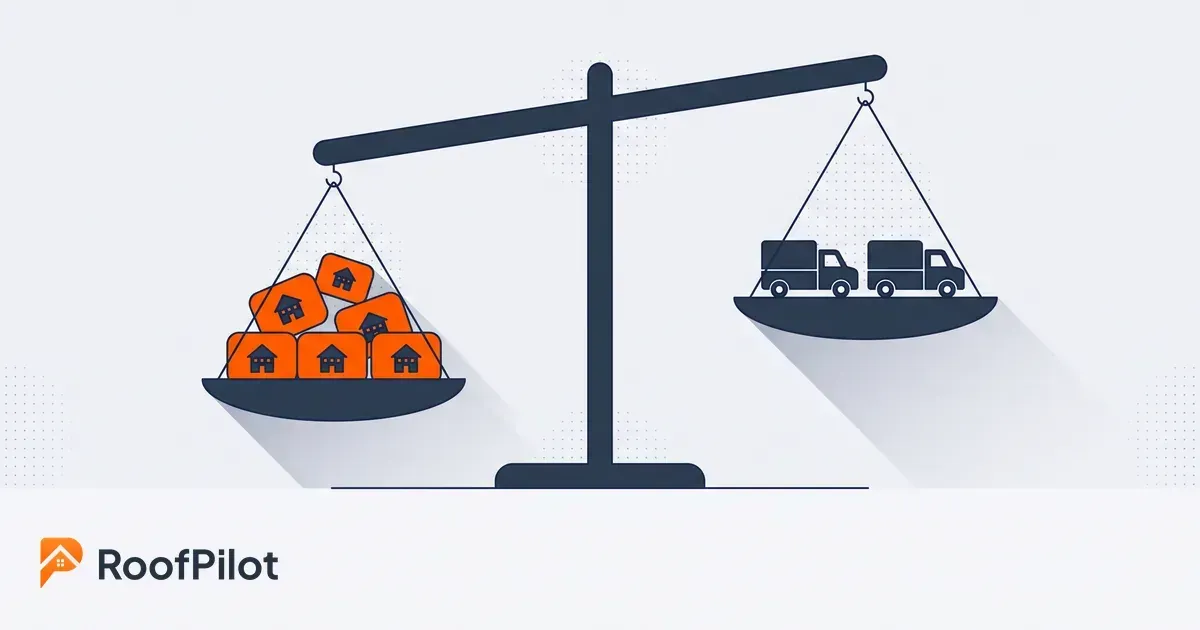
Consider a concrete example. A company spends $3,000 per month on paid search ads and generates 50 leads — a cost per lead of $60. Their referral program costs $500 per month in bonuses and produces 10 leads — also roughly $50 per lead. At the lead level, these channels look equivalent.


But the close rates are completely different. Paid search leads close at 10% — 5 jobs from 50 leads, a cost per job of $600. Referral leads close at 50% — 5 jobs from 10 leads, a cost per job of $100. Average job value from referrals is often higher too, since referred customers come with a pre-existing trust relationship. The referral channel delivers roughly nine times better ROI than paid search, but that's only visible when you track through to close.


Most roofing companies make marketing budget decisions based on cost per lead, because that's the easiest metric to see. The result is often chronically underinvesting in high-close channels and overspending on channels that generate volume without proportional revenue.

Roofer tracking roofing lead sources on laptop in truck with breakdown of Google Ads, Google Business Profile, referrals, and yard signs

Setting Up Lead Source Tracking


Effective tracking is part technical setup and part process discipline. Both are required.


Define a standard source list first. Before configuring anything, create a consistent list of lead sources that everyone in the company will use: Google Ads, Google Business Profile, referral (customer), referral (realtor/insurance agent), website organic, canvassing, direct mail, yard sign, trade show, and a catch-all "other." The exact categories depend on which channels you use, but the list must be standardized — every person who enters a lead must select from the same options, not type whatever they feel like. Inconsistent categorization is the most common reason lead source data becomes unreliable.


Add source capture to your website forms. A "How did you hear about us?" dropdown on every contact form, with options matching your standard source list, captures online leads automatically. For paid ad campaigns, add UTM parameters to your ad URLs — this allows your CRM or analytics to tag website leads by the specific campaign that generated them.


Use call tracking for phone leads. Phone calls are often the majority of roofing leads and the hardest to attribute accurately. Call tracking services assign different phone numbers to different marketing channels — the main website, your Google Ads, yard signs, each gets its own number. When a homeowner calls the yard sign number, the call gets tagged as "yard sign" automatically. The setup takes an hour and the data it produces is significantly more reliable than asking callers where they heard about you.


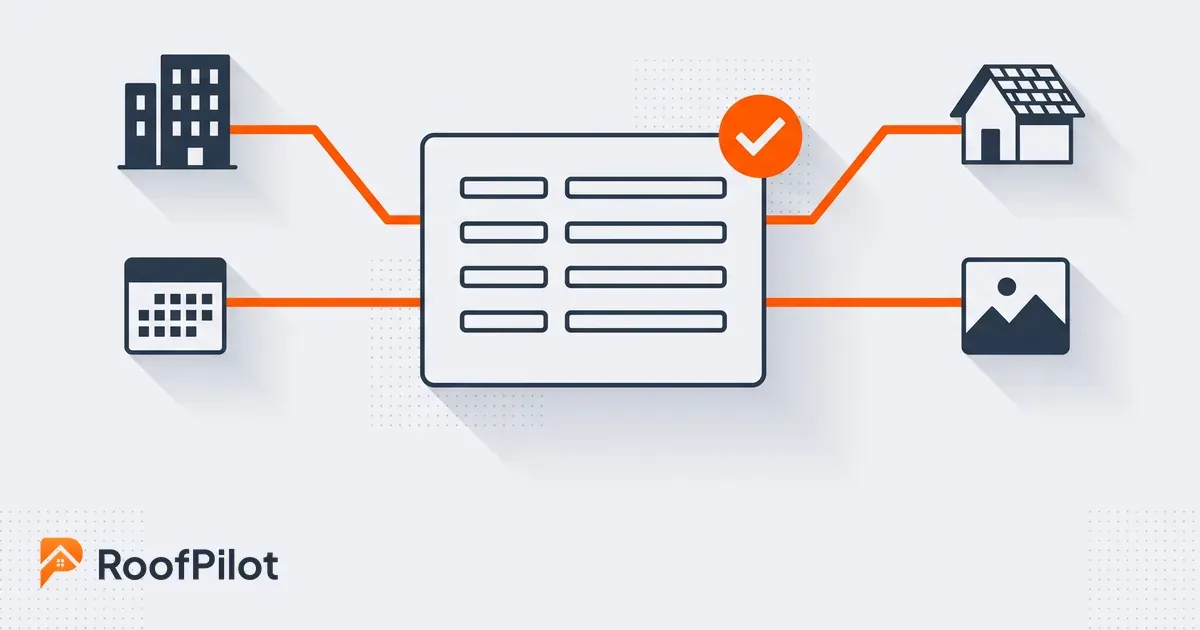
Configure your CRM to capture and maintain source attribution. The source should be a required field when creating any new lead — not optional, not free-text. And critically, that source field must stay attached to the record as it moves through the pipeline from lead to estimate to closed job. If you can only report on where your leads came from but not where your closed jobs came from, the tracking system hasn't solved the problem. For guidance on choosing a CRM that handles this correctly, see the guide on the best CRM for roofing.


Enforce process discipline on the team. Technology captures what it can automatically. Referrals, canvassing leads, and phone-call leads that don't come through tracked numbers require manual entry. This only works consistently if the team understands why it matters and lead source is treated as a required field without exception. A monthly audit of leads with "unknown" or missing source attribution helps catch gaps early.


What Good Lead Source Data Looks Like


Once tracking is in place and has been running for at least 60–90 days (less than that doesn't give reliable patterns), the useful metrics to review are:


Leads by source — volume by channel, trended over time. Useful for identifying whether a channel is growing or declining.


Close rate by source — what percentage of leads from each channel convert to a signed contract. This is the metric that most reveals which channels are actually worth what you're spending on them.


Cost per closed job by source — total channel spend divided by closed jobs from that channel. This is the number to optimize, not cost per lead.


Average job value by source — some channels produce customers who buy larger jobs. Referrals often skew higher because referred customers trust the recommendation and are more likely to choose better materials or add scope items.


ROI by source — revenue generated from the channel minus what was spent on it, divided by what was spent. This is the simplest summary of whether a channel is creating value.


The formula is straightforward: Channel Revenue minus Channel Cost, divided by Channel Cost. A paid search channel that generated $96,000 in jobs from $2,500 in ad spend has an ROI of 37:1. A channel generating $20,000 in jobs from $3,000 in spend has an ROI of 5.7:1. Both are positive, but one deserves more budget.


Roofer analyzing roofing marketing ROI and channel performance on large monitor showing referral leads, Google Ads, and pipeline value

Where Roofing Channels Typically Land


Close rates vary by market and execution, but referral sources — customer referrals, real estate agent referrals, insurance agent referrals — consistently produce the highest close rates in roofing, typically 40–60%. These leads arrive with built-in trust and often with higher urgency than cold leads. Google Business Profile (organic local search) and Google Local Service Ads also produce strong close rates, typically 25–40%, because they capture homeowners actively searching for roofing help. Paid search (standard Google Ads) runs 15–25% depending on market competition. Lead aggregator services — platforms that sell leads to multiple competing roofers — typically close at 10–20% because the lead is simultaneously receiving calls from your competitors.


Lower close rates don't automatically mean lower ROI, but they do mean higher volume is required to justify the spend. A channel with a 10% close rate needs to produce very cheap leads to compete on a cost-per-job basis with a channel closing at 40%.


Making Decisions From the Data


The monthly review process doesn't have to be complicated. Once a month, pull the lead source report from your CRM reporting tools and answer three questions: which channels are producing the most closed revenue per dollar spent, which are underperforming relative to their cost, and where does the current budget allocation line up or misalign with those results?


The decision framework from that review is straightforward. Channels performing well: can you scale them? Invest more. Channels performing poorly despite sufficient time: can you improve execution, or should you reduce/eliminate the spend? New channels with insufficient data: give them a minimum of 90 days before judging, but track carefully from day one.


Budget reallocation based on ROI data rather than habit or momentum is typically the highest-leverage marketing decision a roofing company can make. Companies that systematically move budget toward higher-ROI channels and away from lower-performing ones see compounding improvements in marketing efficiency over time.


What this means for your business: The goal isn't to find one perfect channel and go all-in. It's to understand the true cost-per-job across your whole marketing portfolio and invest accordingly — reducing what doesn't work and scaling what does.


Roofer reviewing roofing marketing dashboard with attribution failures, missing data, and offline tracking issues on computer

Common Tracking Mistakes to Avoid


Inconsistent source categorization is the most common problem — different team members using different labels for the same source until the data is too fragmented to analyze. Solve this with a locked dropdown and no free-text option.


Tracking leads but not closed jobs is the second most common failure. The close rate is the number that actually matters, and it's invisible if attribution doesn't flow through the full pipeline.


Ignoring offline sources skews the picture toward digital channels, which look more measurable. Canvassing, yard signs, truck wraps, and word-of-mouth referrals that arrive via phone call are real lead sources that deserve attribution. The "How did you hear about us?" process should apply to every lead, regardless of how they came in.


Evaluating channels too quickly based on insufficient data leads to abandoning things that would have worked with more time. Most digital channels need at least 90 days of consistent execution before the data is meaningful.


The Bottom Line


Marketing without tracking is spending without learning. Every dollar that goes into lead generation is an investment — and like any investment, it should be evaluated based on actual return, not activity or intent.


RoofPilot captures lead sources automatically from web forms, maintains attribution through the entire pipeline to close, and generates the source-performance reports that make monthly marketing reviews straightforward. The result is marketing spend that's continuously reallocated toward what's actually working.


Stop guessing. Start knowing what's working.


RoofPilot's CRM tracks every lead from first touch to closed job — so you always know which marketing is producing revenue, not just leads.


Start for Free | See CRM Features


Roofer closing more roofing jobs by presenting clear proposal on tablet to smiling homeowner
By Liam Walsh June 15, 2026
How to close more roofing jobs without adding headcount — speed, professional proposals, a repeatable sales process, and the follow-up system that converts.
Roofer receiving multiple roofing leads from Google search, Facebook ads, incoming calls, etc.
By Liam Walsh June 12, 2026
How to generate more roofing leads — proven strategies from Google Business Profile to storm marketing, referrals, and the follow-up system that closes more jobs.
Overwhelmed roofer with chaotic paperwork and sticky notes versus organized roofer using roofing CRM
By Liam Walsh June 8, 2026
How to choose the best CRM for your roofing business — essential features, what separates roofing-specific CRMs from generic tools, and red flags to avoid.
Professional using advanced roofing calculator app with 3D holographic roof measurements and real-ti
By Liam Walsh June 5, 2026
How to choose the best roofing calculator app — what features matter, why integrated platforms outperform standalone tools, and what to look for before you commit.
Roofer using roof waste calculator on tablet to accurately measure materials and reduce waste compar
By Liam Walsh June 1, 2026
How to reduce roofing material waste with accurate measurements, correct waste factors by roof type, and ordering practices that save thousands annually.
 roofer struggling manual calculations versus calm roofer creating instant roof estimate on a tablet
By Liam Walsh May 29, 2026
How to create instant roof estimates that win more jobs — the technology, the on-site process, and why being first with a professional quote matters.
Modern roof estimating with RoofPilot showing $12,847 total cost and easy proposal sending on a tabl
By Liam Walsh May 25, 2026
How to estimate a roofing job accurately — materials, labor, waste, overhead, and profit — plus the common mistakes that cost roofers money on every job.
Roof size calculator on a tablet showing accurate measurements including total square footage.
By Liam Walsh May 18, 2026
How to calculate roof square footage accurately — ground-based estimates, physical measurement, and automated tools.
Modern house with digital roof pitch calculator overlays showing 8/12 and 4/12 slopes
By Liam Walsh May 15, 2026
How to calculate roof pitch, read the X/12 ratio, convert to degrees, and use pitch factors to get accurate material quantities on every job.
roofing software compaison
By Liam Walsh May 13, 2026
Roofing software — one platform or multiple specialized tools? Compare real costs, integration trade-offs, and find the right fit for your business size.