June 15, 2026

Roofing Sales: How to Close More Jobs Without Hiring More Salespeople

Author

Liam Walsh

9 minute read

Share

Roofer closing more roofing jobs by presenting clear proposal on tablet to smiling homeowner

Growing a roofing company without adding salespeople isn't about luck or a particularly gifted closer — it's about closing a higher percentage of the leads already coming in. Most roofing companies close between 20% and 35% of their estimates, which means 65–80% of the prospects they spend time and money generating walk away without signing. According to the Harvard Joint Center for Housing Studies, home improvement spending continues to rise as housing stock ages — which means the demand is there. The question is whether your sales process is converting its share of it.


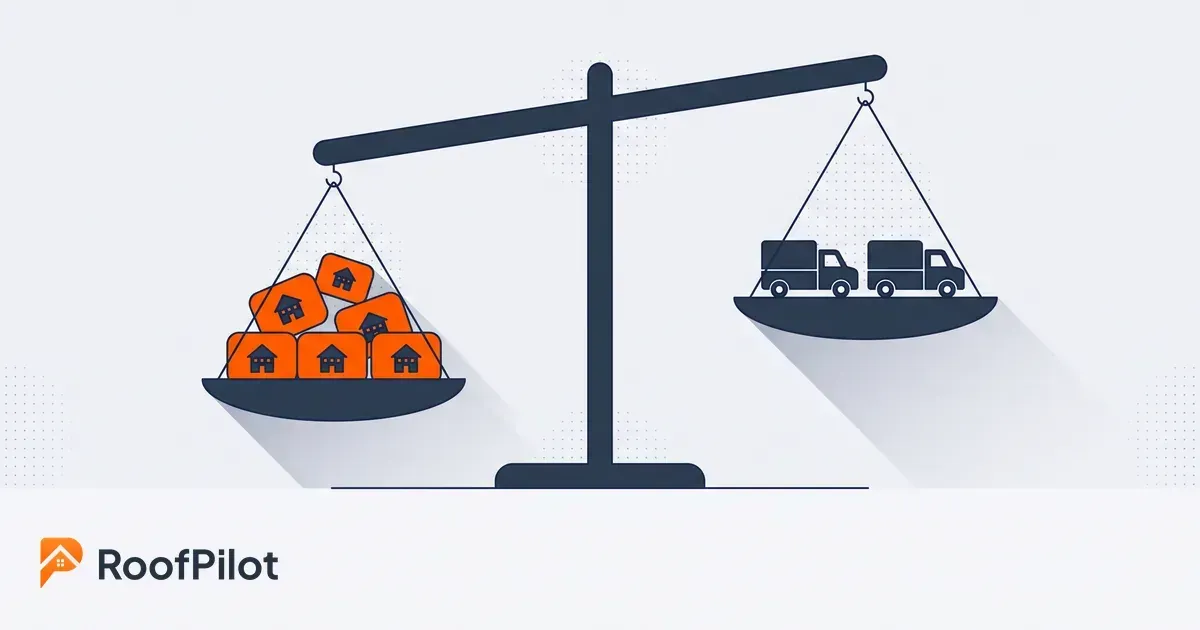
Even a modest improvement in close rate transforms the business math. A company running 100 monthly leads at $12,000 average job value and a 25% close rate generates $300,000 per month. Move that close rate to 35% and monthly revenue becomes $420,000 — a 40% increase from the same lead volume. No new marketing spend. No new hires. If you still need more leads coming in before close rate becomes the bottleneck, the guide to generate more roofing leads covers the full strategy. This guide focuses on what happens once the lead is in hand.

Roofer using follow-up system on tablet to close pending roofing sales and increase conversion rates

Where Deals Actually Get Lost


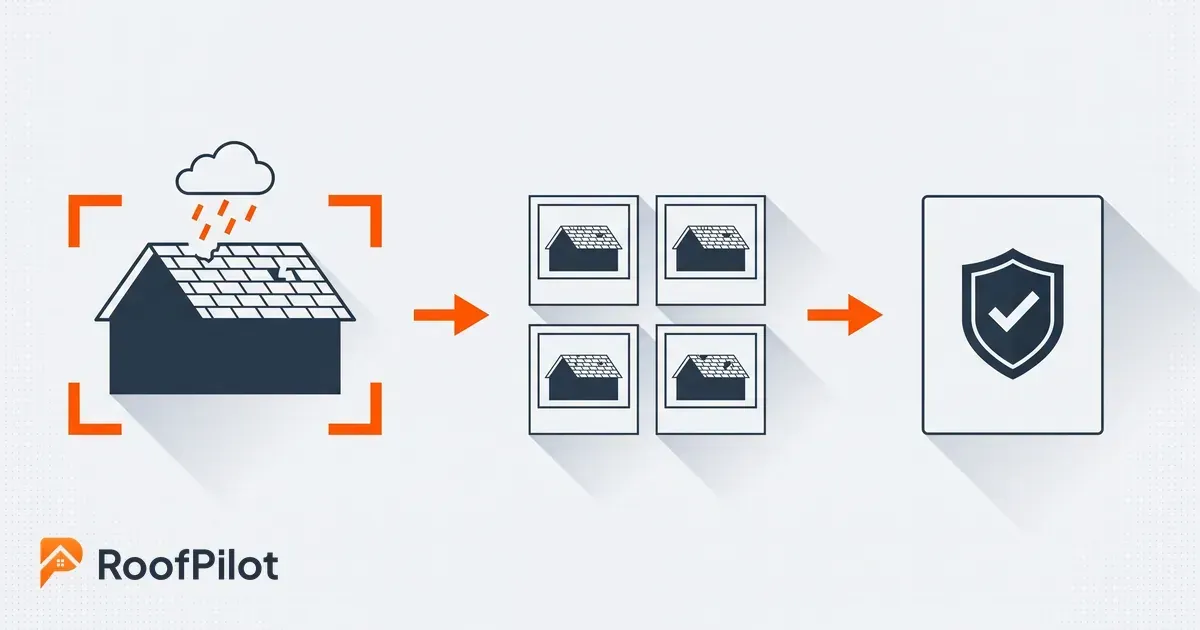
Before working on what to improve, it helps to understand why deals are being lost in the first place. Most close rate problems fall into one of four categories.


Speed failures account for roughly 30–40% of lost deals — the competitor responded faster and delivered a professional quote first. Follow-up failures account for another 20–30% — the estimate went out, no one responded, and no one followed up. Presentation failures are responsible for 15–20% — the price was competitive but the proposal looked unprofessional and trust wasn't established. Process failures — too hard to say yes, unclear path to signing, no digital payment option — make up the remaining 10–15%.


The good news is each of these is fixable without adding people.


Speed: The Factor That Wins More Deals Than Price


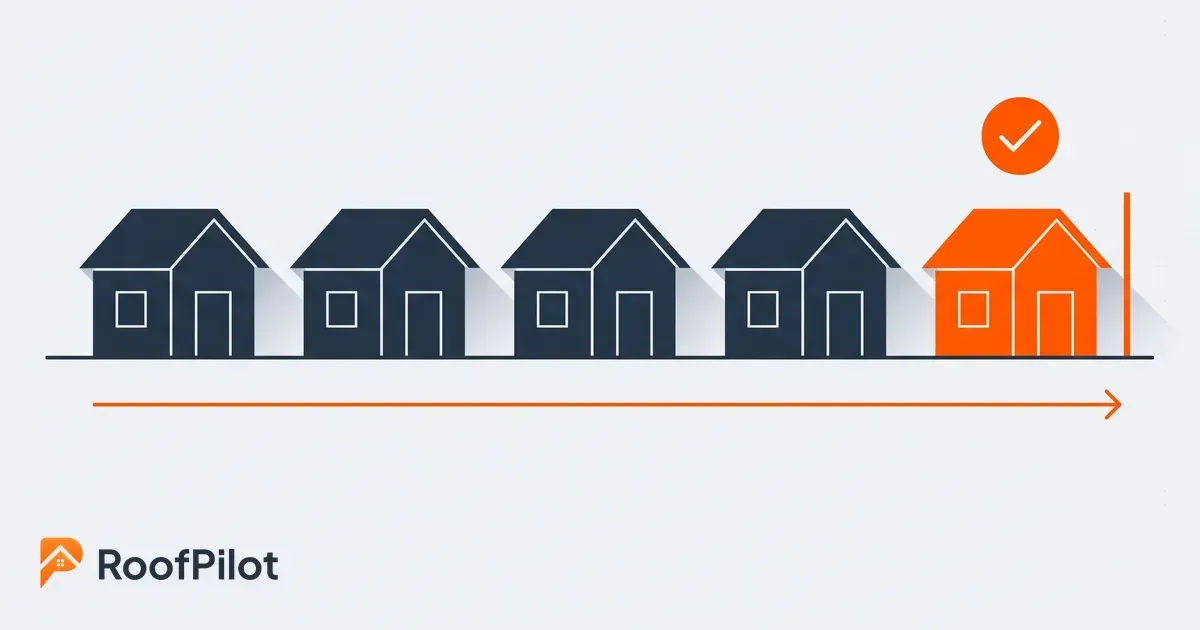
If only one area gets attention, it should be response and quote speed. The homeowner requesting estimates is almost always talking to multiple roofers simultaneously. The first to deliver a clear, professional estimate is the one who sets the standard everything else gets compared against.


For new leads, the goal is response within minutes. For estimate delivery after the site visit, the goal is same-day or on-site. Every day between the inspection and the estimate gives the homeowner time to receive competitive quotes, reconsider, or simply lose urgency about the problem.


The practical path to faster estimates runs through better tooling. Aerial measurement tools pull accurate roof dimensions in minutes without requiring a tape measure. Pre-built material pricing means no time spent looking up costs. Template-based roofing proposals eliminate the blank-document problem. With these in place, the standard workflow becomes: arrive at the property, pull measurements, build the estimate during or immediately after the inspection, and present before leaving. Same-day estimates stop being the exception and become the default.


What this means for your business: The roofer who delivers a professional, accurate estimate the same day wins the deal at a disproportionate rate — not because they're necessarily better, but because they've demonstrated organization and capability before the conversation has even gotten to price.


Roofer delivering professional roofing sales pitch on tablet to happy homeowners in front of their house

Professional Presentation: Looking Like a Company Worth Trusting


Homeowners can't evaluate roofing quality before the job is done. What they can evaluate is how professional a company appears — and they use presentation as a proxy for workmanship quality. A branded, well-organized proposal communicates competence and reliability in a way that a handwritten estimate on a clipboard simply doesn't.


Professional presentation starts with the physical impression: a uniformed crew, a clearly marked truck, arriving on time. It continues through the inspection — explaining what you're seeing, documenting with photos, educating rather than selling. It culminates in the proposal.


A winning proposal covers the scope of work clearly, specifies materials by name and grade, gives a realistic timeline, explains warranty coverage, and presents your company's credentials. Format matters: clean layout, your logo and colors, legible type, no spelling errors. Digital delivery with electronic signature capability allows the customer to sign from any device rather than printing, signing, and scanning — which is a friction point that delays or loses deals more often than roofers realize.


Offering good-better-best options is one of the most consistent close rate improvements available. When a customer receives three clearly differentiated options at different price points, they become the decision-maker about which tier fits their situation rather than the person deciding whether to hire you at all. The middle option typically closes most often, and the premium option has a meaningful uptake rate among customers who want the best materials available.


A Repeatable Sales Process


Consistent close rates require consistent processes. A roofer who closes 35% of estimates because they're talented at reading people will get inconsistent results when they're tired, rushed, or handing appointments to a second salesperson. A roofer with a documented process will be consistent regardless of the day.


The inspection and presentation structure that works in practice has five stages, each with a clear purpose. The introduction is about rapport and discovery — understand the homeowner's situation, what prompted the call, how urgent the problem is, and what outcome they're hoping for. The inspection is systematic documentation — measure everything, photograph conditions, note anything that affects scope. The solution presentation explains options and materials, addresses the specific concerns the homeowner raised, and educates without pressure. The proposal walkthrough covers scope, materials, timeline, pricing, and warranty — line by line, with space for questions. And the close is simply asking clearly: "Are you ready to move forward? I can get you on the schedule this week."


What this means for your business: Most lost deals happen not because the price was wrong but because the close was never clearly attempted. Homeowners rarely volunteer "I'm ready to sign." They have to be asked. Build the ask into every appointment as a non-optional step, and your close rate will improve before you change anything else.


Objections are part of the process, not obstacles to it. "I need to think about it" usually means a specific concern hasn't been addressed. "I'm getting other quotes" is an opportunity to differentiate. "It's more than I expected" opens a conversation about value and options. Having scripted, practiced responses for the four or five most common objections makes the difference between a confident answer that keeps the deal alive and a fumbling response that lets it fall away.


Roofer in truck managing roofing sales process with CRM dashboard, proposals, and follow-up reminders on tablet

Follow-Up: The Majority of Sales Happen Here


Industry data consistently shows that the majority of closed deals happen after multiple contact attempts, yet most roofers follow up once or twice after sending an estimate and then move on. The leads that don't respond immediately aren't necessarily lost — they're often still deciding, waiting on a spouse's input, dealing with competing priorities, or simply needing a reason to stop procrastinating.


A structured follow-up sequence covers the first 30 days with decreasing frequency: same-day email confirming the proposal, a call on day one to confirm receipt and answer questions, a text check-in on day three, a value-add email on day five, a call on day seven, email with a local project reference on day ten, a call at two weeks, and monthly touch points after that until they explicitly say no. The key is that each touchpoint has a purpose — either delivering value (a relevant testimonial, a weather update, a schedule availability note) or asking a specific question that surfaces the real objection.


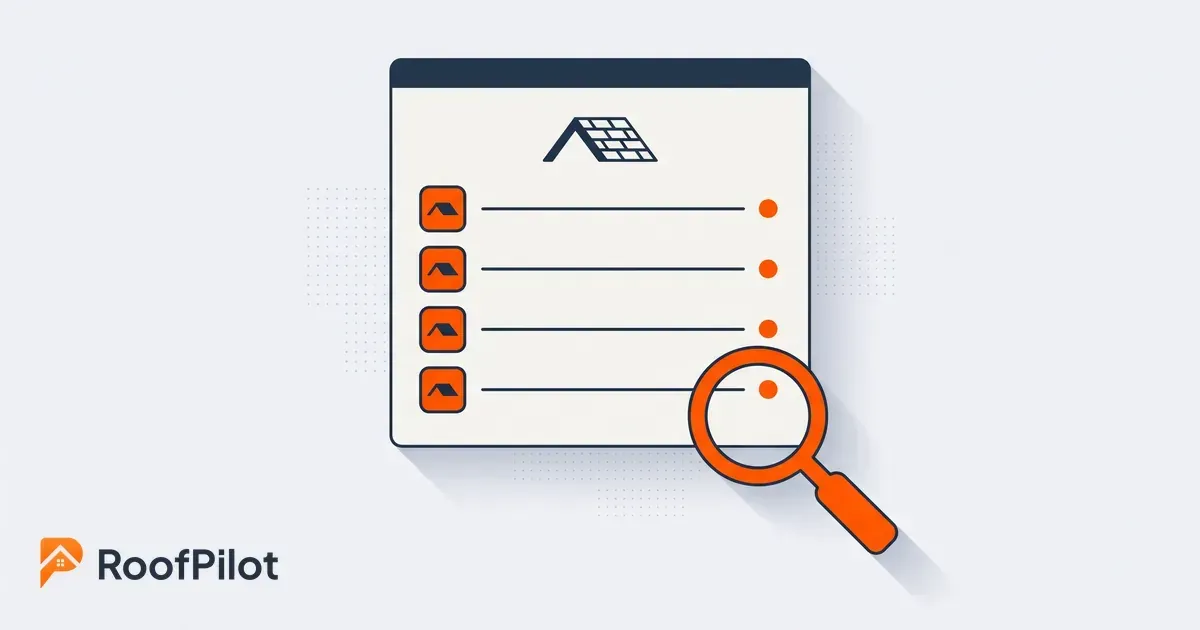
CRM follow-up tools are what make this systematic rather than aspirational. Automatic task creation after each deal stage, reminders for follow-up deadlines, and pipeline visibility showing every deal and its last activity date turn follow-up from a mental burden into a managed workflow.


Pricing Strategy: Beyond Competing on Price


The instinct to lower prices to win more work is common and usually wrong. Market research across home services consistently shows that homeowners are not primarily shopping for the cheapest option — they're looking for the best combination of price, confidence in the company, and perceived quality. A quote that comes in at the bottom of the range often triggers the question "what's wrong with them?" rather than automatic selection.


Pricing strategy for roofing sales comes down to three principles. Know your actual costs so you're not accidentally pricing at a loss. Present options at multiple price points so the customer has choices within your offerings rather than comparing you to the next roofer. Offer financing where possible — the ability to pay over time removes the barrier for homeowners who want the work done but are hesitant about the upfront cost, and it consistently increases average job value.


The Bottom Line


Closing more roofing jobs without adding salespeople is a systems problem, not a talent problem. Speed earns the right to the deal by demonstrating organization and responsiveness. Professional presentation builds trust before any conversation about price. A repeatable process ensures every appointment follows the same disciplined path. Consistent follow-up captures the deals that weren't ready on day one. These four elements together — consistently applied — compound into meaningfully higher close rates over time.


The technology that supports them exists and is accessible. RoofPilot brings measurements, proposals, CRM, and follow-up tools into one platform, so each step of the sales process flows into the next without manual data entry or switching systems.


Close more jobs with the same leads.


RoofPilot's estimating, proposals, and CRM tools help you quote faster, present professionally, and follow up consistently — all from one platform.


Start for Free | See How Proposals Work


Roofer reviewing roofing marketing dashboard with closed jobs, revenue, and cost per lead
By Liam Walsh June 19, 2026
How to track roofing lead sources and calculate true marketing ROI — from setup to monthly review — invest in what actually closes jobs, not just generates leads.
Roofer receiving multiple roofing leads from Google search, Facebook ads, incoming calls, etc.
By Liam Walsh June 12, 2026
How to generate more roofing leads — proven strategies from Google Business Profile to storm marketing, referrals, and the follow-up system that closes more jobs.
Overwhelmed roofer with chaotic paperwork and sticky notes versus organized roofer using roofing CRM
By Liam Walsh June 8, 2026
How to choose the best CRM for your roofing business — essential features, what separates roofing-specific CRMs from generic tools, and red flags to avoid.
Professional using advanced roofing calculator app with 3D holographic roof measurements and real-ti
By Liam Walsh June 5, 2026
How to choose the best roofing calculator app — what features matter, why integrated platforms outperform standalone tools, and what to look for before you commit.
Roofer using roof waste calculator on tablet to accurately measure materials and reduce waste compar
By Liam Walsh June 1, 2026
How to reduce roofing material waste with accurate measurements, correct waste factors by roof type, and ordering practices that save thousands annually.
 roofer struggling manual calculations versus calm roofer creating instant roof estimate on a tablet
By Liam Walsh May 29, 2026
How to create instant roof estimates that win more jobs — the technology, the on-site process, and why being first with a professional quote matters.
Modern roof estimating with RoofPilot showing $12,847 total cost and easy proposal sending on a tabl
By Liam Walsh May 25, 2026
How to estimate a roofing job accurately — materials, labor, waste, overhead, and profit — plus the common mistakes that cost roofers money on every job.
Roof size calculator on a tablet showing accurate measurements including total square footage.
By Liam Walsh May 18, 2026
How to calculate roof square footage accurately — ground-based estimates, physical measurement, and automated tools.
Modern house with digital roof pitch calculator overlays showing 8/12 and 4/12 slopes
By Liam Walsh May 15, 2026
How to calculate roof pitch, read the X/12 ratio, convert to degrees, and use pitch factors to get accurate material quantities on every job.
roofing software compaison
By Liam Walsh May 13, 2026
Roofing software — one platform or multiple specialized tools? Compare real costs, integration trade-offs, and find the right fit for your business size.