August 10, 2026
Why Roofing Businesses Fail: The Patterns That Repeat
Author
9 minute read
Share
Most roofing businesses don't fail because the work was bad. They fail because the business behind the work wasn't built to survive. The cash ran out, the pricing was wrong, the leads weren't followed up, or the owner ran out of capacity before they ran out of ambition. The work was often good. The business wasn't.
In 2026, the roofing industry is more competitive than it's been in years. Labor costs have stayed elevated, material costs are volatile, and homeowners comparison-shop online before they call. The margin for operational error is smaller than it was five years ago. The same patterns that have always sunk roofing operations are more lethal now because the conditions have less slack in them.
The encouraging part is that roofing business failure is almost entirely predictable. The same mistakes appear over and over, and all of them are preventable with awareness and the right systems. This guide covers the patterns that repeat most often, not as a cautionary tale, but as a map of what to watch for and fix before it becomes a crisis.
The Numbers Are Worth Knowing
Business failure rates in roofing follow the same general pattern as construction broadly, which consistently has one of the higher failure rates among industries tracked by labor and economic researchers. The National Federation of Independent Business tracks the problems small business owners rank highest, and the ones near the top, finding and retaining qualified workers and broad cost pressures, align closely with what strains roofing operations specifically.
The typical pattern isn't a sudden collapse. It's a slow erosion. Revenue is inconsistent, margins are thin, the owner works more and enjoys it less, something goes wrong that would have been manageable with more financial cushion, and eventually the math stops working. Most roofing businesses that fail had warning signs visible for 12 to 18 months before they actually closed. Recognizing those signs early is the entire value of understanding the failure patterns.
Cash Flow: The Most Common Way Roofing Businesses Die
Cash flow is the number one business killer in roofing, and it's particularly dangerous because a business can be profitable on paper while running out of cash in practice. The mechanics are straightforward: you pay for materials and labor before the job is done, then wait to collect from the customer. Multiply that timing gap across multiple jobs and you're consistently spending money you haven't been paid yet.
The spiral is predictable once it starts. You can't pay a supplier on time, so your credit terms tighten. Tighter terms mean you're paying more upfront for materials. Cash you needed for the next job's materials went to cover last month's shortfall. A job with a slow-paying customer backs up the whole chain.
The fix requires two things working together. The first is collecting deposits, a meaningful percentage of contract value paid before work begins, which funds the materials for that job rather than borrowing against anticipated future collection. The second is reducing the time between job completion and payment. Payment systems that make it easy for customers to pay immediately, from their phone, at completion, without waiting for a mailed invoice, close the cash gap faster than any collection process. The full playbook for improving collection speed is covered in the guide to getting paid faster on every job.
What this means for your business: If you're not collecting deposits and not following up on outstanding invoices within 48 hours of completion, you are financing your customers' projects with your own cash. That works until it doesn't.
Underpricing: Winning Jobs That Aren't Worth Winning
The logic of underpricing feels sound: lower price means more jobs, more jobs means more revenue, more revenue means more profit. The math doesn't work that way in practice.
Thin-margin jobs leave no room for anything to go wrong. Decking damage discovered mid-job, a material price increase since the estimate was written, a crew that ran one day over, any of these on a properly-priced job is absorbed. On a job priced at 10% margin, any one of them wipes out the profit entirely. Multiply that across a full season and you've worked at maximum capacity for near-zero net income.
The deeper problem with underpricing is the customer base it attracts. Customers who choose you because you're the cheapest option are the most likely to dispute invoices, demand extras at no charge, and leave negative reviews when anything goes less than perfectly. Customers who choose you based on reputation, responsiveness, and professionalism are far more likely to pay on time, refer neighbors, and generate repeat business. The customer mix you attract is downstream of the pricing position you choose.
Pricing correctly requires knowing your actual costs, not just materials and direct labor, but labor burden, vehicle costs, equipment, insurance, overhead, and the profit margin needed to invest in the business and pay yourself appropriately. Most roofers who underprice do so not because they want to be cheap, but because they haven't done the math carefully enough to know what their work actually costs to produce.
Lead Management: Expensive Leads Wasted
Marketing and lead generation cost money. Every lead that comes in and doesn't get followed up is a return on zero investment. And yet slow or absent follow-up is one of the most consistent operational failures in roofing businesses.
The pattern is familiar: a lead comes in, you're busy on a job site, you plan to call back tonight, tonight comes and something else comes up, two days pass, by the time you call the homeowner has already signed with someone else. Multiply that across a season and you've spent significant money generating leads that never converted because the follow-up window closed.
The solution is a system that ensures follow-up happens regardless of how busy the field is. A roofing CRM that logs every lead and creates a follow-up task the moment a lead is received removes the dependency on the owner's memory. It doesn't matter if you're on a roof at the time, the follow-up is queued and visible when you come off the job. Response time matters, and the roofer who follows up the same day consistently will close more jobs than the one with better skills who follows up two days later.
No Systems in a Business That Needs Them
Every roofing business starts as a founder-dependent operation where the owner knows everything, manages everything, and everything runs through them. That works fine at two or three crews. It stops working somewhere around four or five, and by the time it fails, it fails badly.
The symptoms of a business without systems are recognizable: each job is handled differently depending on who's managing it, things fall through the cracks because they were never written down, the owner can't leave for a week without everything slowing down, quality is inconsistent because there's no standard for what quality means. Growing a business that runs on the owner's knowledge rather than documented processes means the business doesn't scale, it just adds more weight to one person.
Building systems earlier than feels necessary is one of the most reliable predictors of long-term success in roofing. The transition from a founder-run operation to a systems-run operation is the core challenge in scaling a roofing business, and it's far easier to build that foundation when you have two crews and some breathing room than when you have seven crews and everything is on fire.
People Problems and Quality Failures
Bad hires are expensive in any business. In roofing, where a single crew can be responsible for a high-value job on a customer's most valuable asset, a bad hire has direct consequences for quality, customer relationships, and liability.
The common patterns: hiring under pressure because someone quit suddenly and you need bodies on a job, overlooking red flags because the person interviewed well, keeping someone too long because having them feels better than the short-term pain of replacing them. Each of these produces the same result over time: quality problems, customer complaints, callbacks that wipe out margin, and eventually reputation damage that outlasts the individual employee who caused it.
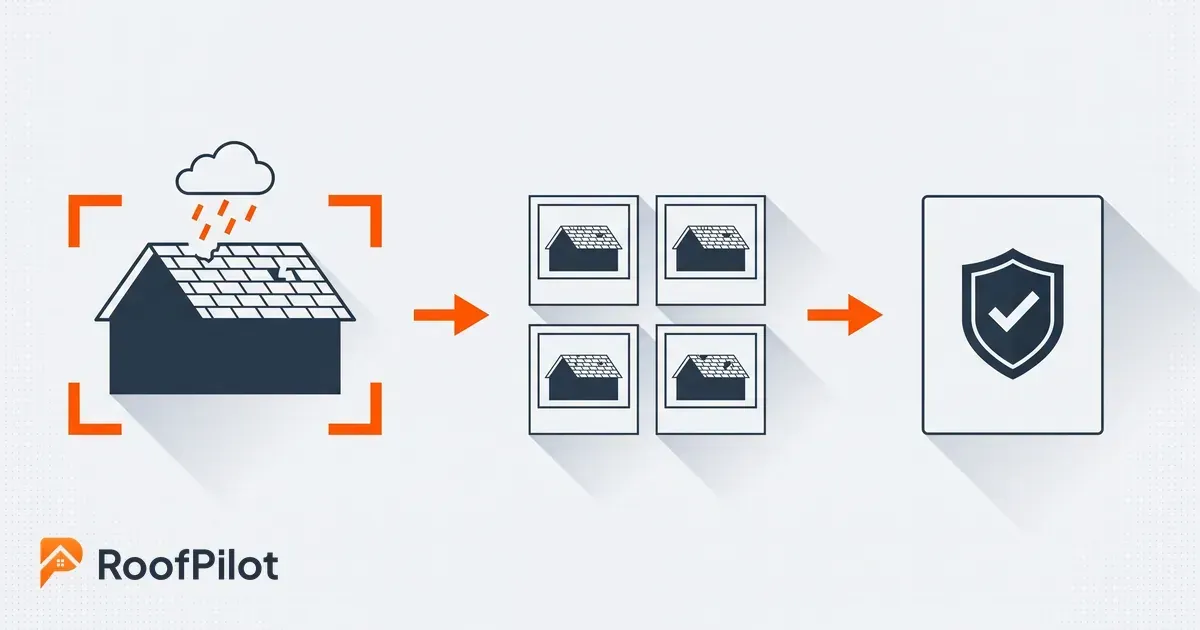
Quality problems compound. One bad roof leads to a one-star review that a prospective customer reads before deciding who to call. One callback becomes two because the same crew has the same habits. Reputation in roofing is built job by job and lost faster than it was built. Investing in crew training, establishing quality standards that are inspected rather than assumed, and documenting work with photos at each stage are operational habits that protect the business on every job.
Financial Blind Spots
Many roofing operations that fail were profitable jobs away from survival. They just didn't know it because they weren't tracking the right numbers. Not knowing which jobs are actually profitable, not knowing true overhead costs, not knowing the cash position with any precision, these financial blind spots mean problems are discovered too late to correct.
The roofer who does job costing consistently, comparing what a job actually cost against what it was estimated to cost, learns over time which job types, crew configurations, and customer segments produce reliable margin and which consistently underperform. That information improves estimating accuracy, informs pricing, and identifies where operational fixes would have the most impact. Without it, pricing is guesswork and margin is unknown until the end of the year when the accountant delivers the news.
What this means for your business: The warning signs of a business in trouble are usually visible 12 to 18 months before a crisis: difficulty making payroll, supplier credit tightening, an accounts receivable balance that keeps growing, a close rate that's declining. Each of these is a signal worth acting on immediately. Small problems in roofing businesses don't resolve themselves.
Related reading: