

February 23, 2026
Roofing Industry Trends 2026: What Roofers Need to Know
Author
9 minute read
Share
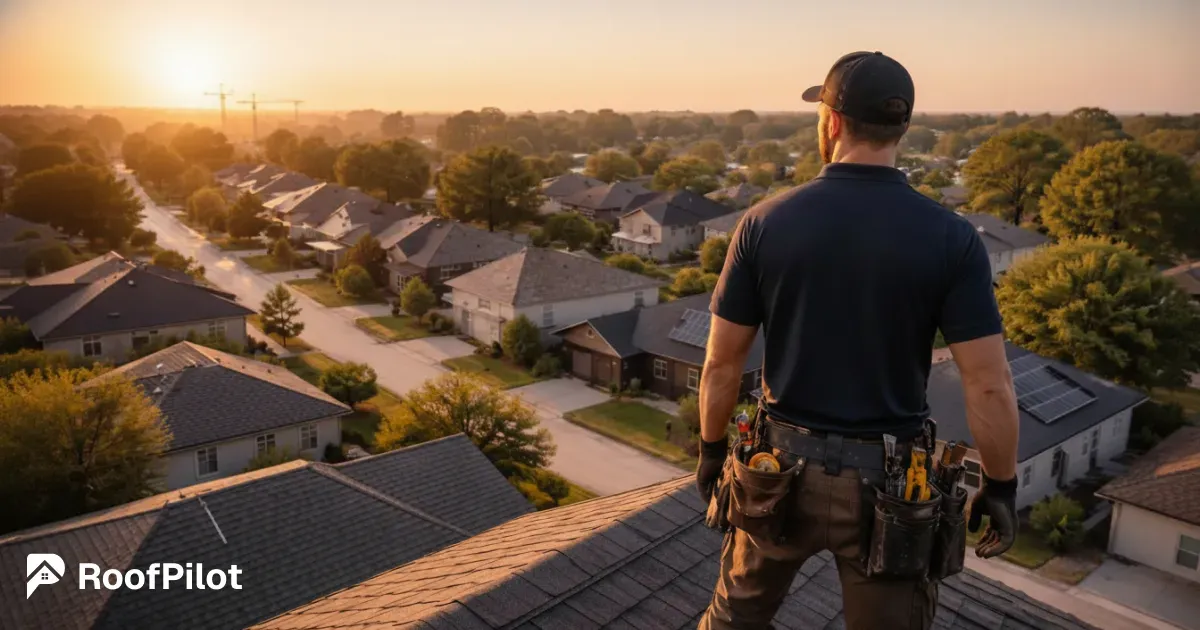
The roofing industry is not what it was five years ago. It's bigger, more competitive, more complicated — and full of opportunity for roofers who understand where things are heading.
This is the full picture of the roofing industry in 2026: the market forces driving demand, the cost pressures squeezing margins, the technology shift redefining how work gets done, and the structural changes that will determine who wins the next decade.
The Market in 2026: A $92.5 Billion Industry
The U.S. roofing market hit $92.5 billion in 2025 and is projected to keep growing. But the growth story isn't coming from new home construction — it's coming from existing roofs reaching the end of their lifespan, from storms, and increasingly from an insurance-driven replacement cycle that is accelerating in ways the industry hasn't seen before.
Roughly 79–80% of roofing revenue comes from re-roofing, not new builds. That means the demand side of this business is largely independent of the housing construction market. When developers slow down, roofers who focus on replacement are largely insulated.
That's the good news. Contractor confidence reflects it: 78% of roofing contractors report a positive business outlook heading into 2026. Backlogs are healthy in most markets. The fundamental demand drivers — an aging housing stock, severe weather events, rising replacement requirements from insurance carriers — aren't going away.
What is changing is the business environment around that demand. Costs are higher. Competition is more professional. Customers expect more. The gap between roofers who run efficient operations and those who don't is wider than it's ever been.

Labor Shortage Is Getting Worse, Not Better
There are 156,800 roofers employed in the United States. That number sounds large until you understand two things: the industry has about 12% of its positions open at any given time, and 1 in 5 current roofers is over the age of 55.
The retirement wave hitting the skilled trades is not a distant problem. It is happening now. According to Bureau of Labor Statistics projections, the roofing industry will need approximately 349,000 new workers over the next decade just to maintain current capacity — and that's before accounting for growth.
The pipeline isn't filling fast enough. Trade school enrollment has grown, but not at a rate that closes this gap. Competition from other construction trades — electricians, plumbers, HVAC techs — for the same pool of young workers entering the trades is real and intense.
There is another force compounding the shortage in 2026 that no workforce development program can address: federal immigration enforcement. Immigrant workers make up more than 60% of the roofing workforce — a higher share than nearly any other construction trade. As ICE enforcement actions intensified through 2025 and have continued into 2026, contractors in affected markets are reporting sudden crew shortages, workers not showing up, and difficulty sourcing replacement labor on short notice. Roofers have been among the first trades targeted by worksite raids, in part because of their visibility on job sites. For any contractor who relies on immigrant labor — directly or through subcontractors — this is an active operational risk that is already affecting project timelines and crew capacity in many markets.
What this means for your business:
Wages are up, and they will stay up. A skilled, reliable crew is a competitive asset, not just a cost. The contractors who have figured out retention — through pay, through culture, through career development — are building a structural advantage over everyone else.
It also means efficiency is no longer a nice-to-have. If you can complete a job with fewer workers in less time, you're not just saving money — you're doing more revenue with the labor capacity you have. Every hour your crew spends on paperwork, driving back to the shop, or waiting on information that should have been on their phone is an hour not on a roof.
Material Costs Are Up 43% — and Still Climbing
Roofing material prices have increased 43.4% cumulatively since February 2020. That number understates the impact for most contractors, because not every price increase happened at the same time or in the same product category — which means estimate accuracy has been a moving target for years.
In 2025 and into 2026, the primary driver of new cost pressure is tariffs. The Trump administration's tariff increases have sent metal roofing prices up 15–25%, depending on product and supplier. The major shingle manufacturers — GAF, Owens Corning, CertainTeed — have announced price increases of 6–10%, citing higher resin, asphalt, and glass fiber costs tied to import duties on raw materials and manufacturing inputs.
This isn't a situation that's going away quickly. Even if tariff policy shifts, the supply chain adjustments that manufacturers and distributors have made in response will take time to unwind.
What this means for your business:
Your estimates from 18 months ago are not your estimates today. Contractors who are still pricing jobs from memory or from old price lists are either leaving money on the table or losing jobs to contractors who've adjusted. Material cost accuracy has to be part of your estimating process, not an afterthought.
The other implication: job costing matters more than ever. With material costs volatile and margins under pressure, knowing your actual cost versus your estimated cost — on every job — is the only way to understand whether you're making money and where you're leaking it.
The Insurance Crisis Is Reshaping Demand
One of the most significant forces affecting the roofing industry in 2026 is the property insurance market — and most roofers are only seeing part of the picture.
Here is the full picture:
On the demand side, insurance claims are a massive driver of roofing work. The U.S. recorded $42 billion in insured losses from weather events in just the first nine months of 2025. Hail storms, wind events, and hurricanes continue to generate large volumes of insurance-driven replacement work, particularly in the Southeast, Midwest, and Plains states.
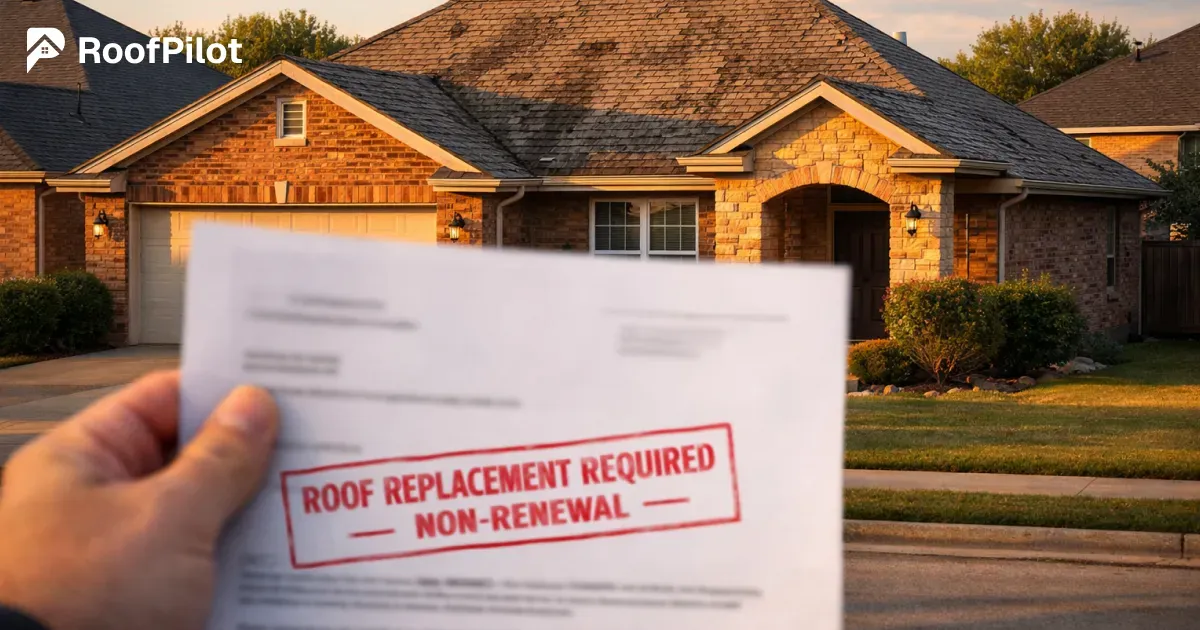
On the other side of that equation, insurance carriers are under severe pressure. Premium increases have averaged 22% year over year for homeowners. Carriers are exiting high-risk markets entirely — in Florida, Louisiana, and parts of Texas, finding any insurance coverage has become difficult for homeowners. And across the country, carriers are shortening their acceptable roof age requirements from 20–25 years to 15–20 years.
That last point is the one most roofers haven't fully internalized yet. Millions of homes with 15–20 year old roofs that would have been insurable five years ago are now either uninsurable or facing sharply higher premiums unless the roof is replaced. Homeowners in this situation are being pushed toward replacement not because the roof is failing — but because the insurance market says it has to go.
This is creating a category of insurance-adjacent demand that isn't traditional storm damage work. It's homeowners replacing functional roofs to maintain insurance coverage. The sales conversation is different. The timeline is different. The urgency is different.
What this means for your business:
Roofers who understand the insurance environment are better positioned to have the right conversation with homeowners. If a homeowner is confused about why their insurer is requiring a roof replacement, your ability to explain the situation clearly — and present a professional proposal that helps them move forward — is a direct competitive advantage.
Technology Adoption Is Accelerating Fast
The technology profile of the roofing industry has changed substantially in the past three years, and the pace of change is still increasing.
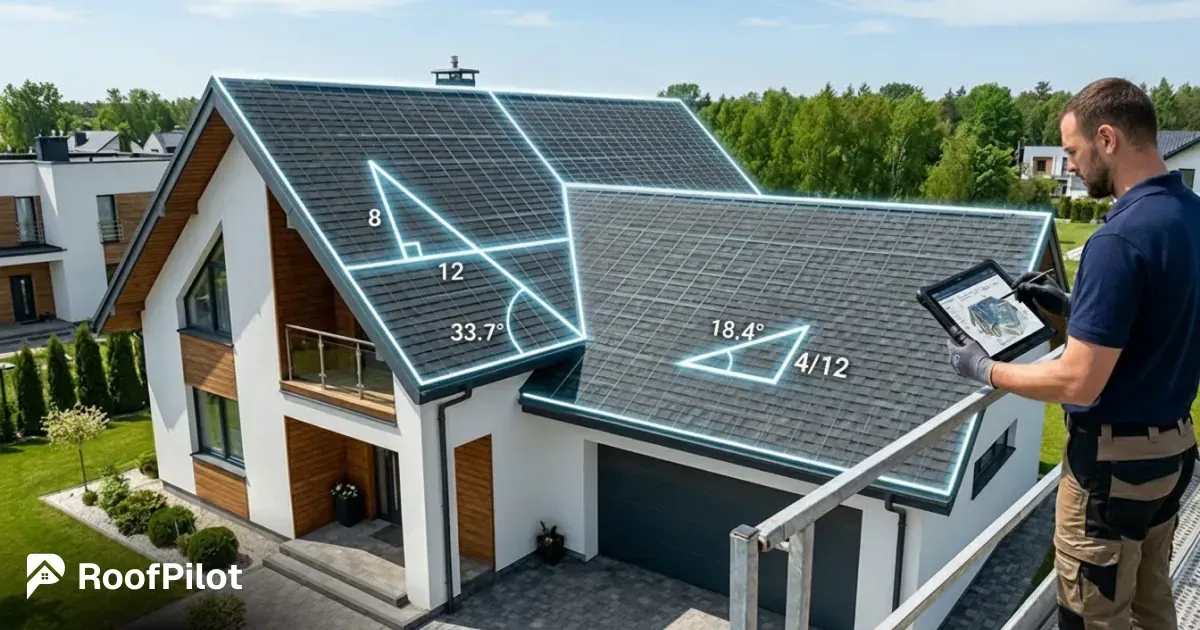
Drones are now used on more than 55% of roofing job sites. What was a novelty five years ago is now standard equipment for serious contractors. The benefits have been proven: faster site assessments, better documentation, safer measurements on steep or high-risk roofs, and photos that support insurance claims and customer proposals.
AI-powered tools have moved from pilot programs to active use. In a recent industry survey, 29% of roofing contractors reported using AI tools in their business — a figure that projections put at 40% within the next 12–18 months. The most common applications are in estimating (using AI to analyze aerial imagery and generate takeoffs), lead generation (AI chatbots and follow-up automation), and proposal generation.
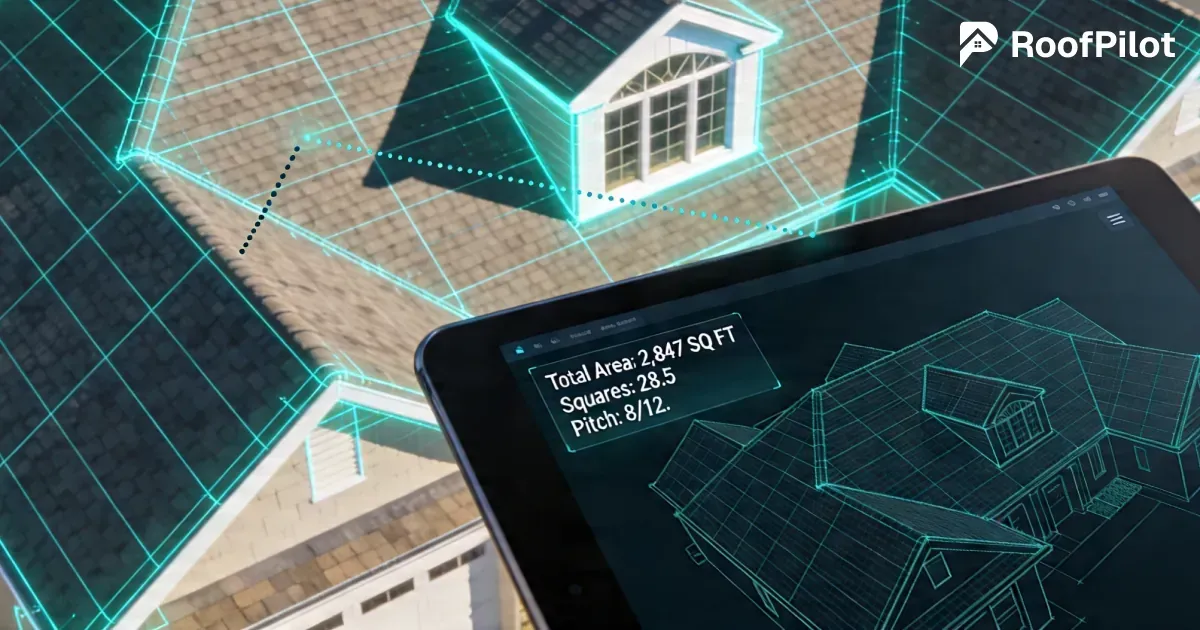
Satellite and aerial measurement has become the default for residential re-roofing in most markets. Same-day measurements are now expected by customers and required by the pace of competition. A contractor who takes three days to produce a measurement report is competing against one who can have it in an hour.
Integrated software platforms have replaced the disconnected stack of tools that most contractors were using five years ago. The industry has moved — and is continuing to move — away from using one tool for CRM, a different tool for proposals, a spreadsheet for scheduling, and paper invoices. The contractors growing fastest are the ones who've connected their workflow from lead capture through to payment collected.
The data advantage this creates compounds over time. A contractor with connected CRM and job data knows which lead sources are converting, which job types are most profitable, which customers are most likely to refer. A contractor without that data is guessing.
What this means for your business:
Technology adoption is no longer a competitive differentiator — it's table stakes. The question isn't whether to use these tools. It's whether your tools are connected and whether you're getting the efficiency they're capable of delivering. Disconnected tools that still require manual data entry between systems are not a technology advantage. They're a productivity tax.
The specific inflection point to watch is AI-assisted estimating and takeoffs. Contractors who have adopted aerial measurement tools with AI-powered measurement capabilities are consistently faster to quote and more accurate on materials. That speed translates directly to close rates — customers who receive a professional, accurate proposal the same day are more likely to sign than customers who wait.
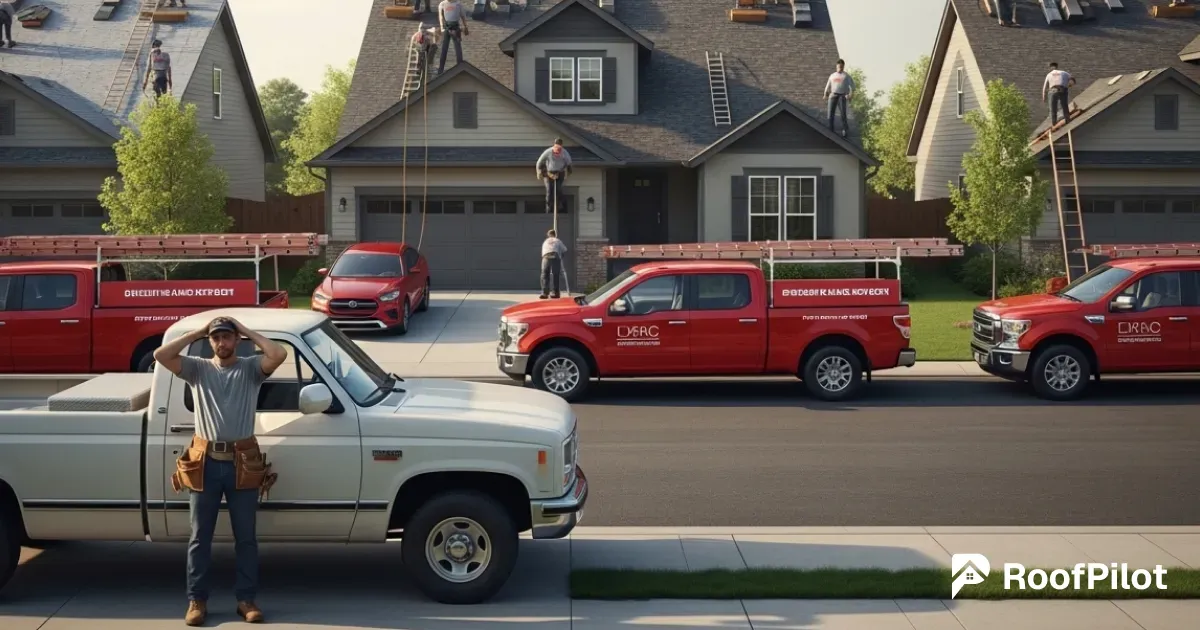
Private Equity Is Reshaping the Competitive Landscape
The roofing industry has historically been fragmented — tens of thousands of small and mid-size operators, few national brands, limited institutional capital. That structure is changing rapidly.
In 2024, Home Depot acquired SRS Distribution for $18.25 billion — one of the largest acquisitions in the construction supply space ever. That deal gives the largest home improvement retailer in the country direct access to the contractor supply chain. In 2025, QXO completed its $10.6 billion acquisition of Beacon Roofing Supply, the country's largest roofing-specific distributor.
These aren't isolated events. M&A activity in the roofing supply and contracting space has grown 116.7% over the past six years. Private equity firms have been actively rolling up regional roofing contractors, creating larger operators with professional management, national scale, and access to capital that independent contractors can't match.
This consolidation is changing the competitive environment in specific markets where PE-backed consolidators have built presence. They compete on brand, systems, and capacity — but they often struggle on the things that independent contractors do well: local relationships, responsiveness, and quality control on individual jobs.
What this means for your business:
The consolidators are coming for specific customer segments, particularly large commercial projects and insurance restoration at scale. In residential replacement, the independent contractor who runs a tight operation with professional systems and a strong local reputation has real advantages — but those advantages only hold if the operation is actually professional and the systems are actually tight.
The pressure from larger, better-capitalized competitors makes operational efficiency a strategic necessity. Contractors who waste time on administrative work, who lose leads because follow-up is inconsistent, or who can't produce a professional proposal quickly are giving ground to operators who can.
What the Best Roofing Businesses Are Doing Differently
The gap between the top quartile of roofing contractors and the rest has never been wider. Here's what separates them.
They measure everything. Job costing, lead source performance, crew productivity, close rates — the contractors who know their numbers make better decisions. The ones who don't are flying blind, which means they're often pricing jobs wrong, keeping unprofitable customers, and growing in directions that don't actually improve their margins.
They move fast. Speed to respond to a new lead. Speed to deliver a quote. Speed to send an invoice after a job is done. Research consistently shows that the first contractor to respond to an inquiry wins the job a disproportionate percentage of the time. Contractors who've built systems around speed — automated follow-up, same-day measurements, instant proposal generation — consistently outperform contractors who rely on getting back to people when they have time.
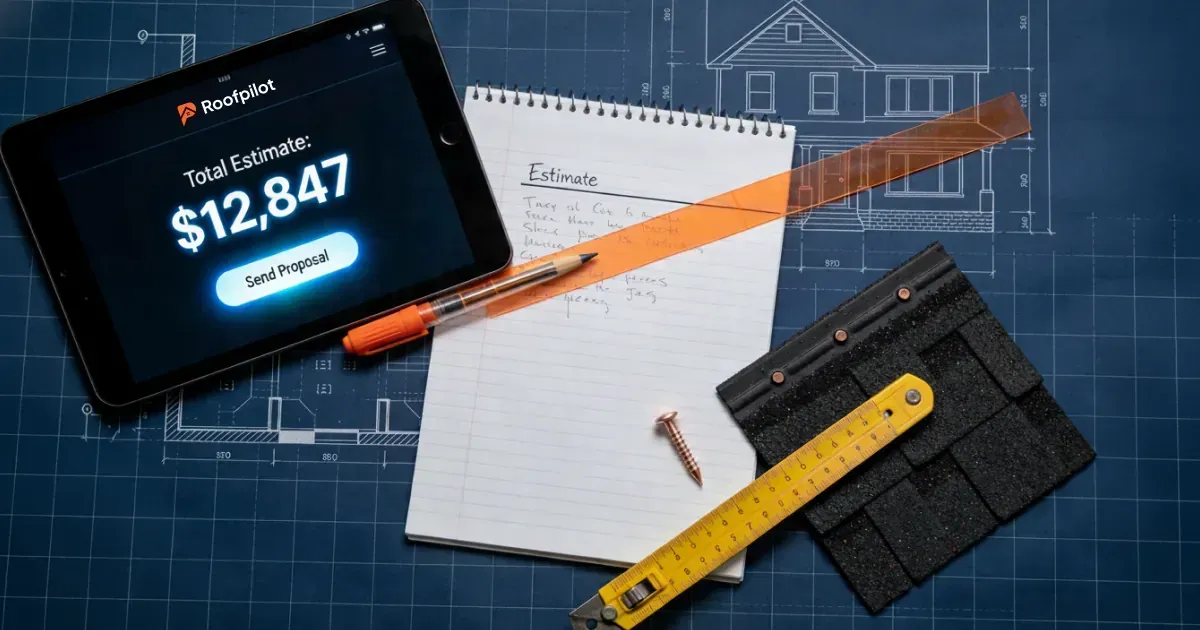
They look professional at every step. The quality of your proposal is the quality of your company in the mind of a customer who hasn't seen your work yet. A clean, detailed, digital proposal with line-item pricing and e-signature capability communicates professionalism before you've done a single square. Contractors who've made the investment in how they present look like bigger, more trustworthy companies — and they win more jobs as a result.
They invest in their crews. The contractors with the best retention aren't necessarily paying the most — they're the ones whose crews know what work is coming, have the information they need before they get to the job, and aren't spending half the day on the phone waiting for answers. Systems that get crew the right information — materials needed, job details, scheduling — at the right time are a retention and efficiency tool, not just an administrative convenience.
They get paid faster. Cash flow kills more roofing businesses than lack of work. Contractors who send invoices immediately after job completion — ideally from the job site before they've left — collect faster and have fewer disputes. Those who batch invoices at the end of the week or wait for office staff to process paperwork consistently have worse cash flow and more collection problems. Digital invoicing and payments isn't just convenient — it has a direct impact on how fast money moves.
How to Prepare Your Business for What's Coming
The trends in this report aren't predictions — they're current conditions. The contractors who will benefit from them are the ones who adapt now rather than after the industry has moved further.
On labor: If your crew situation is fragile, fix it before it breaks. The cost of losing a key crew member — in recruiting, training, and lost capacity during the gap — is far higher than the cost of keeping them. Invest in the people worth keeping.
On materials: Update your pricing. If your price lists are more than six months old, they're wrong. Build a process for tracking material cost changes and reflecting them in estimates before you absorb the difference in your margin.
On insurance: Get comfortable with the insurance conversation. Understanding why carriers are requiring replacements, what documentation they need, and how to present a proposal to a homeowner in that situation is a skill that will generate more revenue in the next three years than almost anything else.
On technology: If your tools aren't connected — if you're still doing manual data entry between systems, or managing leads in a spreadsheet, or printing proposals — close that gap. The efficiency loss is real and it compounds. More importantly, the contractors you're competing against are closing the same gap right now.
On the competitive landscape: The consolidators are better capitalized than most independent contractors, but they can't replicate local relationships, responsiveness, or the quality that comes from an owner who's invested in every job. That's a real advantage — but only if your operations are sharp enough to deliver on it consistently.
The roofing industry in 2026 is a $92.5 billion opportunity. The structural demand drivers — aging roofs, severe weather, insurance-driven replacement cycles — are durable. The contractors who run tight operations, adopt the right tools, and build the kind of businesses that compound over time will continue to gain ground.
The gap between the top contractors and the rest is wide, and it's widening. Which side of it your business ends up on is largely a systems and execution problem — not a market problem.