October 2, 2026

Capacity Planning for Roofing Crews: How Much Work Can You Actually Take?

Author

Liam Walsh

9 minute read

Share

roofing capacity planning

Capacity planning for roofing crews is figuring out, honestly, how much work your crews can actually complete in a given week, and then not promising more than that. It is the quiet math behind every start date you give a customer, and most roofing companies never do it on purpose. They book work until the calendar feels full, then discover in the middle of the season that "full" and "too much" look identical right up until jobs start slipping.

This guide answers the practical questions. What capacity planning actually is, why it matters even when you are slammed, how to calculate your real capacity in squares and crews, how much of it you should actually book, how many crews one person can run, and how to match what you take on to the demand coming in. The whole point is to replace a gut feeling with a number you can plan around, so you take on the right amount of work instead of too much or too little.

What is capacity planning for a roofing crew?

Capacity planning is calculating how much roofing work your crews can complete in a set period, usually a week, and using that number to decide how much to sell and schedule. Capacity is your real output, measured in something concrete like squares installed or jobs finished, not the vague sense that you are "busy."

The distinction matters because busy and at capacity are not the same thing. A company can feel frantic and still be leaving output on the table, or feel steady and be badly overbooked with the bill coming due later. Capacity planning turns "we have a lot going on" into "we can finish about this many squares this week with the crews we have," which is the only version of the statement you can actually schedule against. Everything downstream, your start dates, your buffer, your decision about whether to add a crew, depends on getting that base number right.

Why does capacity planning matter when you are already busy?

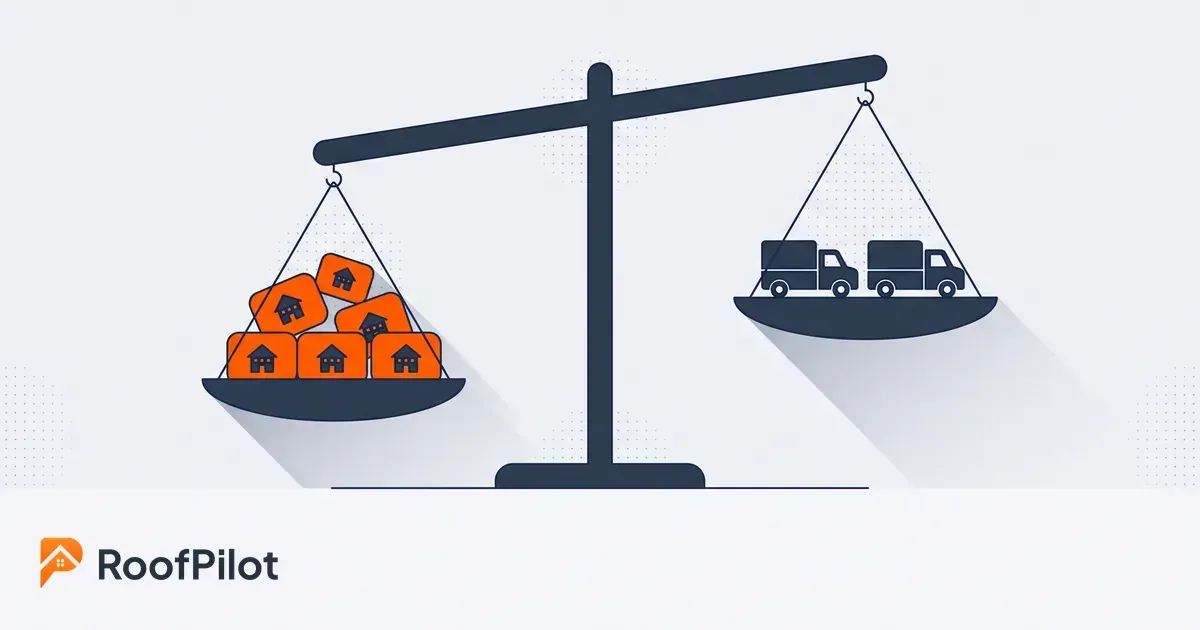
It matters most when you are busy, because that is exactly when overbooking does its damage. Taking on more work than your crews can finish does not create more output, it creates slipped start dates, rushed jobs, callbacks, and burned-out crews, and every one of those costs you more than the extra job was worth. Capacity is a ceiling, and pretending it is higher than it is does not raise it.

Demand makes this harder, because it is not steady and it is not fully in your control. Across the construction industry, firms reported carrying roughly 8.8 months of backlog in mid-2026, and that kind of number rises and falls with the season, the weather, and the last big storm. Roofing feels those swings sharply: a quiet March and a slammed September in the same year is normal. Without a capacity plan, you ride the wave, overpromising when work floods in and scrambling when it dries up. With one, you can see when demand is about to outrun your crews and make a real decision instead of just saying yes until the calendar breaks.

What this means for your business: The busy season is when a capacity number earns its keep. Before you say yes to the next job in a packed month, you should know whether it fits under your ceiling or pushes you over it, because a start date you cannot hit costs more trust than the job earns in revenue.

How do you calculate your real crew capacity?

roofing crew capacity

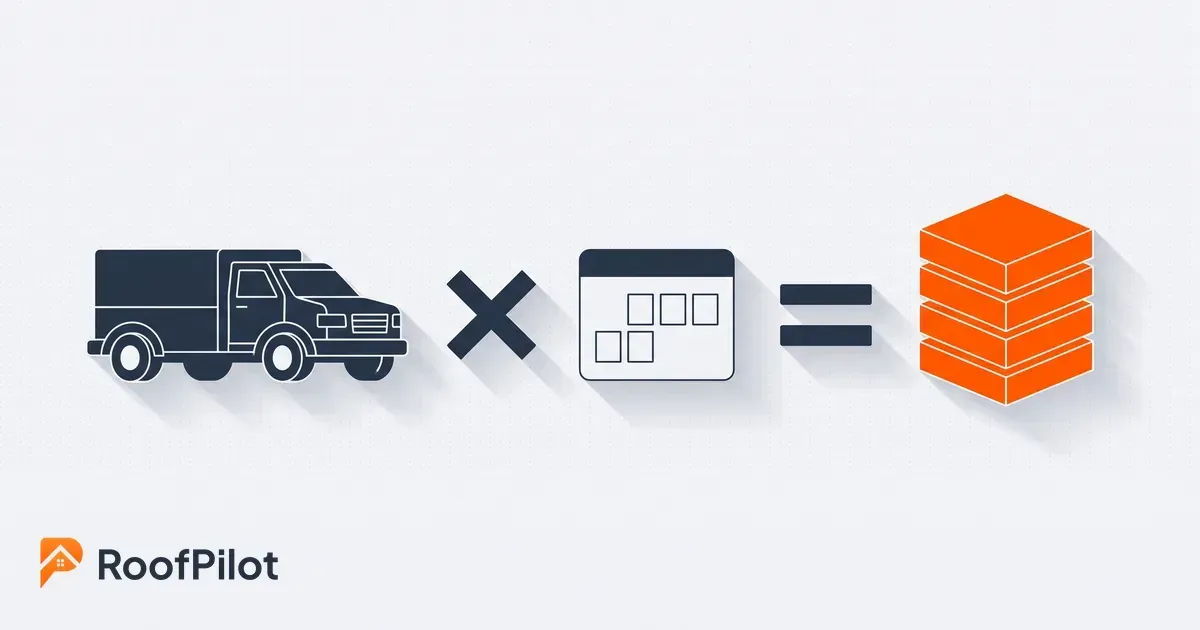
You calculate capacity by measuring what your crews actually produce, then discounting for the days they cannot work. Start with output per crew per day in squares, multiply by the crews you have and the days they can realistically work, then cut it back for weather and the inevitable disruptions. The result is your honest weekly ceiling.

Use your own measured pace, because it is the only number that matters, but you need a starting point until you have one. Many residential tear-off and reroof crews land somewhere around 20 to 30 squares on a straightforward day, less on steep or complex roofs, so a crew working a normal week is producing a range you can estimate and then sharpen with real data. Then discount for reality. Weather alone can erase a chunk of any month, so planning as if every scheduled day is a working day is the most common way roofers overstate capacity. A practical habit is to plan against 80 to 85 percent of your theoretical maximum, holding back a 15 to 20 percent buffer for rain days, callbacks, and the job that runs long. That buffer is not slack you are wasting, it is the margin that keeps one bad-weather week from toppling every start date behind it. When you see every crew's real availability on one calendar instead of guessing, the capacity number stops being a hunch and becomes something you can actually book against.

How many crews can one person actually run?

roofing crews per manager

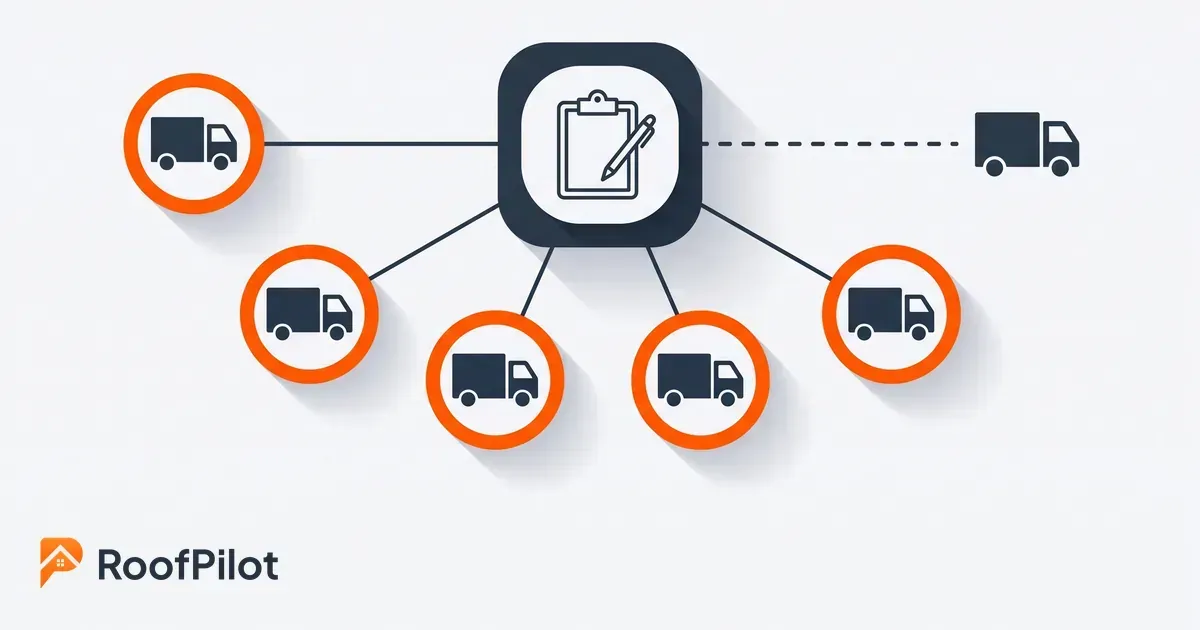
One person can realistically run only a handful of crews well, and pretending otherwise is a hidden capacity limit most owners hit without naming it. Your capacity is not just squares and crews, it is also supervision: every crew needs a competent lead, and every group of crews needs someone who can actually keep track of them.

A workable rule of thumb is one experienced foreman per crew, and somewhere around three to five crews per production manager before quality and communication start to slip. Push past that and the symptoms show up fast: missed details, crews waiting on decisions, jobs that drift because nobody was really watching them. The number is not magic and it depends on how complex your jobs are and how good your systems are, but the principle holds, adding crews without adding supervision does not add capacity, it just spreads your existing oversight thinner until something breaks. When you plan capacity, count your supervision the same way you count your crews, because the person keeping jobs on track is as real a constraint as the labor on the roof.

How do you match capacity to demand without overpromising?

You match capacity to demand by comparing the work coming in against your weekly ceiling and adjusting one side or the other before you overcommit. When demand is climbing toward your capacity, you have three honest options: book further out and tell customers the real start date, add capacity, or turn work away, and choosing on purpose beats overpromising and missing.

Start by making both numbers visible. You already have your capacity ceiling; put your incoming demand next to it, the signed jobs plus the pipeline likely to close, so you can see the gap before it becomes a crisis. When the two lines are about to cross, that is your signal to act early, not the day a customer calls asking why the crew never showed. If demand keeps outrunning capacity month after month, that is the real signal to know when it is genuinely time to add a crew, a decision you want to make from data rather than panic. And once you have decided how much work fits, you turn that capacity into an actual weekly schedule, where the plan meets specific jobs and crews. Running the whole loop in RoofPilot, where your booked work, your crews, and your calendar are the same record, is what lets you see demand and capacity side by side instead of in two different heads.

What this means for your business: Overpromising is a decision you make by accident when you cannot see your capacity and your demand at the same time. Put both numbers in front of you and the hard calls, book out, add a crew, or say no, become deliberate instead of something you discover too late.

How do you know your capacity plan is working?

roofing start date reliability

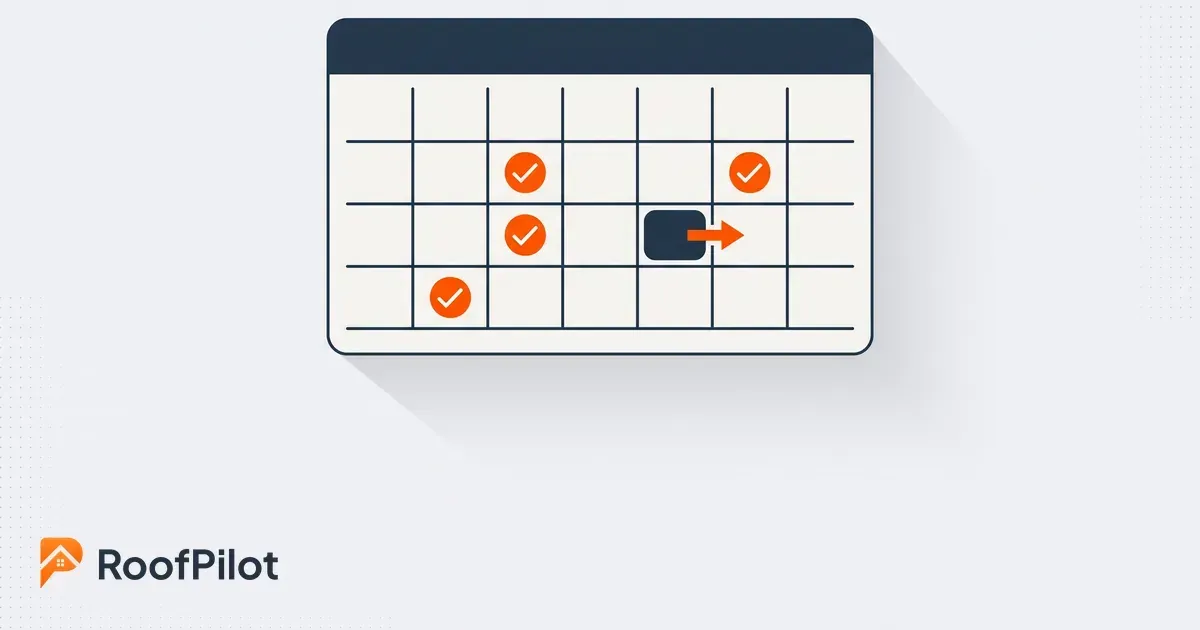
You know your capacity plan is working when your start dates hold, your crews stay productive without being run ragged, and callbacks are not climbing. Those three signals tell you whether the number you planned against matches the reality on the roofs. If start dates keep slipping, your real capacity is lower than you think, or you are booking past it.

Watch a few numbers to keep yourself honest. Track how often jobs start on the date you promised, because slipping start dates are the first and clearest sign you are overbooked. Watch crew utilization, the share of the workday actually spent producing, since chronically low utilization means you have more capacity than you are using and chronically maxed-out crews mean you have no buffer left. And watch callbacks and rushed-job mistakes, which tend to rise when crews are pushed past a sustainable pace. Most roofing companies track none of this and simply feel the strain as stress and lost customers. Put numbers on your start-date reliability and your utilization, review them against the season, and your capacity plan stops being a one-time guess and becomes something you tune as you grow.

The Bottom Line

Capacity planning is the difference between running your roofing company on a real number and running it on a feeling. Measure what your crews actually produce, discount hard for weather and disruption, and hold back a buffer so one bad week does not topple your whole schedule. Remember that supervision is a limit too, and count your foremen and managers alongside your crews. Then put your capacity next to your demand so you can see the crunch coming and choose your response on purpose, whether that is booking further out, adding a crew, or turning work away. Do that consistently and you stop overpromising in the busy months and scrambling in the slow ones, and you take on exactly the amount of work you can actually finish well.

Related reading:


By Liam Walsh • October 23, 2026
How to run a software pilot in your roofing company before you commit. Pick one crew and real jobs, set what to measure, and see if a new tool actually fits.

By Liam Walsh • October 19, 2026
A roofing mobile app puts the whole business in your pocket. Run jobs, photos, quotes, and invoices from your phone so the office and the roof stay in sync.
By Liam Walsh • October 16, 2026
Keep your roofing office and field data in sync. One source of truth across your CRM, calendar, and field tools so nobody rekeys or works off stale information.
By Liam Walsh • October 12, 2026
A roof photo workflow built for insurance claims. How to capture, organize, and time-stamp storm damage photos so an adjuster approves them the first time.
By Liam Walsh • October 9, 2026
Your roofing production backlog is the work you have sold but not yet built. How to size a healthy backlog, keep jobs from aging, and protect the cash in it.

By Liam Walsh • October 5, 2026
What to put in a roof inspection report, a ready-to-use template you can copy, and how to turn your findings and photos into a report that wins you the job.
roofing dispatch
By Liam Walsh • September 28, 2026
Roofing dispatch is getting the right crew to the right job on the right day. How to run day-of dispatch, cut idle crew hours, and keep every job on track.
sales to production handoff
By Liam Walsh • September 25, 2026
The sales-to-production handoff is where roofing jobs get dropped after the sale. How to hand off a signed job complete, set a handoff SLA, and stop the leaks.
roofing appointment setting
By Liam Walsh • September 21, 2026
How to book more roofing appointments and kill no-shows, from fast response and easy online scheduling to reminders that keep inspections on your calendar.
roofing pipeline hygiene
By Liam Walsh • September 18, 2026
Pipeline hygiene keeps a roofing sales pipeline honest so your forecast holds and leads stop rotting, with the stages, rules, weekly review, and clean handoff.