September 28, 2026

Roofing Dispatch: Right Crew, Right Job, Right Day

Author

Liam Walsh

9 minute read

Share

roofing dispatch
roofing dispatch

Roofing dispatch is the daily act of getting the right crew to the right job on the right day, and it is where a good week's plan either holds together or quietly falls apart. You can schedule the week perfectly on Friday, but on Monday morning it is dispatch that decides which crew rolls to which address, in what order, with the materials and information they need to actually start. Get it right and your crews stay productive and your customers stay happy. Get it wrong and you pay for it in idle hours, wasted trips, and callbacks nobody planned for.

This guide is about the day-of discipline, not the weekly calendar. It covers what separates dispatch from scheduling, how to match the crew to the job, how to sequence a day so nobody sits waiting, how weather and readiness decide what can actually run, and why clear communication is the whole game. Done well, dispatch is the cheapest way to get more work out of the crews you already have.

Dispatch is not the same as scheduling

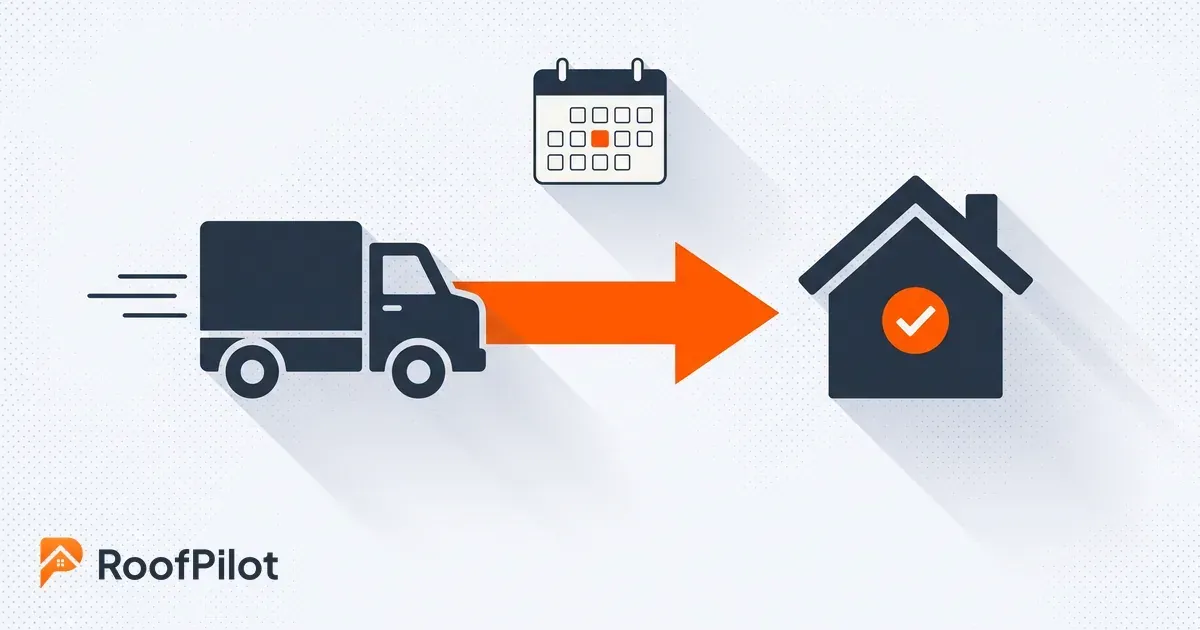
Scheduling is planning the week; dispatch is running the day. Scheduling is where you look ahead and decide, roughly, which jobs happen which days and which crews are pointed at them. Dispatch is the Monday-morning reality that takes that plan and turns it into crews actually moving, adjusting in real time as a permit clears late, a supplier runs behind, or the forecast turns.

The two are easy to blur, and blurring them is how days go sideways. A solid weekly plan assumes everything goes as expected. Dispatch is what you do when it does not. If you want the upstream half of this, our guide to plan the week's crews and jobs covers building a schedule that holds up. This post picks up where that plan meets the actual day, because the best weekly schedule in the world still needs someone deciding, this morning, exactly who goes where and in what order.

What this means for your business: If your weekly schedule looks great but your days still feel chaotic, the gap is dispatch, not planning. Name one person who owns the morning call on who goes where, and give them the full picture to make it with.

Right crew: match the people to the job

roofing crew assignment

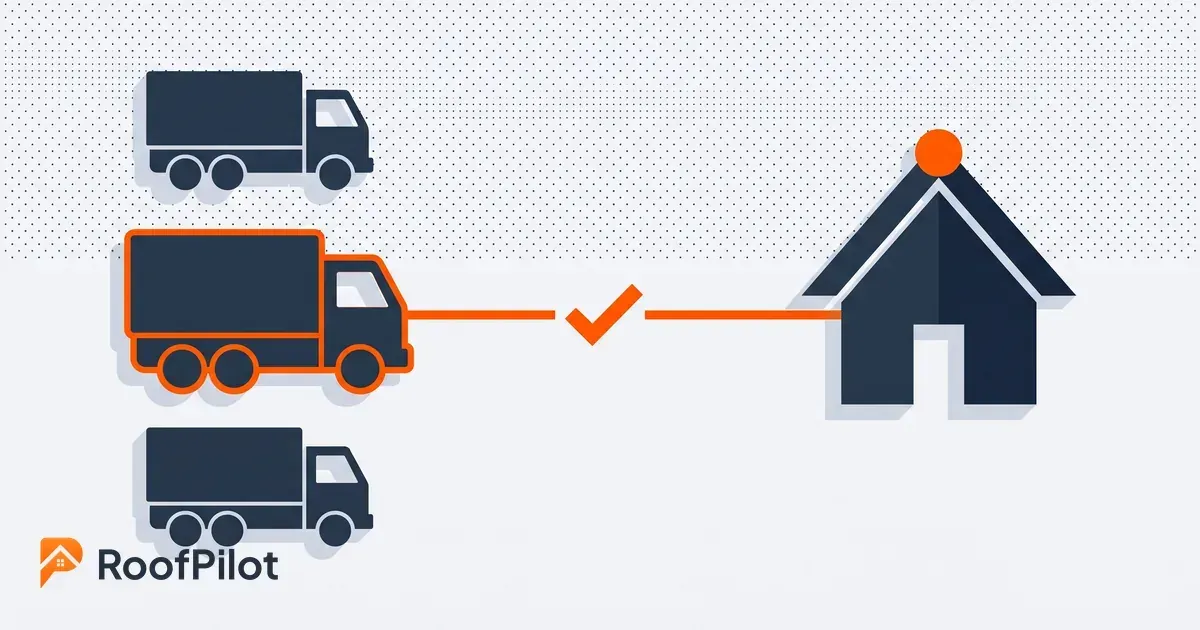
The right crew is the one whose skills fit the job in front of them, not just whoever is free. A straightforward tear-off and reroof is different work from a steep architectural job, a low-slope commercial section, or a tricky repair on a house with bad access. Sending a crew that does not match the job costs you either quality or speed, and often both.

This does not mean you need specialists for everything. It means you know your crews honestly, which ones are fast and clean on standard residential work, which one to send when the job is steep or complicated, and which lead you trust in front of an anxious homeowner. Dispatch is where that knowledge gets used. When you point your strongest crew at your hardest job of the day and your steady crew at the volume work, the whole day runs smoother and you stop discovering mismatches on the roof.

Right job: sequence the day so nobody sits idle

roofing dispatch route

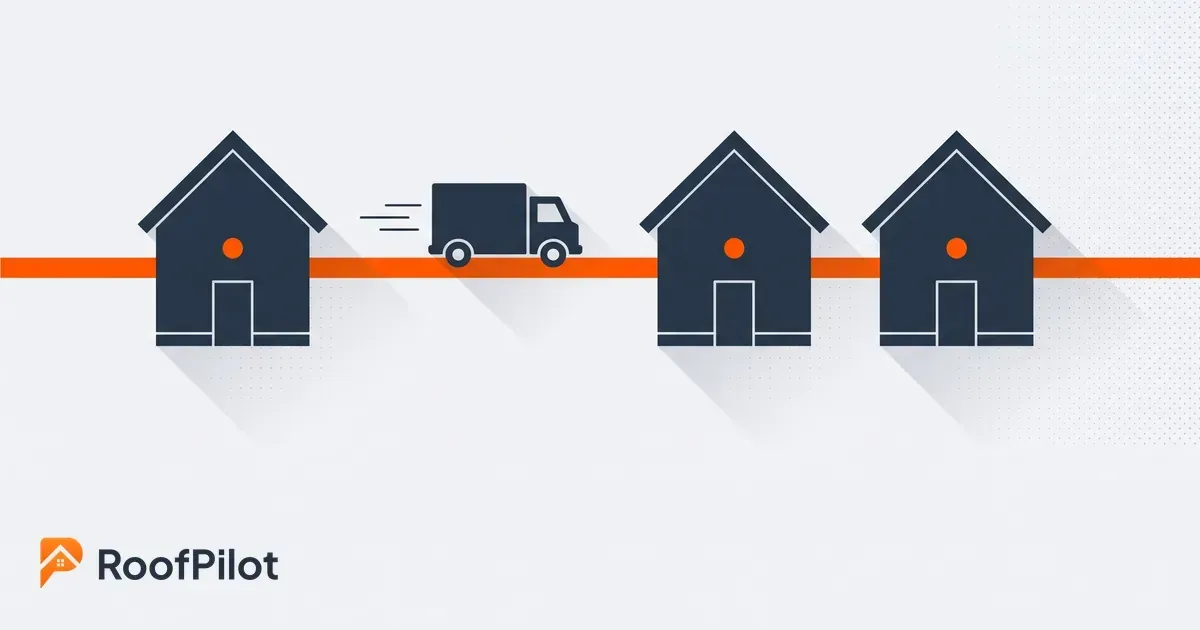
The right job at the right time means sequencing the day so each crew moves from one task to the next without waiting. Idle crew time is pure loss, and most of it comes from poor sequencing: a crew that finishes early with nothing lined up, a job that was not ready when they arrived, or two crews sent across town from each other when a little planning would have kept the driving down.

Sequence with the day's realities in mind. Group jobs by area so crews are not crossing the whole service territory twice. Make sure the first job of the day is genuinely ready to start, since a crew standing around at 7 a.m. loses hours you never get back. Line up the next stop before the current one wraps, so a crew that finishes a tear-off early rolls straight to the next address instead of calling in to ask what is next. None of this is complicated, but it only works if the person dispatching can see the whole day at once instead of reacting one phone call at a time.

Right day: weather and readiness decide what can actually run

roofing job readiness

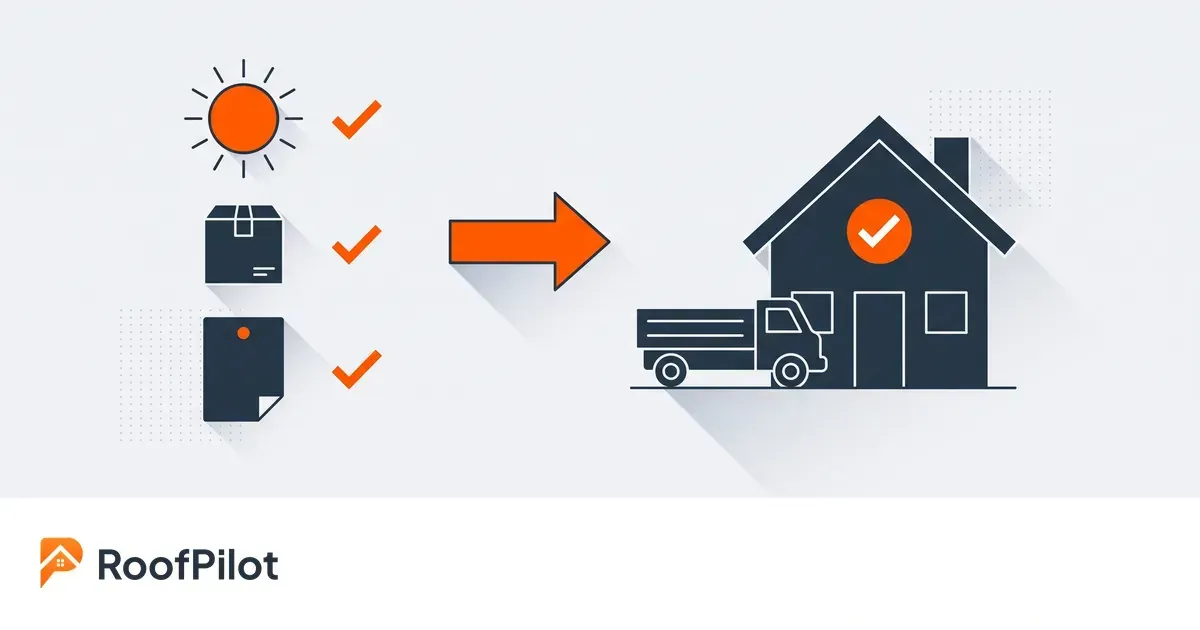
The right day is the one when a job is genuinely ready and the weather will hold, and dispatch is where you make that call. Roofing lives and dies by the forecast in a way few trades do, and a crew sent to tear off a roof ahead of an afternoon storm is a crew you have set up to fail. The same goes for readiness: if the permit has not cleared, the material is not on site, or the dumpster has not landed, the job is not a job yet, no matter what the calendar says.

Good dispatch checks readiness before a crew rolls, not after. A quick gate every morning, is the material there, is the permit in hand, is the weather workable, catches the problems while you can still reshuffle. When a job is not ready, you pull a ready job forward instead of sending a crew to sit or, worse, to open a roof they cannot finish. That kind of real-time reshuffling is only possible when everything you need to see, the weather, the readiness of each job, and every crew's location, lives in one place instead of scattered across texts and memory.

Communicate the plan, or it falls apart

Dispatch is only as good as the crew's understanding of it, so communication is not a nice-to-have, it is the job. A perfect plan in the dispatcher's head is worthless if the crew shows up unsure of the scope, missing a detail the salesperson promised, or unaware the job moved. Most dispatch failures are not planning failures, they are communication failures.

Every crew should start the day knowing exactly where they are going, what the job is, what to expect on site, and how to reach someone the moment something changes. That means the plan travels with the job, not in a separate thread. When a crew rolls with a clear work order the crew can build from, the scope, the materials, the site notes, and the customer's expectations are all in one place, and the crew is not guessing. And when the plan shifts midday, as it will, the update has to reach the crew instantly, not sit in a voicemail nobody checks. When you run the whole day off one shared calendar that everyone can see, a change made in the office shows up in the field, and dispatch stops being a game of telephone.

What this means for your business: Assume your plan will change every single day, because it will. The companies that dispatch well are not the ones with perfect plans, they are the ones who can push a change to the right crew in seconds and confirm it landed.

When crews are scarce, dispatch is your best lever

When you cannot simply hire more crews, getting more out of the crews you have is the whole game, and that is exactly what good dispatch does. Labor is the binding constraint for most roofing companies right now, so squeezing wasted hours out of the day is not a small optimization, it is one of the few growth levers you fully control.

The scarcity is real and well documented. The Associated General Contractors of America found that worker shortages are the most common cause of project delays, with the large majority of firms reporting unfilled openings for craft workers. You feel the same thing on a smaller scale every time a crew sits idle or drives back across town for a job that was not ready. When hiring cannot solve the problem, dispatch can: a crew that spends more of its day on roofs and less of it waiting or driving is, in effect, extra capacity you did not have to hire. Tightening dispatch is how you take on more work without adding a single person.

Track the numbers that tell you dispatch is working

You can tell whether your dispatch is working by watching three things: how much of each crew's day is actually spent working, how often a crew shows up to a job that was not ready, and how many trips it takes to finish a job that should have taken one. Together they show you exactly where the day is leaking.

Crew utilization, the share of the workday spent on productive work rather than waiting or driving, is the headline number, and most owners have no real read on it. Not-ready arrivals point straight at your morning readiness gate. Repeat trips point at either the wrong crew, a missing detail, or a job dispatched before it should have been. Most roofing companies track none of this and simply feel dispatch as a vague daily stress. Put numbers on it, watch them week to week, and dispatch turns from a scramble into something you can steadily tighten. Running the day in RoofPilot, where the schedule, the crews, and the job details all live together, is what makes those numbers visible instead of guessed at.

The Bottom Line

Dispatch is where the week's plan meets the actual day, and it is one of the cheapest places a roofing company can get more out of what it already has. Match the right crew to the job so you are not trading quality for speed. Sequence the day so crews move instead of sitting. Gate every job on weather and readiness before a crew rolls, and reshuffle in real time when something is not ready. Above all, communicate the plan clearly and push every change to the field the moment it happens, because dispatch failures are almost always communication failures. Do that, and with skilled crews as hard to hire as they are, you turn better dispatch into real extra capacity without adding a single name to the payroll.

Related reading:


By Liam Walsh • October 23, 2026
How to run a software pilot in your roofing company before you commit. Pick one crew and real jobs, set what to measure, and see if a new tool actually fits.
By Liam Walsh • October 19, 2026
A roofing mobile app puts the whole business in your pocket. Run jobs, photos, quotes, and invoices from your phone so the office and the roof stay in sync.
By Liam Walsh • October 16, 2026
Keep your roofing office and field data in sync. One source of truth across your CRM, calendar, and field tools so nobody rekeys or works off stale information.
By Liam Walsh • October 12, 2026
A roof photo workflow built for insurance claims. How to capture, organize, and time-stamp storm damage photos so an adjuster approves them the first time.
By Liam Walsh • October 9, 2026
Your roofing production backlog is the work you have sold but not yet built. How to size a healthy backlog, keep jobs from aging, and protect the cash in it.

By Liam Walsh • October 5, 2026
What to put in a roof inspection report, a ready-to-use template you can copy, and how to turn your findings and photos into a report that wins you the job.
roofing capacity planning
By Liam Walsh • October 2, 2026
Capacity planning for roofing crews is knowing how much work you can actually take. How to size your real capacity, set a buffer, and match crews to demand.
sales to production handoff
By Liam Walsh • September 25, 2026
The sales-to-production handoff is where roofing jobs get dropped after the sale. How to hand off a signed job complete, set a handoff SLA, and stop the leaks.
roofing appointment setting
By Liam Walsh • September 21, 2026
How to book more roofing appointments and kill no-shows, from fast response and easy online scheduling to reminders that keep inspections on your calendar.
roofing pipeline hygiene
By Liam Walsh • September 18, 2026
Pipeline hygiene keeps a roofing sales pipeline honest so your forecast holds and leads stop rotting, with the stages, rules, weekly review, and clean handoff.