
September 25, 2026
The Sales-to-Production Handoff: Stop Dropping Jobs at the Finish Line
Author
9 minute read
Share
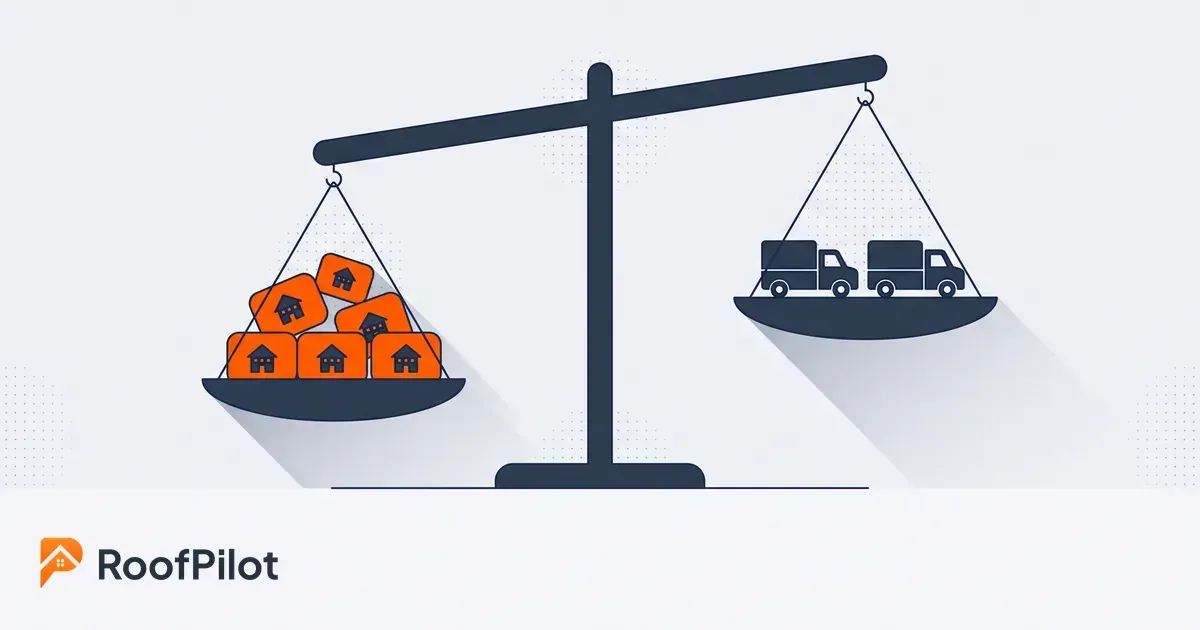
The sales-to-production handoff is the most expensive weak spot in a lot of roofing companies, and almost nobody watches it. It is the moment a signed job leaves the salesperson and becomes production's problem to build, and it is exactly where jobs get dropped at the finish line, after you already spent the money to win them. A deal you fought to close should not fall apart because the details never made it from the person who sold it to the crew who has to build it.
This guide covers that handoff end to end. It explains what the sales-to-production handoff actually is, why jobs leak out of it, what production genuinely needs from sales, what a handoff SLA is and whether you should set one, how to run a clean handoff every time, and how to measure whether yours is working. It is a short discipline with an outsized payoff, because fixing the handoff protects revenue you have already earned.
What is the sales-to-production handoff?
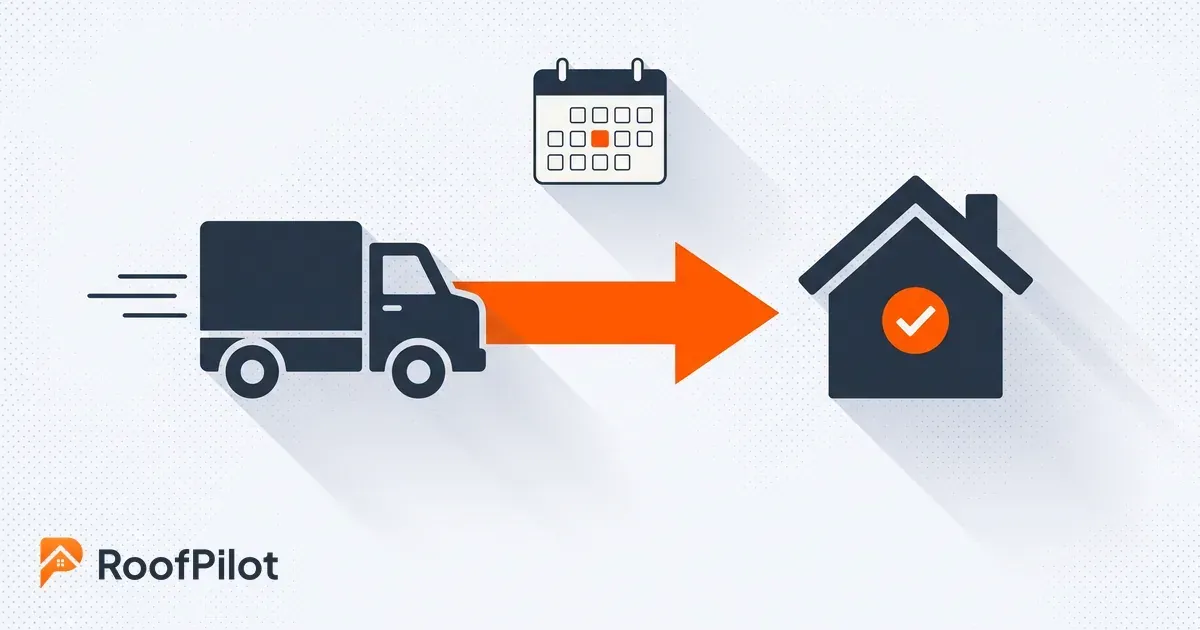
The sales-to-production handoff is the transfer of a sold roofing job from the salesperson who closed it to the team that schedules and builds it. It is the point where a signed contract has to turn into a buildable job, with every detail the crew needs to actually do the work.
It sounds like a single moment, but it is really a transfer of knowledge. The salesperson has spent hours with the customer and carries a head full of context: what was promised, which color, the tricky access on the north side, the customer who works nights and cannot have crews before ten. The handoff is where all of that has to move out of one person's memory and into a form the rest of the company can run on. When it does not, production is left guessing, and guessing on a roof is how you get callbacks.
Why do roofing jobs get dropped at the handoff?
Jobs get dropped at the handoff because no single person owns the gap between selling and building, and the details live in the salesperson's head instead of in the system. Sales moves on to the next deal, production starts from an incomplete picture, and the things nobody wrote down become the change orders, delays, and callbacks that eat the job's margin.
Roofing is not alone in this. A large industry study of construction found that poor communication and bad information drive nearly half of all rework, and that crews lose hours every week just hunting for details they should have been handed. On a roof, that looks like the wrong material showing up, a crew scheduled before the permit cleared, or a promise the customer remembers and the foreman never heard. None of it is exotic. It is the same handful of dropped details, job after job, which is exactly why a real handoff process fixes it so fast.
Picture a job sold on a Friday with a start promised the next week. The salesperson knows the homeowner wants the old ridge vent replaced, not just re-flashed, but that detail lives in a text thread, not the job file. Production schedules the standard scope, the crew arrives without the vent, and now you have a half-finished roof, an annoyed customer, and a second trip you are eating. Nothing went wrong on the roof. The job was dropped at the handoff, and the cost of that one missing line is bigger than the vent ever was.
What this means for your business: If jobs regularly surprise your production team, the problem is almost never the crew, it is the handoff feeding them. Before you push production to work faster, make sure they are starting every job with a complete picture instead of half of one.
What does production actually need from sales?
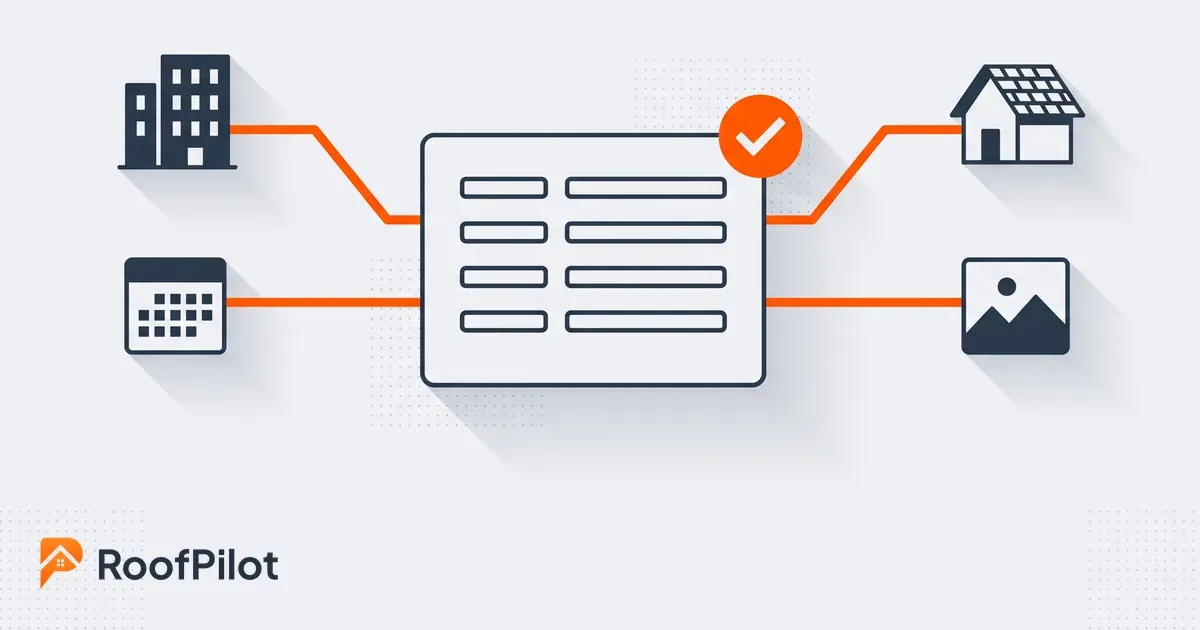
Production needs the complete job, not the highlights. A clean handoff package answers every question the crew would otherwise have to stop and ask: the full scope of work, the exact materials and colors, the measurements, the site details, the customer's expectations, and anything unusual about access, timing, or the property.
Concretely, that means the signed scope and any options the customer chose, the measurements and material list, site notes like where to stage materials and where the dumpster goes, access and pet and parking details, the permit status, and the promises the salesperson made that are not written into the contract but absolutely need to be kept. That last one matters more than any other single item, because the gap between what the customer was told and what the crew was told is where trust breaks. When all of it travels together into a clear work order production can build from, the crew starts the job knowing everything the salesperson knew.
What is a handoff SLA, and should you set one?
A handoff SLA is a simple internal promise about how fast and how completely a sold job moves from sales to production. SLA just means service-level agreement: a standard both sides agree to, such as every signed job being fully handed off within one business day, with a complete package, before it is eligible to be scheduled.
You should set one the moment handoffs start slipping, which for most growing roofing companies is early. The value of an SLA is that it turns a vague expectation into a measurable commitment. Instead of "sales should get production what they need," you have "a sold job is handed off complete within a day, and production confirms it is buildable within another." That clarity is what lets you actually find the bottleneck, because you can see which jobs missed the standard and why. An SLA is not bureaucracy, it is the difference between a handoff everyone assumes is happening and one you can prove is.
What this means for your business: Write down one number to start: how long a signed job can sit before it is fully handed off to production. Make it a standard both teams own, not a favor sales does when it has time. A handoff with a clock on it is a handoff that stops slipping.
How do you run a clean handoff every time?
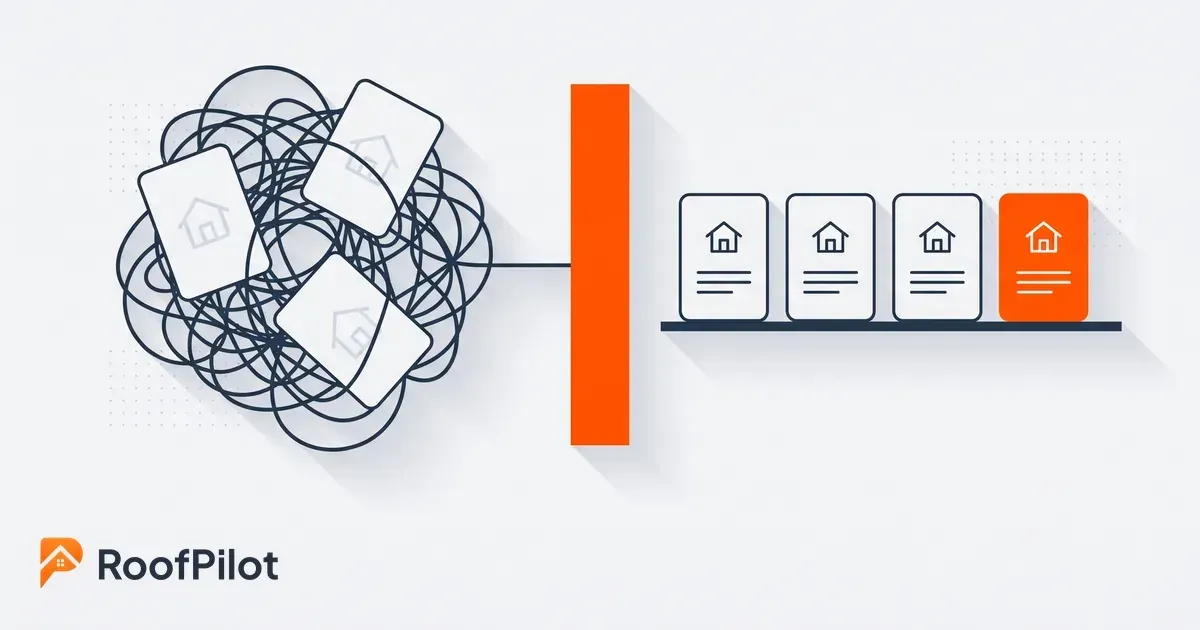
You run a clean handoff by making the complete package a gate, not a suggestion: a job does not move to scheduling until every required detail is in. When the standard is "no job gets scheduled with holes in it," the holes get filled at the handoff instead of discovered on the roof.
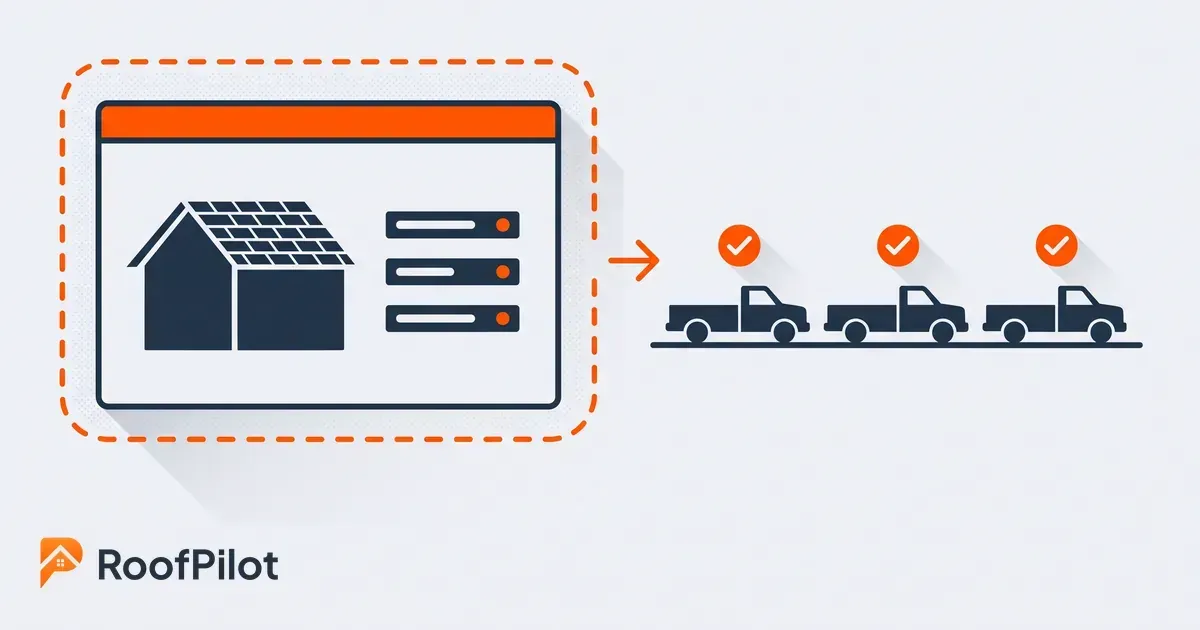
The mechanics are straightforward once the gate exists. Use a standard handoff checklist so the same details are captured on every job, no matter who sold it. Keep everything in one system sales and production both work from, so the salesperson is not emailing a crew lead a photo that gets buried, and production is not rekeying anything. Have production give a quick confirmation that the job is buildable, which catches the missing measurement or unclear scope while sales can still call the customer, not after the crew is standing on the roof. Running the whole flow in RoofPilot means the sold job, its details, and its work order are the same record, so nothing has to be handed across a gap where it can fall. And the cleaner your pipeline is going in, the cleaner the handoff comes out, which is why keeping your sales pipeline clean and current pays off all the way down the line.
How do you measure whether your handoff is working?
You measure the handoff with three numbers: how complete the package is when it lands, how long it takes a sold job to become a scheduled one, and how often production has to go back to sales for something that should have been included. Together they tell you whether the handoff is holding or leaking.
Watch handoff completeness first, because a package that arrives with gaps guarantees problems downstream. Then watch time from signed to scheduled, since a job that sits is a customer growing anxious and a crew calendar you cannot plan. Finally, track how often production kicks a job back for missing information, because that number is the clearest possible signal of a broken handoff. Most roofing companies measure none of these and simply feel the pain as callbacks and chaos. Put numbers on them and the handoff stops being the invisible place jobs disappear and becomes something you can steadily tighten.
The Bottom Line
The sales-to-production handoff is where roofing companies quietly lose jobs they already won. Treat it as a real step, not an afterthought: move the whole job, not the highlights, out of the salesperson's head and into a complete package production can build from. Set a handoff SLA so the transfer has a clock and a standard, gate scheduling on a complete package so gaps get caught before the roof, and keep the whole flow in one system so nothing falls across a seam. Then measure completeness, speed, and kickbacks so you can see the leaks. Fix the handoff and you protect the margin on every job that makes it to the finish line.
Related reading: